Whether you dream of running a neighborhood flower shop, launching a home-based floral business, or selling bouquets online, starting a flower business offers plenty of opportunities. Success begins with understanding your market, planning carefully, and building a solid foundation before investing significant time or money.
This guide walks you through every essential step—from validating your business idea and creating a business plan to pricing your products, finding reliable suppliers, attracting customers, and growing a profitable flower business.

Is Starting a Flower Business Worth It?
A flower business can be both profitable and scalable when built on the right business model. Demand remains strong throughout the year, driven by everyday occasions and seasonal events such as Valentine’s Day, Mother’s Day, weddings, and corporate functions. Unlike many retail businesses, florists can generate revenue from multiple customer segments instead of relying on a single product or service.
Common revenue streams include:
- Everyday bouquets and floral arrangements
- Wedding and event floristry
- Corporate floral services for offices, hotels, and restaurants
- Flower subscription programs
- Workshops, delivery services, and gift add-ons
The industry also offers attractive profit potential. Fresh flowers are commonly marked up 3–4× above wholesale cost, while hard goods such as vases and gift items typically carry markups of 2–2.5×. However, long-term profitability depends on managing inventory efficiently, pricing products correctly, and minimizing waste because flowers are highly perishable.
Choose the Right Flower Business Model
Choosing the right business model determines your startup costs, target customers, daily operations, and growth potential. Many florists start with a lower-cost model to gain experience and build a customer base before investing in a retail storefront.
Common flower business models include:
- Home-based florist: Operate from a spare room, garage, or home studio. Startup costs are typically $2,000–$5,000, making it ideal for online orders, local deliveries, and small event work.
- Retail flower shop: A physical storefront serving walk-in customers. This model usually requires $20,000–$100,000+ to cover commercial rent, refrigeration, inventory, and a POS system.
- Studio florist: Work from a dedicated studio without a walk-in store, focusing on pre-orders, corporate clients, weddings, or flower subscriptions while keeping overhead lower.
- Online flower business: Sell through your website or social media with local delivery or pickup, reducing operating costs while reaching more customers.
- Wedding and event florist: Specialize in bridal bouquets, centerpieces, and large floral installations. Projects often generate higher revenue but require strong floral design, planning, and client management skills.
- Handmade bouquet business: Sell handcrafted bouquets through local markets, social media, or online stores. It’s a practical way to validate demand before expanding into a full-service florist business.
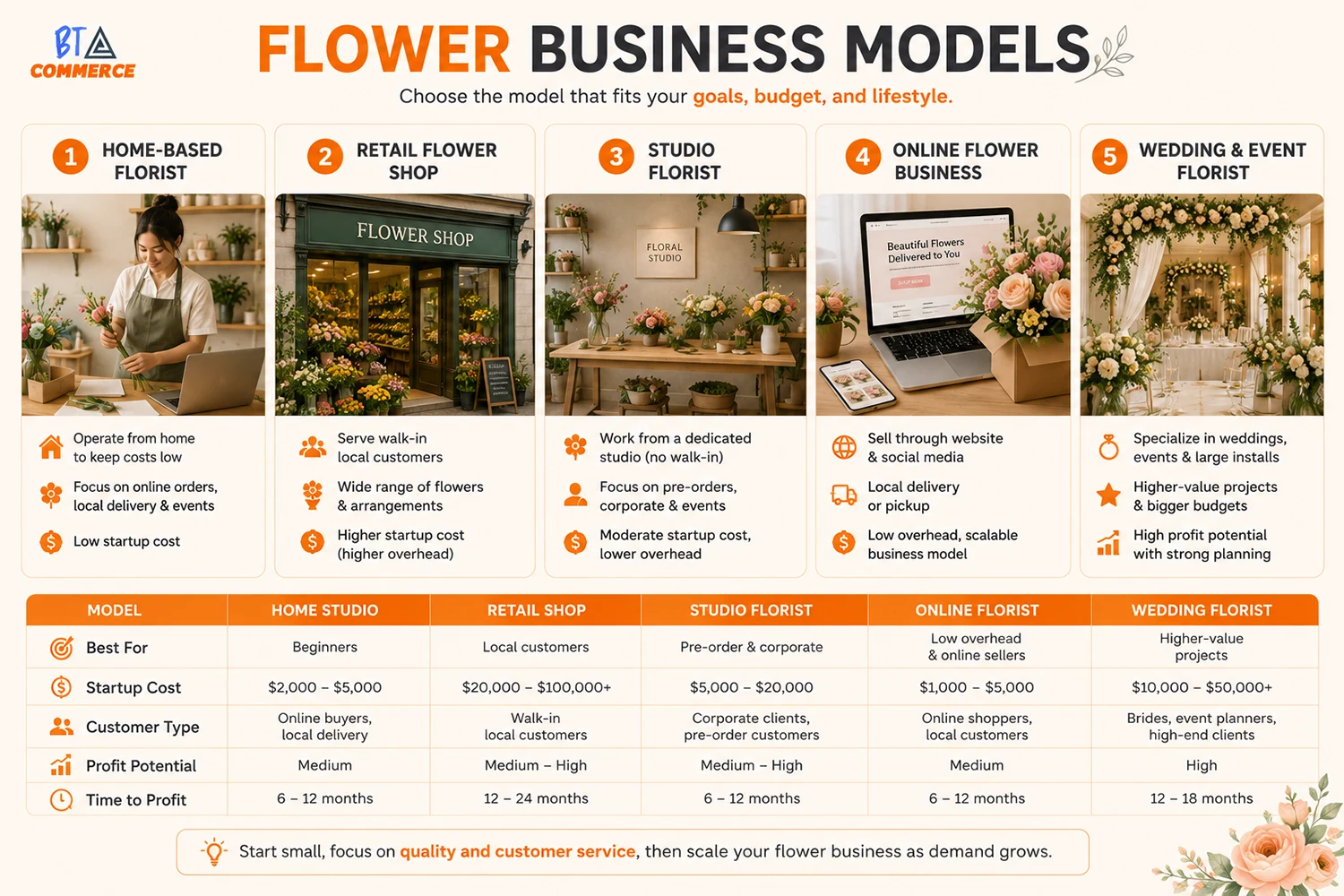
For most beginners, starting from home or a small studio offers the lowest financial risk. Once you establish consistent demand and positive cash flow, expanding into a retail flower shop becomes a more sustainable long-term investment.
Read more:
- How to Start a Business in 10 Practical Steps to Succeed
- How to Start a Craft Business: A Step-by-Step Guide for Beginners
How to Start a Flower Business in 7 Steps
Step 1. Conduct Market Research
Before investing in inventory, equipment, or business registration, confirm that there’s enough demand for your flower business. Market research helps you validate your business idea, understand customer needs, and uncover opportunities that competitors may have missed.
Focus on these key areas:
- Identify your target market: Define your ideal customers, whether they’re everyday retail buyers, wedding and event clients, corporate accounts, or online shoppers. Knowing who you want to serve will shape your products, pricing, and marketing strategy.
- Analyze local competitors: Research nearby florists, flower shops, their websites, and social media profiles. Compare their product offerings, pricing, design style, customer reviews, and delivery options to understand the local competitive landscape and customer expectations.
- Look for market gaps: Find unmet needs that can help your business stand out, such as flower subscriptions, same-day delivery, eco-friendly packaging, locally sourced flowers, or contemporary floral designs. You can also use Google Trends and Google Keyword Planner to identify seasonal demand and emerging search trends for floral products in your target market.
A clearly defined niche gives your business a stronger competitive advantage than competing on price alone, making it easier to attract the right customers and build long-term loyalty.
Step 2. Create a Business Plan
A business plan serves as the roadmap for your flower business, helping you define clear goals, estimate costs, and make informed decisions before investing. It doesn’t need to be lengthy, but it should explain how your business will operate and generate sustainable revenue.
Your business plan should include:
- Define your business goals: Describe your business model, mission, and long-term objectives. Decide whether you’ll operate a retail flower shop, home-based studio, online flower business, or specialize in weddings and events. Your goals should guide future decisions on operations, budgeting, and growth.
- Outline your products and services: List your core offerings, such as everyday bouquets, bridal bouquets, centerpieces, wedding flowers, corporate arrangements, flower subscriptions, or delivery services. Instead of creating endless custom options, start with a focused product lineup that’s easier to manage and price consistently.
- Plan your finances: Estimate the funding you’ll need to launch and operate your business during the first year. Include projected revenue, expected expenses, seasonal fluctuations, and expected cash flow to understand when your business is likely to break even.
- Create revenue projections: Estimate your expected sales and expenses for the first 12 months based on your pricing strategy, target market, and seasonal demand. Be sure to account for peak sales periods like Valentine’s Day and Mother’s Day, which often generate a significant portion of annual revenue for many florists.
A well-structured business plan doesn’t just help secure financing—it also provides a clear framework for measuring progress and making better business decisions as your flower business grows.
Step 3. Set Your Budget and Price Your Products
A realistic budget and a profitable pricing strategy are essential for long-term success. Many flower businesses struggle not because of low demand, but because they underestimate startup costs or price their products too low to cover labor and overhead.
When planning your budget, estimate the following expenses:
- Startup costs: Equipment, refrigeration, workspace setup, delivery, business registration, insurance, and website development.
- Operating costs: Wholesale flowers purchased from floral wholesalers, packaging, utilities, marketing, rent (if applicable), and other recurring monthly expenses.
- Cash reserve: Set aside enough working capital to cover several months of operating expenses, especially during slower seasons or unexpected fluctuations in demand.
Once you understand your costs, build a pricing strategy that protects your profit margins. Many professional florists use the following cost-plus pricing formula to maintain healthy profit margins:
- Multiply the wholesale cost of fresh flowers by 3.5× or more.
- Multiply the cost of hard goods, such as vases and ribbons, by 2.5×.
- Add a 25% labor and design fee to cover arrangement time, design expertise, and overhead.
Rather than creating fully customized arrangements for every order, consider offering a simple pricing menu with options such as small, medium, and large bouquets. This makes purchasing easier for customers, simplifies inventory management, and helps maintain consistent profit margins.
Step 4. Register Your Business
Registering your business establishes a legal foundation for your flower business and helps separate your personal finances from business liabilities. While the exact requirements vary by country and state, the registration process generally includes the following steps:
- Choose a business structure: Select the legal structure that best fits your needs, such as a Sole Proprietorship, Partnership, LLC (Limited Liability Company), or Corporation. Many small business owners choose an LLC because it offers liability protection while remaining relatively simple to manage.
- Register your business: Register your business name with the appropriate government authority and obtain an Employer Identification Number (EIN) if required. An EIN is typically needed to open a business bank account, hire employees, and file business taxes.
- Obtain the necessary licenses and tax permits: Depending on your location, you may need a general business license, a sales tax permit, or a resale certificate, which allows you to open wholesale accounts and purchase flowers and other inventory at wholesale pricing without paying sales tax upfront. If you’re operating a home-based flower business, be sure to check local zoning regulations before accepting customers or storing inventory.
Once your business is legally registered, open a dedicated business bank account and keep your personal and business finances separate. This makes bookkeeping easier, simplifies tax reporting, and gives your business a more professional financial foundation.
=> Read more: 600+ Flower Business Name Ideas by Style & Niche
Step 5. Find Suppliers and Prepare Your Workspace
The quality of your products depends on both the flowers you source and the environment where you prepare them. Choosing reliable suppliers and setting up an efficient workspace from the beginning will help reduce waste, improve consistency, and protect your profit margins.
When sourcing flowers, diversify your supply chain instead of relying on a single vendor:
- Regional floral wholesalers: The primary source for fresh flowers and floral supplies at wholesale prices. Most require a business license or resale certificate before you can open a wholesale account.
- Local flower farms: A great option for seasonal blooms, specialty varieties, and businesses that want to promote locally grown flowers. Building relationships with regional growers can also improve quality and seasonal availability.
- Online flower suppliers: Useful for sourcing imported flowers or specialty stems through trusted flower importers when they aren’t available from local wholesalers.
Your workspace should also be designed to preserve flower quality and streamline daily operations. Prepare the following essentials:
- A sturdy workbench with easy-to-clean surfaces, such as stainless steel or heavy-duty plastic.
- Essential tools, including floral shears, floristry scissors, a floral knife, secateurs, wire cutters, floral wire, floral tape, buckets, floral foam, and packaging materials.
- A cool, well-ventilated storage area. Fresh flowers should be kept at 34°F–38°F (1–3°C). Proper cold storage, flower conditioning, and hydration help extend vase life. For larger inventories, a commercial floral cooler can further reduce losses.
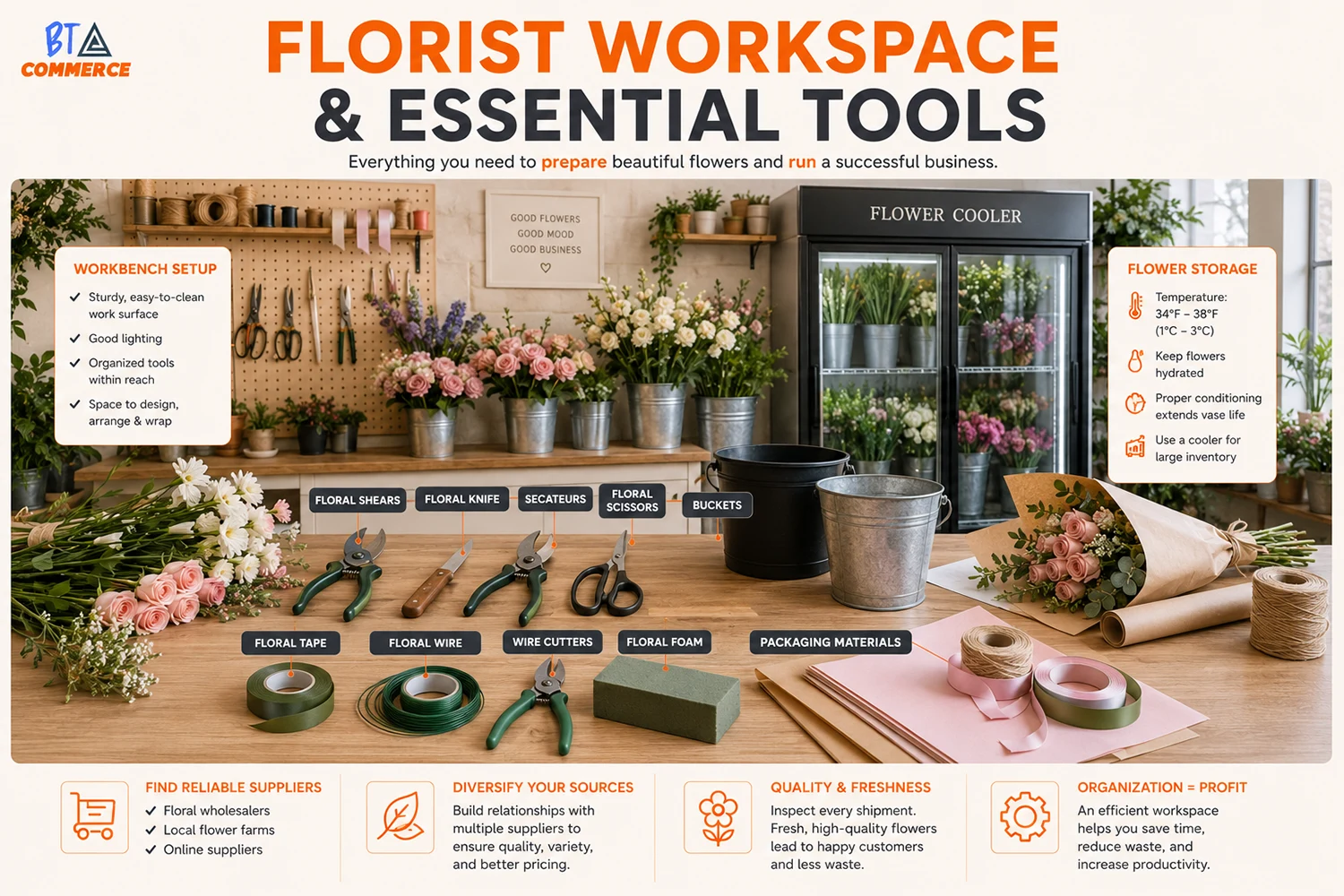
A dependable supplier network and an organized workspace provide a strong operational foundation, making it easier to deliver consistent quality as your flower business grows.
Step 6. Build Your Brand and Market Your Business
A strong brand helps customers recognize and trust your business, while a professional online presence makes it easier for them to discover your products and services. By building a professional online presence and promoting your services through multiple channels, you can create a steady pipeline of new and returning customers.
Focus on these key areas:
- Build a recognizable brand: Define your niche and create a consistent visual identity, including your logo, color palette, typography, and packaging. Tools like Canva can help you design professional marketing materials and social media graphics.
- Create a portfolio and website: Showcase high-quality photos of your own floral arrangements to demonstrate your style and craftsmanship. Build a mobile-friendly website using platforms like Shopify or Squarespace, and clearly display your products, delivery area, pricing, online ordering process, and delivery policies.
- Strengthen your local presence: Set up a Google Business Profile so your business appears in Google Search and Google Maps. If you specialize in weddings, consider listing your business on directories like Yelp or The Knot to improve credibility and collect customer reviews.
- Promote your business: Use Instagram, Pinterest, and Facebook to showcase your work, share flower care tips, and post behind-the-scenes content. You can also build an email marketing list to promote seasonal collections, encourage repeat customers, and generate referrals from satisfied customers.
- Build local partnerships: Connect with wedding planners, event venues, photographers, boutiques, cafés, and bakeries to expand your reach and generate referrals. These partnerships can become a reliable source of recurring business, especially for weddings, corporate events, and other high-value floral projects.
A recognizable brand, a professional website, and a diversified marketing strategy make it easier for potential customers to discover, trust, and recommend your flower business.
Step 7. Grow Your Flower Business
Once your business has a steady customer base, focus on scaling sustainably. Growth isn’t just about increasing sales—it also means improving efficiency, expanding revenue streams, and maintaining healthy profit margins.
As your business grows, consider these strategies:
- Expand your services: Introduce new offerings such as flower subscriptions, corporate floral arrangements, workshops, seasonal collections, or wedding and event services. Diversifying your services helps reduce reliance on a single source of income.
- Create additional revenue streams: Build long-term partnerships with restaurants, boutique hotels, funeral homes, real estate agencies, and event venues that require recurring floral arrangements. These B2B contracts can provide more predictable revenue throughout the year.
- Hire and delegate: As order volume increases, hire florists or delivery staff to handle daily operations while you focus on business development. Standardized workflows also make it easier to maintain consistent quality as your team grows.
- Automate your operations: Use accounting software like QuickBooks to manage invoices, bookkeeping, and finances, and consider e-commerce or florist POS platforms such as Shopify or Floranext to streamline online orders, inventory, and daily operations. As your business grows, investing in a walk-in cooler can reduce flower waste and improve profitability.
Sustainable growth comes from building efficient systems—not simply selling more flowers. As your operations become more streamlined, you’ll be better positioned to serve more customers while maintaining quality and profitability.
Common Challenges When Starting a Flower Business
Running a flower business comes with challenges that can affect profitability, especially during the first year. Understanding these risks early will help you make better operational and financial decisions.
Some of the most common challenges include:
- Seasonality: Sales often peak during Valentine’s Day, Mother’s Day, and wedding season, while demand may slow significantly during other periods. Seasonal supply fluctuations and global supply chain disruptions can also increase flower costs and reduce availability.
- Inventory management: Fresh flowers are highly perishable, making accurate demand forecasting and inventory planning essential. Poor inventory planning can quickly lead to waste, lost sales, and lower profit margins.
- Price competition: Independent florists compete with supermarkets and large online flower retailers. Long-term success usually comes from offering a unique style, premium service, or a specialized niche rather than competing on price.
- Operational complexity: As your business grows, managing inventory, deliveries, flower conditioning, customer service, and peak holiday orders becomes increasingly challenging. Building efficient workflows early makes it easier to scale without sacrificing quality.
While these challenges are common, they’re manageable with careful planning, efficient operations, and a clear market position.
Starting a Flower Business FAQs
How much does it cost to start a flower business?
Startup costs vary depending on your business model. A home-based flower business typically requires $2,000–$5,000, while opening a retail flower shop usually costs $20,000–$100,000+ due to commercial rent, refrigeration, store buildout, and inventory.
Can I start a flower business from home?
Yes. Many florists start from home to keep overhead low. You’ll need a dedicated workspace, essential floral tools, reliable wholesale suppliers, and any required business licenses or permits. Before launching, check your local zoning regulations to ensure home-based businesses are allowed.
Do I need florist training?
No. Formal florist training or certification isn’t required to start a flower business. However, floral design workshops, online courses, and hands-on practice can help you develop floral design skills more quickly and improve the quality of your arrangements.
Is owning a flower shop profitable?
Yes, a flower business can be profitable with effective pricing and cost control. Many successful florists target healthy gross profit margins of 50%–70% by applying industry-standard markups, while well-managed businesses often achieve net profit margins of 10%–16% after operating expenses.
How long does it take to become profitable?
Most small flower businesses take 6–18 months to reach consistent profitability. The timeline depends on factors such as startup costs, customer acquisition, pricing strategy, inventory management, and seasonal demand. Businesses that build a loyal customer base and maintain healthy cash flow generally reach profitability sooner.
Recommended Reading