Starting a waxing business can be a rewarding opportunity as demand for professional hair removal services continues to grow. With recurring appointments, loyal clients, and relatively low startup barriers, a waxing salon can become a profitable business when planned and managed effectively.
In this guide, BTA Commerce explains how to start a waxing business, covering everything from creating a business plan and meeting legal requirements to setting competitive prices, building your brand, and attracting your first clients with confidence.
Is Starting a Waxing Business Worth It?
A waxing business provides professional hair removal services, including Brazilian, bikini, facial, and full-body waxing. As more consumers seek longer-lasting results than shaving, demand for professional waxing services continues to grow, making it an attractive opportunity for beauty professionals.
Before deciding if this business is right for you, consider these key factors:
- High recurring revenue potential: Because hair naturally regrows, most clients return every 4–6 weeks for maintenance appointments. This recurring-service model creates predictable income and can deliver healthy profit margins with effective cost management.
- Relatively low startup costs: Compared with many businesses in the beauty industry, a home-based waxing studio can often be launched with an investment of around $5,000–$15,000, making it an accessible option for first-time business owners.
- Professional requirements: Success requires more than technical skills. You’ll need to meet professional licensing requirements, comply with local regulations, and operate your business safely while delivering a high-quality client experience.
- Best suited for: This business is ideal for estheticians and beauty professionals who enjoy working closely with clients, pay attention to detail, and want to build a business around repeat appointments rather than one-time sales.
If you’re looking for a service-based business with growing demand, manageable startup costs, and recurring revenue, starting a waxing business can be a worthwhile long-term investment.
Read more:
- How to Start a Beauty Business: Step-by-Step Beginner Guide
- How to Start a Hair Business in 7 Steps (Beginner’s Guide)
- How to Start a Nail Business in 9 Steps
- 350+ Waxing Business Name Ideas by Category & Niche
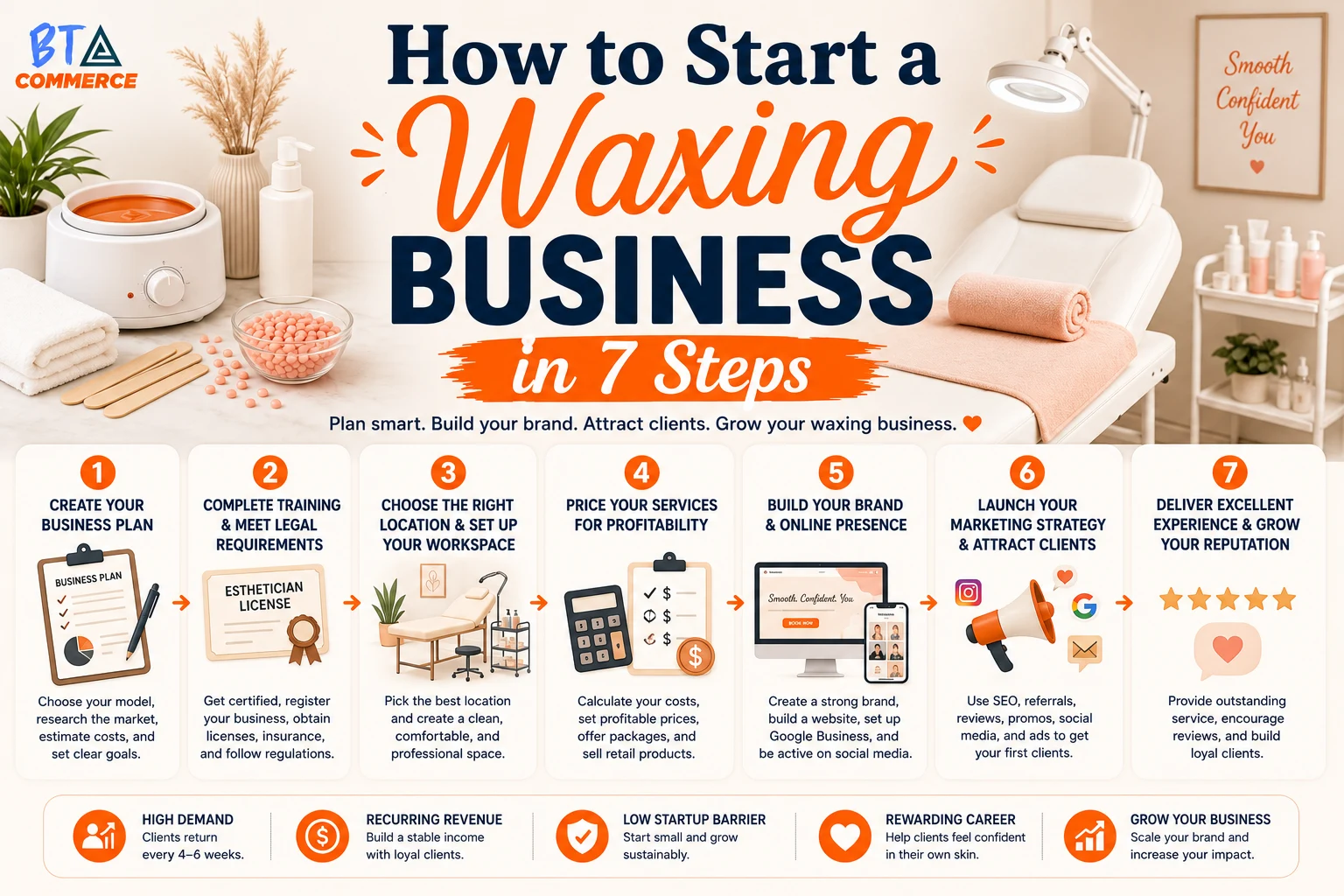
How to Start a Waxing Business in 7 Steps
Step 1. Create Your Waxing Business Plan
A business plan helps you validate your idea before investing in your waxing business. It should define how your business will operate, compete, and become profitable.
- Choose your business model: Decide whether you’ll operate from home, rent a salon suite, offer mobile services, or open a retail salon. This decision affects your startup costs, licensing requirements, pricing, and long-term growth.
- Define your services and target market: Outline the waxing services you’ll offer and identify your ideal customers based on local demographics, lifestyle, and demand. Consider whether you’ll primarily serve busy professionals, students, or clients seeking services such as Brazilian, facial, or full-body waxing.
- Research your local competition: Analyze waxing salons, spas, and independent estheticians within roughly a 5-mile radius. Compare their services, customer reviews, and market positioning to identify gaps your business can fill.
- Estimate your startup budget: List your expected startup investment and major operating expenses so you can calculate your break-even point before opening.
- Set measurable goals: Define first-year targets such as monthly revenue, client retention, repeat booking rate, and your expected break-even timeline.
A well-structured business plan doesn’t need to be lengthy, but it should clearly explain what you’ll offer, who you’ll serve, how you’ll compete, and what it will take to build a profitable waxing business.
Step 2. Complete Training and Meet Legal Requirements
Before serving clients, make sure you meet all professional and legal requirements in your state. This protects your waxing business, builds client trust, and helps you avoid costly penalties after opening.
- Complete the required training: Most states require an Esthetician License or Cosmetology License before you can legally perform waxing services. Depending on your state, approved training programs may require 260–1,600 hours, although some waxing-specific licenses require fewer hours.
- Register your business: Choose a legal business structure, such as an LLC, obtain an Employer Identification Number (EIN) if needed, and open a dedicated business bank account to separate personal and business finances.
- Obtain licenses and permits: Besides your personal license, your salon or workspace may also require an establishment license, local business license, or health department approval depending on local regulations.
- Purchase liability insurance: Professional and general liability insurance helps protect your business against claims involving burns, skin reactions, or other client injuries. If you hire employees, workers’ compensation insurance may also be required.
- Follow health and sanitation regulations: Understand your State Board of Cosmetology requirements for cleaning, disinfecting equipment, handling disposable supplies, and maintaining a safe treatment environment.
Completing these requirements before opening your business will help you operate legally, reduce risk, and build credibility with future clients.
Step 3. Choose the Right Location and Set Up Your Workspace
Your waxing business location directly affects operating costs, client experience, and regulatory compliance. Choose a workspace that fits your business model while creating a clean, professional environment that encourages clients to return for future waxing services.
- Choose the right location: Compare a home-based studio, salon suite, retail salon, or mobile business based on your budget, local demand, and zoning requirements. Commercial rent typically ranges from $600 to $1,000+ per month, depending on the location.
- Create a professional treatment space: Design a clean, private workspace with adequate lighting, ventilation, and a comfortable treatment area that reflects your brand and helps clients feel at ease.
- Invest in essential equipment: Purchase reliable equipment such as a professional wax warmer, hydraulic treatment table, treatment cart, magnifying lamp, lighting, and the supplies needed to perform services efficiently.
- Prepare sanitation procedures: Set up handwashing facilities, EPA-approved disinfectants, disposable supplies, and other sanitation practices required by your local health authority to maintain a safe working environment.
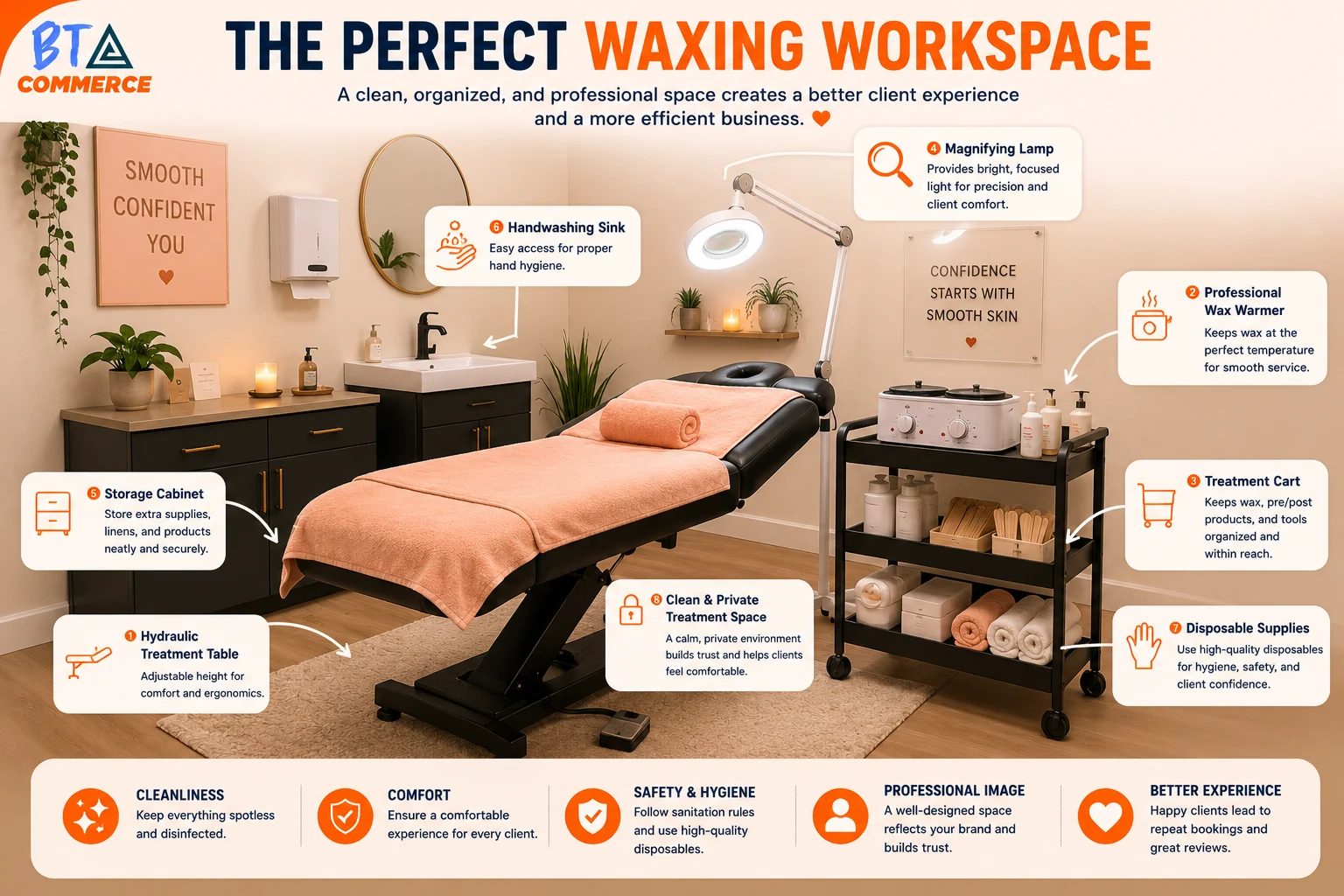
A well-designed workspace not only improves operational efficiency but also reinforces your professionalism and client confidence.
Step 4. Price Your Services for Profitability
A profitable pricing strategy for your waxing business should cover your operating costs, pay for your time, and leave enough margin to grow your business. Avoid setting your waxing service prices based solely on competitors or offering deep discounts to attract new clients.
- Research your local market: Compare the pricing of nearby waxing salons and independent estheticians to understand the typical price range in your area before setting your own rates.
- Calculate your service costs: Include hard wax, soft wax, disposable supplies, aftercare products, payment processing fees, and a portion of your operating expenses to understand the true cost of each service.
- Set profitable service prices: Price each treatment to cover both your costs and labor while maintaining healthy profit margins, rather than competing on the lowest price.
- Increase average order value: Create service packages, memberships, or bundled treatments to encourage repeat visits and generate more predictable recurring revenue.
- Sell retail products: Recommend aftercare products such as ingrown hair serums, exfoliating scrubs, soothing lotions, and post-wax oils to improve client results while creating an additional revenue stream.
Review your pricing regularly as your experience, operating costs, and local market conditions change to ensure your business remains competitive and profitable.
Step 5. Build Your Brand and Online Presence
Your waxing brand shapes how potential clients perceive your business before they ever book a waxing appointment. A professional online presence also makes it easier for local customers to discover, trust, and contact your waxing business.
- Choose a memorable waxing business name: Select a name that’s easy to remember, reflects your brand, and is available as a domain name and social media handle.
- Develop your brand identity: Create a consistent visual style, including your logo, color palette, typography, and brand voice. Whether your studio feels luxurious, modern, or clinical, consistency builds recognition and trust.
- Create a professional website: Build a mobile-friendly website with your service menu, online booking, business hours, contact information, digital client consultation forms, and appointment software such as GlossGenius or Mindbody.
- Set up your Google Business Profile: Claim and optimize your profile so your business appears in Google Search and Google Maps. Keep your address, hours, phone number, and booking link up to date.
- Build your social media presence: Share educational content, before-and-after results, skincare tips, and your studio environment on platforms like Instagram and TikTok to showcase your expertise and attract potential clients.
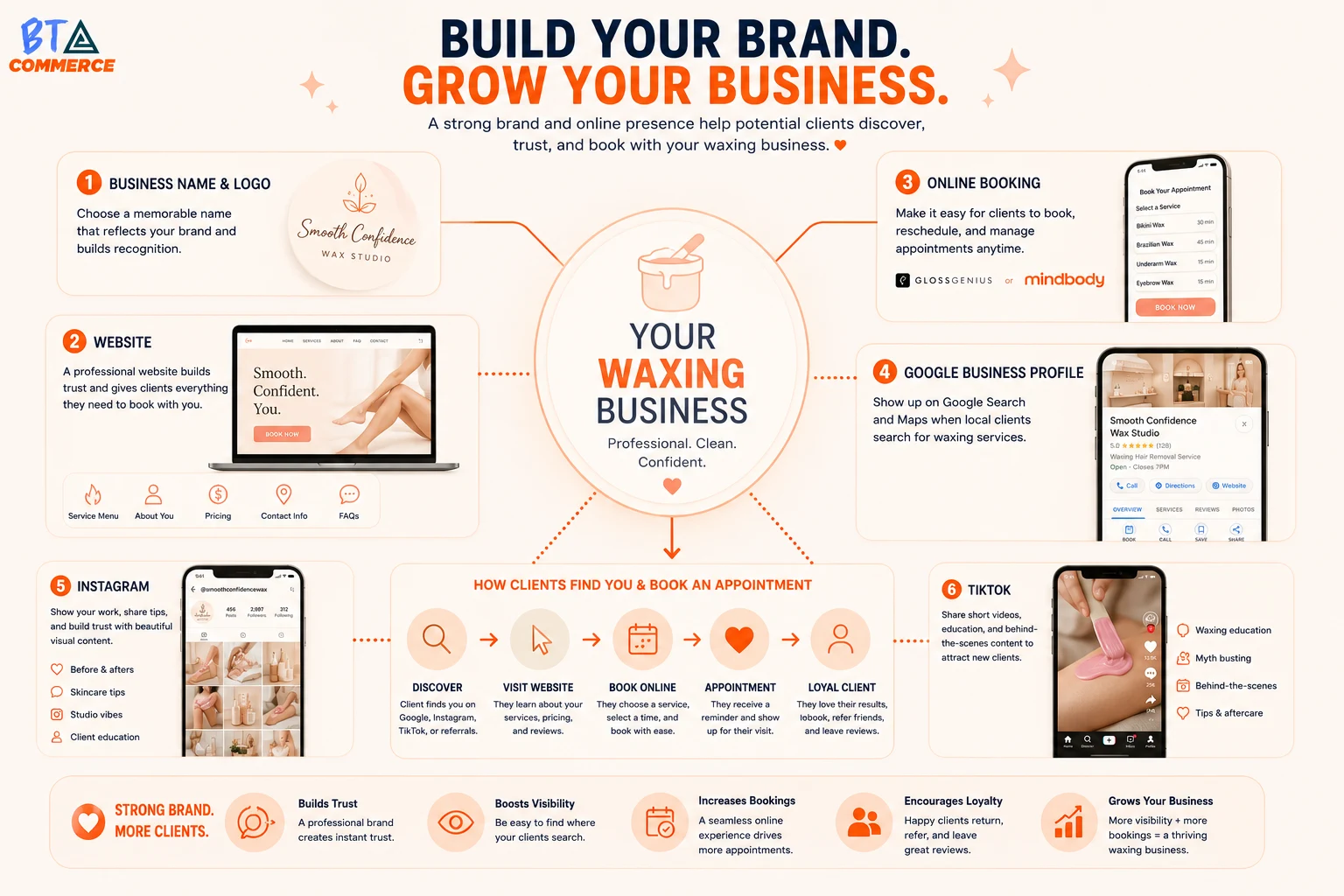
A consistent brand across your website, Google Business Profile, and social media helps establish credibility and makes your waxing business easier to find online.
Step 6. Launch Your Marketing Strategy and Attract Clients
Once your waxing business is ready to open, focus on marketing strategies that increase local visibility and encourage first-time clients to book their first waxing appointment with confidence.
- Optimize for local SEO: Keep your website and Google Business Profile optimized so your business appears when people search for terms like “waxing near me” or other local waxing services.
- Encourage referrals: Launch a referral program that rewards existing clients for introducing new customers, helping you grow through word-of-mouth marketing.
- Collect customer reviews: Ask satisfied clients to leave reviews on Google after their appointments. Positive reviews improve trust and strengthen your local search rankings.
- Run social media and email marketing campaigns: Share educational content, behind-the-scenes videos, client transformations, and skincare tips on social media, while using email marketing to send appointment reminders, seasonal promotions, aftercare tips, and special offers that encourage repeat bookings.
- Offer grand opening promotions: Limited-time discounts or introductory packages can reduce the barrier for first-time clients and generate early bookings.
- Consider paid advertising: Once your organic marketing is established, invest in targeted local advertising to reach more qualified customers and accelerate business growth.
A balanced marketing strategy combines local SEO, referrals, reviews, social media, and promotions to build a steady flow of new clients.
Step 7. Deliver an Excellent Client Experience and Grow Your Reputation
Long-term success depends on keeping your waxing clients satisfied and encouraging them to return. Every waxing appointment is an opportunity to build trust, strengthen your reputation, and generate future referrals.
- Deliver consistent service quality: Follow professional techniques, communicate clearly, and provide the same high standard of care during every appointment.
- Maintain strict hygiene standards: Keep your treatment room spotless, disinfect equipment properly, and follow all sanitation protocols to protect both clients and your business.
- Encourage repeat bookings: Recommend a maintenance schedule before clients leave and make rebooking simple through your appointment system.
- Collect and apply client feedback: Ask clients about their experience and use their feedback to improve your services while identifying opportunities to earn more positive reviews.
- Continue developing your skills: Stay current with new waxing techniques, products, and industry trends through continuing education and professional training.
- Improve operational efficiency: Use appointment scheduling and business management software to manage bookings, client records, reminders, inventory, and cancellation policies more efficiently.
Providing an outstanding client experience not only increases retention but also creates positive word-of-mouth, helping your waxing business grow through loyal customers and a strong local reputation.
How to Start a Waxing Business FAQs
How much does it cost to start a waxing business?
Startup costs depend primarily on your business model:
- Mobile or home-based studio: $3,000–$5,000
- Salon suite rental: $5,000–$15,000
- Commercial storefront: $50,000–$120,000+
Your startup budget should also include:
- Equipment and studio setup: $1,500–$5,000
- Initial supplies and inventory: $500–$2,000
- Licenses, legal fees, and liability insurance: $1,000–$3,000
- Website, branding, booking software, and marketing: $500–$2,000
- Working capital: Reserve an additional $3,000–$5,000 to cover rent, software, and marketing during your first six months.
How much can a waxing business make?
Your earning potential depends on your business model, pricing, and client retention.
- Employee or booth renter: $20,000–$50,000 per year
- Solo studio owner: $60,000–$100,000+ per year
- Multi-staff salon owner: Can earn significantly more, but with much higher startup and operating costs.
Typical service prices include:
- Eyebrow wax: $10–$40
- Brazilian wax: $65–$75
- Full-body wax: $150+
You can further increase revenue by offering memberships, service packages, and aftercare retail products, while encouraging clients to return every 4–6 weeks.
How long does it take for a waxing business to become profitable?
Most waxing businesses follow a similar growth timeline:
- Months 1–3: Build your client base and cover day-to-day operating expenses. Businesses with pre-booked clients may reach their break-even point during this stage.
- Months 6–12: Repeat bookings become more consistent, creating positive monthly cash flow.
- Years 1–2: Many businesses recover their startup investment and achieve stable, long-term profitability.
The speed of profitability depends on several factors:
- Business model: Home-based and mobile studios usually become profitable faster than commercial salons because of lower overhead.
- Client retention: Rebooking clients every 4–6 weeks creates predictable recurring revenue.
- Operating costs: Keeping rent, payroll, inventory, and other fixed expenses under control improves profit margins and shortens the path to profitability.
Recommended Reading