Knowing how to start a bracelet business is only the first step—the real challenge is building a brand that customers choose over countless alternatives. Whether you want to create handmade bracelets, sell fashion jewelry, or offer personalized designs, success starts with making the right decisions before you launch.
At BTA Commerce, you’ll learn a practical, step-by-step process for choosing a profitable niche, developing your first bracelet collection, selling online, and growing a sustainable bracelet business.
How to Start a Bracelet Business in 7 Steps
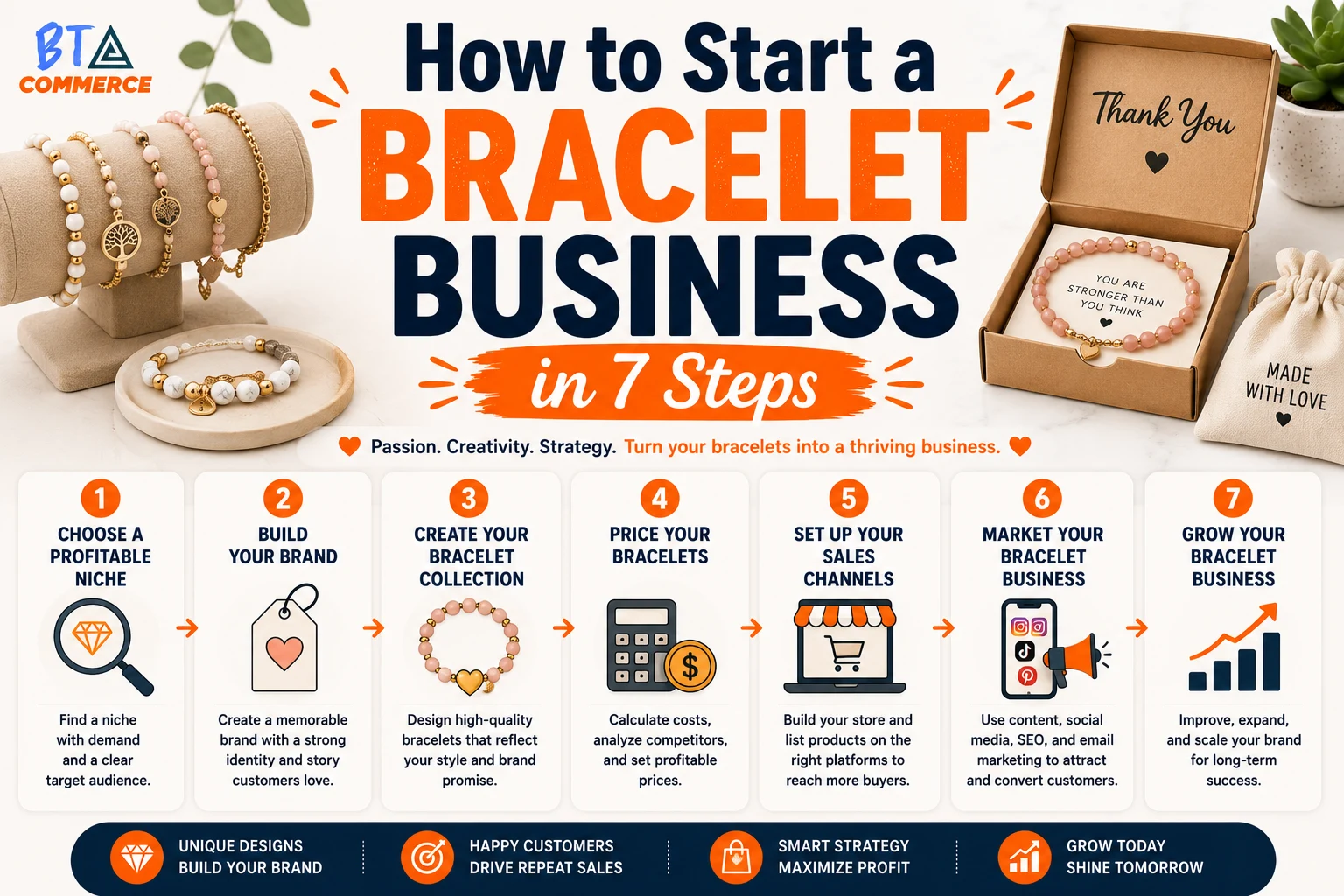
Step 1. Choose a Profitable Bracelet Niche
Your niche determines who you sell to, what you sell, and how your brand stands out. Rather than competing in the broad jewelry market, focus on a specific type of bracelet with proven demand and a clearly defined audience.
Popular bracelet niches include:
- Handmade bracelets: Crafted with beads, gemstones, leather, or metal for customers seeking unique, artisan-made jewelry.
- Personalized bracelets: Customized with names, initials, birthstones, or engraved messages for gifts and special occasions.
- Fashion bracelets: Trend-driven collections designed for everyday wear and seasonal styles.
- Permanent jewelry: Clasp-free welded bracelets offered as a premium in-person experience.
- Eco-friendly bracelets: Made from recycled or sustainable materials for environmentally conscious buyers.
Before choosing a niche, validate demand instead of relying on assumptions. Study best-selling products on Etsy, explore trends on Pinterest, and analyze competitor reviews to identify what customers value and where existing products fall short. Then, define a clear unique selling proposition (USP)—such as exclusive designs, premium craftsmanship, sustainable materials, or personalization—to give shoppers a compelling reason to buy from your brand.
Step 2. Build Your Brand
Your brand is more than a business name—it’s how customers recognize, trust, and remember your bracelet business. A strong brand helps you stand out in a competitive jewelry market and creates a consistent experience across your website, marketplace listings, and social media.
Build your brand around these core elements:
- Business name: Choose a memorable, easy-to-pronounce name that reflects your niche. Before deciding, check the availability of the .com domain and your social media handles on platforms like Instagram, TikTok, and Pinterest.
- Brand identity: Define your target audience, brand personality, color palette, typography, and visual style so every customer touchpoint feels consistent.
- Brand story: Tell customers why you started your business and what makes your bracelets unique, whether it’s handcrafted quality, sustainability, or personalization.
- Visual branding: Create a simple logo using tools like Canva or Looka, then apply consistent colors, product photography, packaging, and marketing materials across your brand.
A consistent brand experience helps customers trust your business and recognize your products across Shopify, Etsy, and other ecommerce channels.
Read more:
- 450+ Catchy & Unique Bracelet business names ideas You’ll Love
- How to Start a Business in 10 Practical Steps to Succeed
- How to Start a Jewelry Business (Step-by-Step Guide)
Step 3. Create Your Bracelet Collection
Your first bracelet collection should focus on a consistent theme instead of offering dozens of unrelated designs. A focused, cohesive collection is easier to produce, market, and refine based on customer feedback while helping customers instantly recognize your style.
When developing your first collection, focus on:
- Collection theme: Build your collection around a consistent style, such as minimalist jewelry, birthstone bracelets, beach-inspired designs, charm bracelets, or stackable bracelets.
- Quality materials & tools: Source beads, polymer clay beads, natural gemstones, leather, stainless steel, sterling silver, or gold-filled components, along with essential jewelry tools such as pliers and wire cutters.
- Product quality: Test sample bracelets for comfort, durability, clasp strength, elastic performance, and tarnish resistance before selling them to customers.
- Branded packaging: Use jewelry boxes, pouches, thank-you cards, and care instructions to create a premium unboxing experience that encourages repeat purchases.
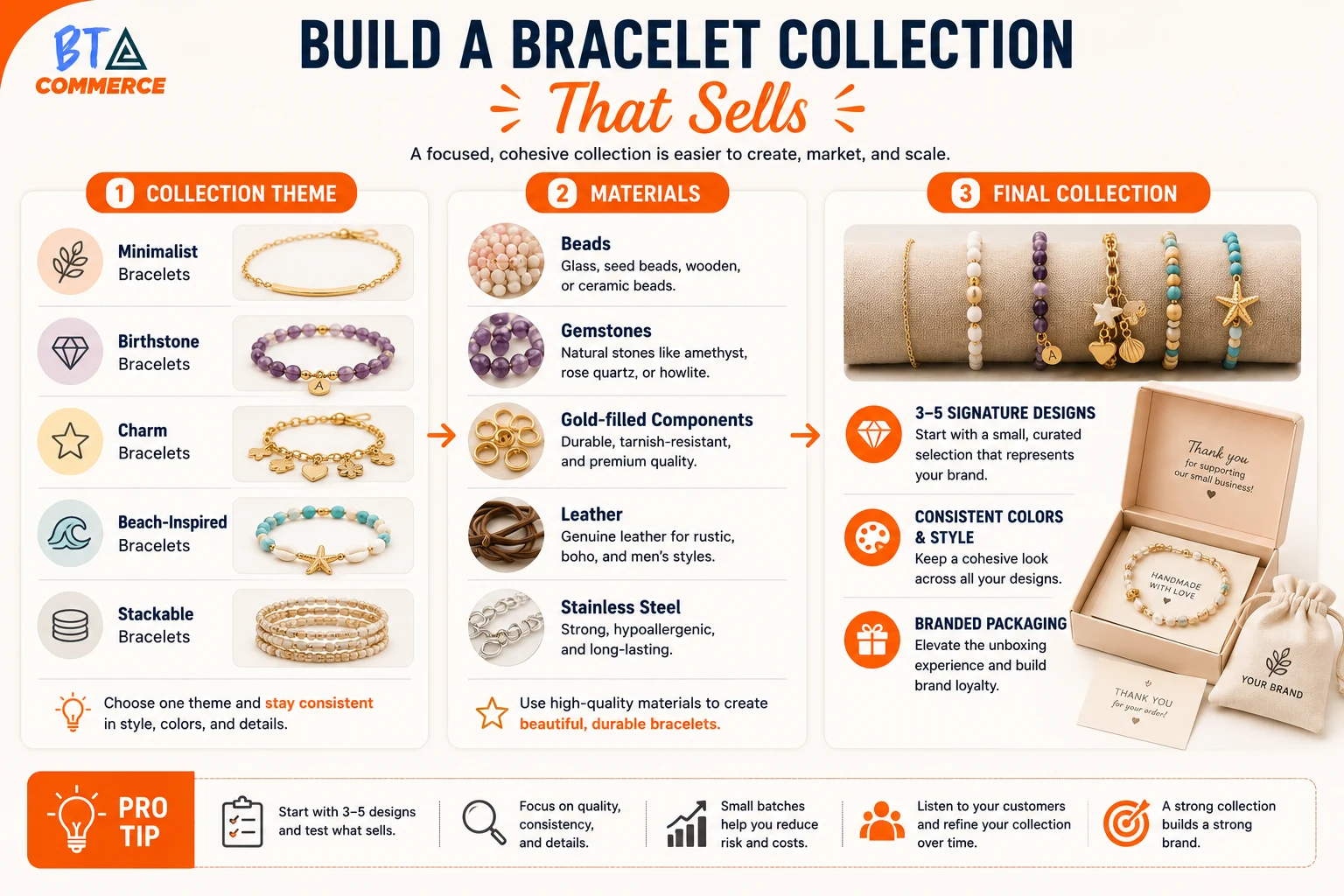
Rather than launching a large catalog, start with 3–5 signature designs and produce small batches to test demand before expanding your collection. This approach keeps your startup costs manageable while helping you identify your best-selling products before expanding your collection.
Step 4. Price Your Bracelets
Pricing your bracelets correctly ensures every sale generates a profit instead of simply covering your costs. A common pricing formula used by handmade jewelry businesses is (Material Cost + Labor Cost) × 3, which accounts for production costs, overhead, packaging, and your profit margin.
When pricing your products, consider these key factors:
- Production costs: Calculate the cost of materials such as beads, gemstones, clasps, elastic cord, packaging, and any other supplies used for each bracelet.
- Labor costs: Assign yourself an hourly rate and include the time required to design, assemble, and package each product.
- Competitor pricing: Compare similar bracelets on Etsy, Amazon Handmade, or independent jewelry stores to understand current market pricing and customer expectations.
- Retail and wholesale pricing: Set retail prices that reflect your brand value, and create separate wholesale prices if you plan to sell through boutiques or gift shops. Wholesale prices are typically 1.5–2× your production cost, leaving room for retailers to apply their own markup.
Review your pricing regularly as material costs, production efficiency, and market demand change. As your business grows, buying materials in bulk can help lower production costs and improve your profit margins. Avoid competing on price alone—customers are often willing to pay more for high-quality craftsmanship, personalization, and strong branding.
Step 5. Set Up Your Sales Channels
Before you start promoting your business, make sure customers have an easy way to discover, purchase, and receive your bracelets. Selling through multiple channels can help you reach different audiences while reducing your dependence on a single platform.
Prepare your sales channels by focusing on these essentials:
- Build your online store: Launch a branded website with platforms like Shopify for full control over your brand, products, and customer data. If you’re just getting started, Big Cartel is another beginner-friendly option.
- Sell on online marketplaces: List your products on Etsy to reach shoppers looking for handmade jewelry, or expand to Amazon Handmade as your business grows.
- Create compelling product pages: Write clear product descriptions, include sizing and material details, and highlight features such as personalization, sustainability, or handmade craftsmanship.
- Use high-quality product photos: Showcase your bracelets with well-lit images from multiple angles, along with close-up shots that capture important details and textures.
- Set up payments and shipping: Offer secure payment options, clearly communicate shipping costs and delivery times, and provide tracking whenever possible to build customer confidence.
Start with one or two sales channels you can manage effectively. Many successful bracelet businesses begin with Shopify and Etsy, then expand to additional marketplaces or retail partnerships as order volume increases.
Step 6. Market Your Bracelet Business
Once your store is ready, the next challenge is attracting consistent traffic and turning visitors into customers. The most effective marketing strategy combines social media, SEO, email marketing, and community engagement to build brand awareness and generate repeat sales.
Promote your bracelet business with these proven strategies:
- Build your social media presence: Share your products regularly on Instagram, TikTok, and Pinterest, where jewelry and fashion content performs especially well.
- Create engaging content: Post styling ideas, behind-the-scenes videos, bracelet-making processes, customer testimonials, and user-generated content (UGC) to build trust.
- Work with influencers: Partner with fashion or lifestyle micro-influencers to showcase your bracelets through product reviews, styling videos, or affiliate collaborations.
- Use email marketing: Grow an email list to send welcome discounts, new collection announcements, exclusive offers, and abandoned cart reminders.
- Optimize your store for SEO: Use descriptive product titles, detailed descriptions, and relevant keywords such as handmade beaded bracelets, personalized bracelets, or friendship bracelets to improve visibility on Google, Shopify, and Etsy search results.
- Sell at local markets and craft fairs: Attend craft fairs, farmers markets, and pop-up events to increase local brand awareness, receive direct customer feedback, and generate additional sales.
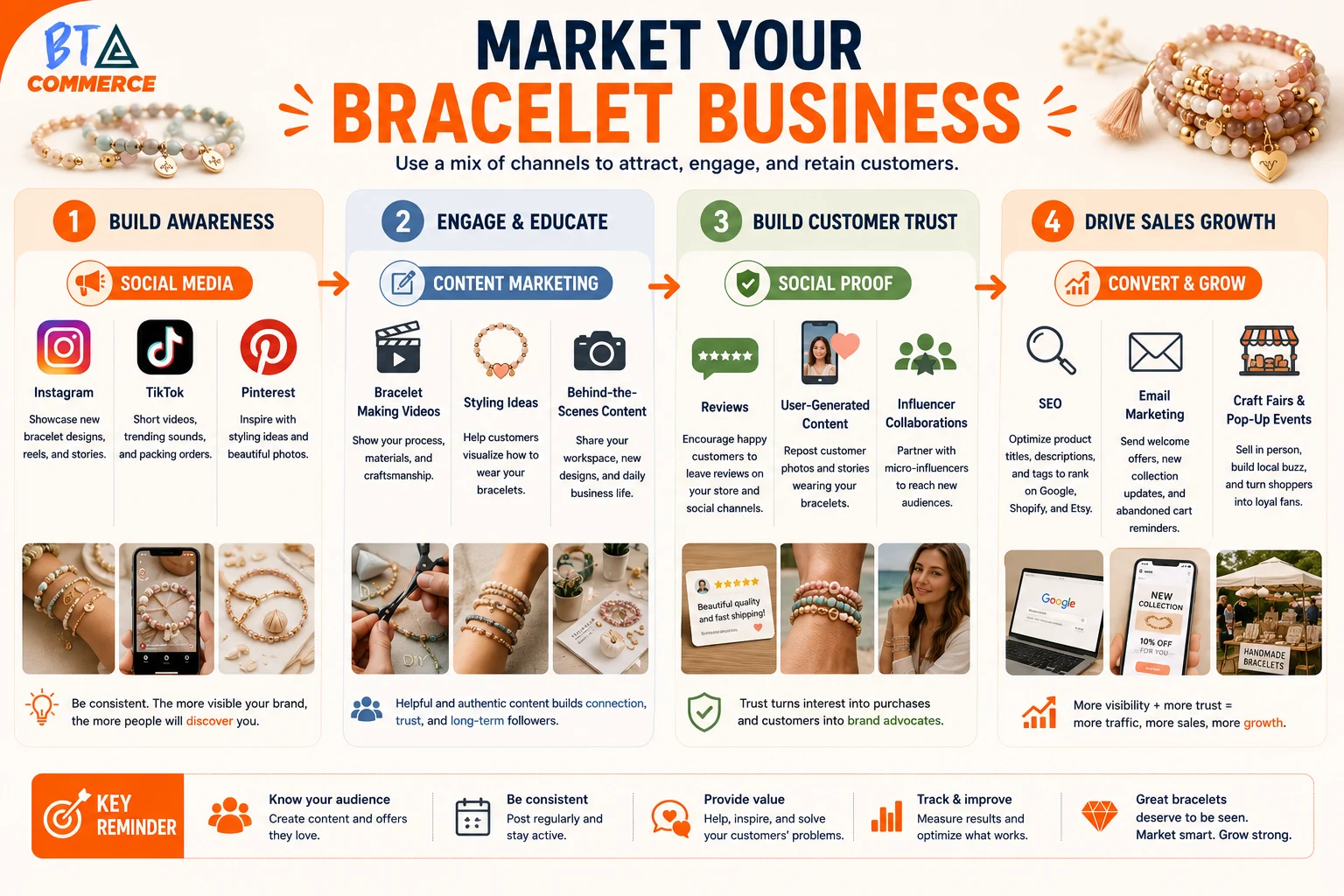
Rather than relying on a single marketing channel, combine organic content, search traffic, email marketing, and in-person events to create a sustainable customer acquisition strategy.
Step 7. Grow Your Bracelet Business
Growing a bracelet business means continuously improving your products, customer experience, and sales strategy. As your business gains traction, use customer insights and sales data to make smarter decisions instead of expanding too quickly.
Focus on these areas to scale your business:
- Deliver excellent customer service: Respond quickly to inquiries, resolve issues professionally, and provide a smooth buying experience that encourages repeat purchases.
- Collect customer reviews and feedback: Encourage reviews on Shopify, Etsy, or Google, then use customer feedback to improve your products and shopping experience.
- Track sales performance: Monitor your best-selling products, conversion rates, average order value, and customer behavior to identify growth opportunities.
- Introduce new bracelet collections: Expand your catalog with seasonal collections, limited editions, or complementary products such as necklaces, anklets, or earrings.
- Expand to additional sales channels: As production grows, consider selling through Amazon Handmade, local boutiques, gift shops, or wholesale partnerships to reach new customers.
- Stay updated with market trends: Follow emerging jewelry trends, monitor competitor activity, and experiment with new materials, colors, or designs to keep your collections relevant.
Successful bracelet businesses grow by testing, measuring, and improving over time. Continue refining your products, expanding your sales channels, and reinvesting in marketing to build a stronger brand and increase long-term revenue.
Common Mistakes to Avoid When Starting a Bracelet Business
Many new bracelet businesses struggle not because of poor products, but because of avoidable mistakes. Recognizing these issues early can help you save money, build customer trust, and grow more sustainably.
- Choosing a niche that’s too broad: Trying to sell every bracelet style makes it difficult to stand out. Focus on a specific audience and product category to build a stronger brand.
- Using low-quality materials: Weak clasps, poor elastic, or cheap components often lead to product failures, negative reviews, and fewer repeat customers.
- Underpricing your products: Pricing based only on material costs leaves little room for labor, packaging, overhead, and profit, making long-term growth difficult.
- Ignoring branding: An inconsistent brand, generic packaging, or forgettable visual identity makes your business less memorable and reduces customer trust.
- Taking poor product photos: Since jewelry is highly visual, low-quality images can significantly reduce clicks and conversions, regardless of product quality.
- Relying on a single sales channel: Selling only through Etsy, social media, or your own website limits growth and increases your business risk if traffic declines.
- Neglecting customer feedback: Reviews and customer comments can reveal issues with quality, sizing, packaging, or design that help you improve future collections.
Avoiding these common mistakes gives your bracelet business a stronger foundation, making it easier to attract customers, build loyalty, and grow profitably over time.
How to Start a Bracelet Business FAQs
Do I need a business license to sell bracelets?
It depends on your location and business structure. Many home-based businesses can start with minimal requirements, but you should check your local regulations for business registration, sales tax, and any required permits.
Can I start a bracelet business from home?
Yes. Many successful bracelet businesses begin from home with a small workspace, basic jewelry-making tools, and an online store. Starting from home helps keep startup costs low while you build your customer base.
How much does it cost to start a bracelet business?
You can start a small bracelet business from home with a relatively modest budget. Your startup costs will depend on the materials, tools, inventory, packaging, and selling platform you choose, and many entrepreneurs begin small before reinvesting their profits.
What type of bracelets sells the best?
Popular categories include personalized bracelets, handmade beaded bracelets, minimalist jewelry, friendship bracelets, and permanent jewelry. The best-selling products often combine current trends with a clearly defined target audience.
Is selling bracelets profitable?
Yes, a bracelet business can be profitable when you choose a strong niche, price your products correctly, and consistently attract customers through effective branding and marketing. High-quality products and repeat customers are key to long-term success.
Recommended Reading