Starting a boutique business is a great way to build a retail brand around carefully curated products, whether you sell clothing, jewelry, beauty items, or home décor. You can launch an online boutique, open a physical storefront, or combine both sales channels to reach more customers.
In this guide, BTA Commerce walks you through each step, from planning and sourcing inventory to launching and promoting your boutique.
What Is a Boutique Business?
A boutique business is a small retail business that offers a carefully curated selection of products for a specific target market. Unlike large retail stores that carry a wide range of merchandise, boutiques focus on a particular niche, such as clothing, jewelry, beauty products, gifts, or home décor, while delivering a more personalized shopping experience.
Boutiques can operate as an online boutique, a brick-and-mortar store, or both. Regardless of the sales channel, successful boutique businesses stand out through a unique brand identity, carefully selected inventory, and exceptional customer service.
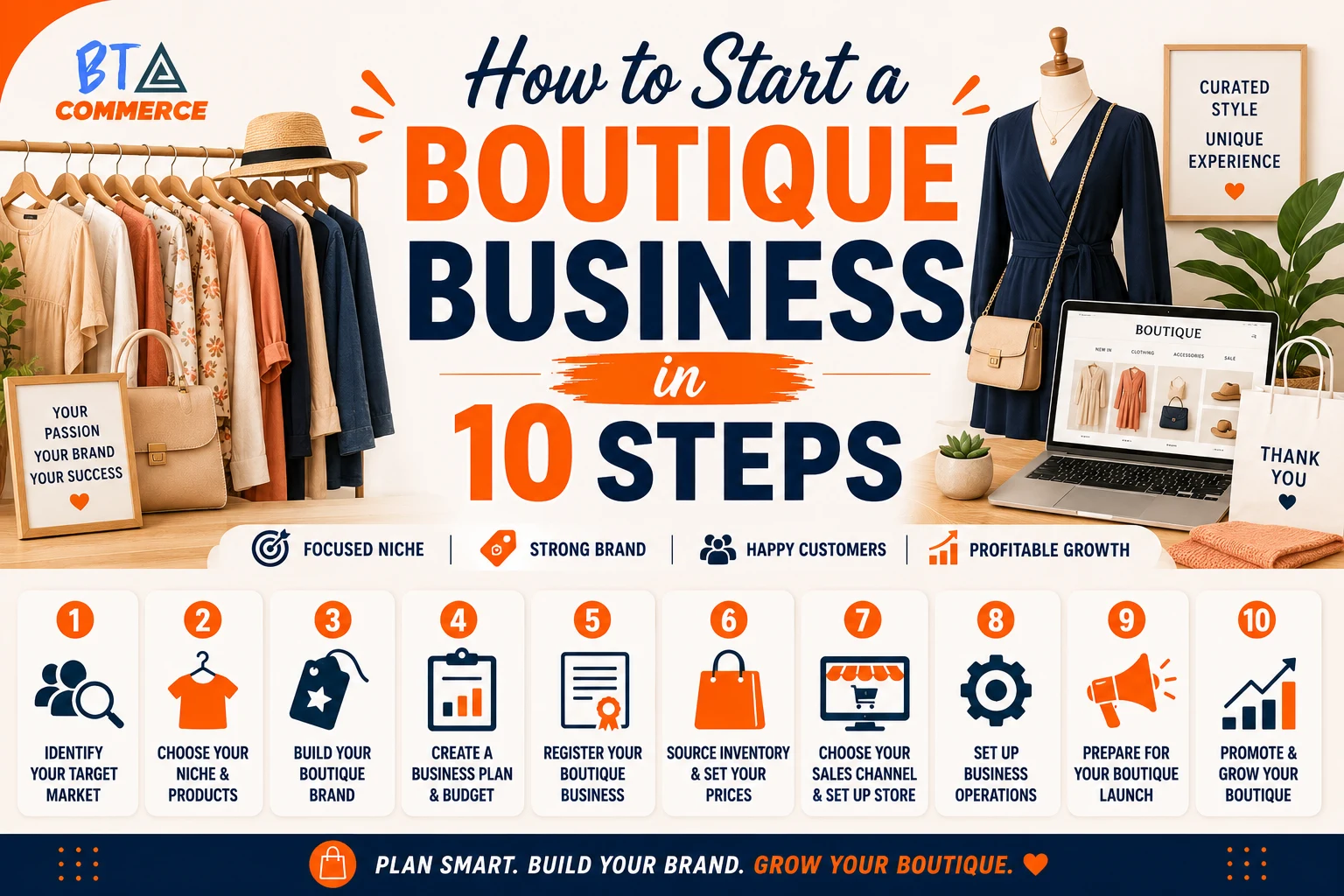
How to Start a Boutique Business in 10 Steps
Step 1. Identify Your Target Market
Understanding your target market is the foundation of a successful boutique business. The better you know your ideal customers, the easier it will be to choose the right niche, build a brand they connect with, and develop products that meet their needs.
Start your market research by answering these key questions:
- Who is your ideal customer? Define their age, lifestyle, income level, shopping budget, location, and interests. Understanding who they are and how much they are willing to spend will help you make better business decisions in the following steps.
- What are they looking for? Identify the products, styles, price range, and shopping experience your customers value most. For example, demand may exist for streetwear, sustainable fashion, handmade jewelry, or premium accessories, depending on your target audience.
- Who are your competitors? Analyze boutiques that serve a similar audience to understand their product selection, pricing, branding, and customer experience. Look for underserved customer needs or product categories that competitors are overlooking.
- Is there enough market demand? Validate your business idea using keyword research tools such as Google Trends and Google Keyword Planner, along with customer feedback and competitor analysis, to confirm there is consistent demand and room for long-term growth.
Completing this research before choosing your boutique niche and products will help you make more informed decisions throughout the rest of the planning process.
Step 2. Choose Your Boutique Niche and Products
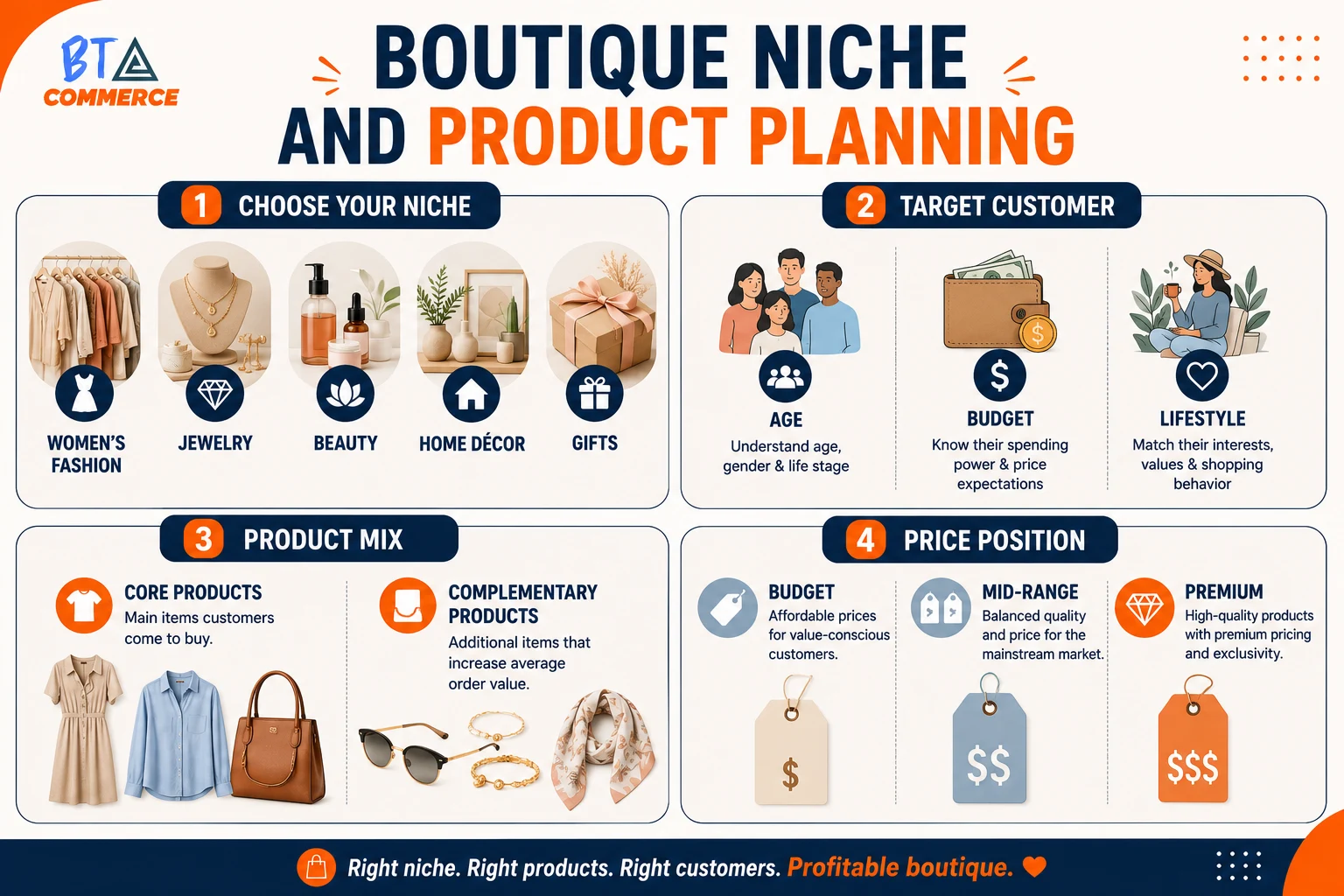
Once you understand your target market, choose a boutique niche that aligns with their needs and preferences. A clearly defined niche helps your business stand out, attract the right customers, and create a more memorable shopping experience.
When selecting your niche and product assortment, consider the following:
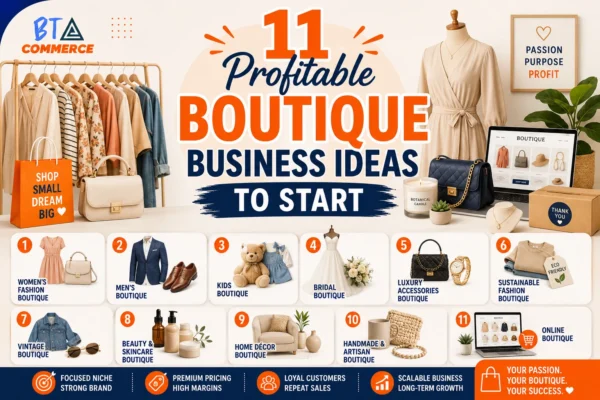
- Choose a specific niche: Rather than trying to appeal to everyone, focus on a well-defined category such as women’s clothing, sustainable fashion, athleisure, handmade jewelry, beauty products, gifts, or home décor.
- Build a complementary product assortment: Decide which products your boutique will carry and how they work together. For example, a clothing boutique may also offer shoes, handbags, and accessories to increase the average order value.
- Define your market position: Decide whether your boutique will serve the budget, mid-range, or premium market. This positioning will influence your product selection, sourcing strategy, and future pricing decisions.
- Plan your sourcing strategy: Source inventory from trusted wholesale suppliers, independent designers, local artisans, or wholesale marketplaces such as Faire and FashionGo. Before placing large orders, request product samples to evaluate quality and ensure they align with your brand.
Choosing the right niche and product mix early will make it easier to build a consistent brand and develop an inventory that keeps customers coming back.
Read more:
- 11 Profitable Boutique Business Ideas to Start
- Clothing Business Plan for Boutique and Online Fashion Brands
- 500+ Boutique Business Name Ideas: Unique, Cute & Trendy Names
- How to Start a Business in 10 Practical Steps to Succeed
Step 3. Build Your Boutique Brand
Your brand is more than a business name or logo—it’s the identity that shapes how customers recognize and remember your boutique. A strong brand creates trust, differentiates you from competitors, and delivers a consistent shopping experience across every sales channel.
Focus on these key branding elements:
- Define your unique brand identity: Establish what makes your boutique different, whether it’s sustainable fashion, luxury essentials, locally made products, or trend-focused collections. Your brand identity should reflect the needs of your target audience.
- Choose a memorable business name and logo: Select a name that is easy to remember, available as a domain name, and consistent across your website and social media platforms. Pair it with a professional logo that reflects your boutique’s style.
- Create a consistent brand aesthetic: Choose colors, typography, product photography, and packaging that work together to create a recognizable look and feel across your storefront, ecommerce website, and social media channels.
- Develop your brand voice and customer experience: Whether your brand is modern, elegant, playful, or minimalist, maintain a consistent tone in your marketing, customer service, and product descriptions. Every interaction should reinforce the personality of your boutique.
A clear and consistent brand helps customers recognize your boutique, builds loyalty, and makes your business more memorable in a competitive retail market.
Step 4. Create a Boutique Business Plan and Budget
A boutique business plan gives your business a clear direction, while a realistic budget helps you understand how much capital you’ll need before opening. Planning both early can reduce financial risk and make it easier to secure funding if needed.
Your business plan should include these key elements:
- Set clear business goals: Define your boutique’s mission, target market, niche, unique selling proposition (USP), product categories, and growth objectives. A well-structured business plan also strengthens your application if you seek financing from lenders or investors.
- Estimate your startup costs: Create a detailed budget covering inventory, store setup or website development, branding, equipment, licenses, marketing, rent, payroll, utilities, POS software, and working capital. As a general guideline, an online boutique may require $3,000–$10,000 in initial inventory, while a physical boutique often requires $15,000–$30,000+, depending on the size of the business.
- Forecast revenue and operating expenses: Estimate your monthly sales, recurring expenses, and expected profit. Conduct a break-even analysis to calculate how many products you need to sell each month to cover your fixed costs before generating profit.
- Plan your funding: Decide whether you’ll finance your boutique with personal savings, a small business loan, investors, or other funding sources. It’s also recommended to keep enough working capital to cover 3–6 months of operating expenses during the early stages.
Creating a realistic business plan and budget gives your boutique a stronger financial foundation and helps you make more confident business decisions.
Step 5. Register Your Boutique Business
Registering your boutique business allows you to operate legally, purchase inventory from wholesale suppliers, and protect your business as it grows. While legal requirements vary by location, most boutiques should complete these essential steps before launching.
Complete the following tasks:
- Choose a business structure: Select a legal structure that fits your business, such as Sole Proprietorship, Partnership, or Limited Liability Company (LLC). Many boutique owners choose an LLC because it provides liability protection while remaining relatively simple to manage.
- Register your business: Register your business with the appropriate state or local authority. If you operate under a different trading name, you may also need to register a Doing Business As (DBA) name where required.
- Apply for tax IDs, licenses, and permits: Depending on your location, you may need an Employer Identification Number (EIN), a Sales Tax Permit, a general business license, and other local permits. If you’re opening a physical boutique, check whether you also need zoning approval or a Certificate of Occupancy before opening your store.
- Protect your brand: Consider registering a trademark for your boutique name and logo as your business grows. Trademark protection can help prevent others from using a similar brand identity.
Completing these legal requirements before opening your boutique helps you avoid compliance issues, build credibility with suppliers, and establish a solid foundation for long-term growth.
Step 6. Source Inventory and Set Your Prices
Your inventory is the foundation of your boutique, and your pricing strategy determines whether your business will be profitable. Source products that match your brand, then set prices that cover your costs while remaining competitive.
To build a profitable inventory strategy:
- Find reliable suppliers: Find reliable suppliers: Source products from wholesale marketplaces, manufacturers, apparel trade shows such as MAGIC Las Vegas, or local designers. Platforms such as Faire and FashionGo make it easier to discover independent brands and boutique-ready products. If you want exclusive merchandise, consider partnering with local artisans or creating your own private-label products.
- Purchase your initial inventory: Start with a carefully curated collection instead of carrying too many products. Focus on your core categories, order samples to evaluate quality before purchasing in bulk, and offer complementary items that encourage larger purchases.
- Calculate your true product costs: Include more than just the wholesale price. Your total cost should account for shipping, packaging, product tags, duties, photography, and marketing expenses to ensure your pricing remains profitable.
- Set profitable retail prices: Many boutiques use a markup of 2.5× to 3× the wholesale cost to cover operating expenses, future markdowns, and maintain healthy profit margins. You can also apply psychological pricing, such as prices ending in .99 or .95, to make products more appealing.
- Review pricing regularly: Monitor sales performance and profit margins. If certain products remain unsold after several weeks, consider promotional pricing or clearance sales to free up cash for new inventory.
Step 7. Choose Your Sales Channel and Set Up Your Store
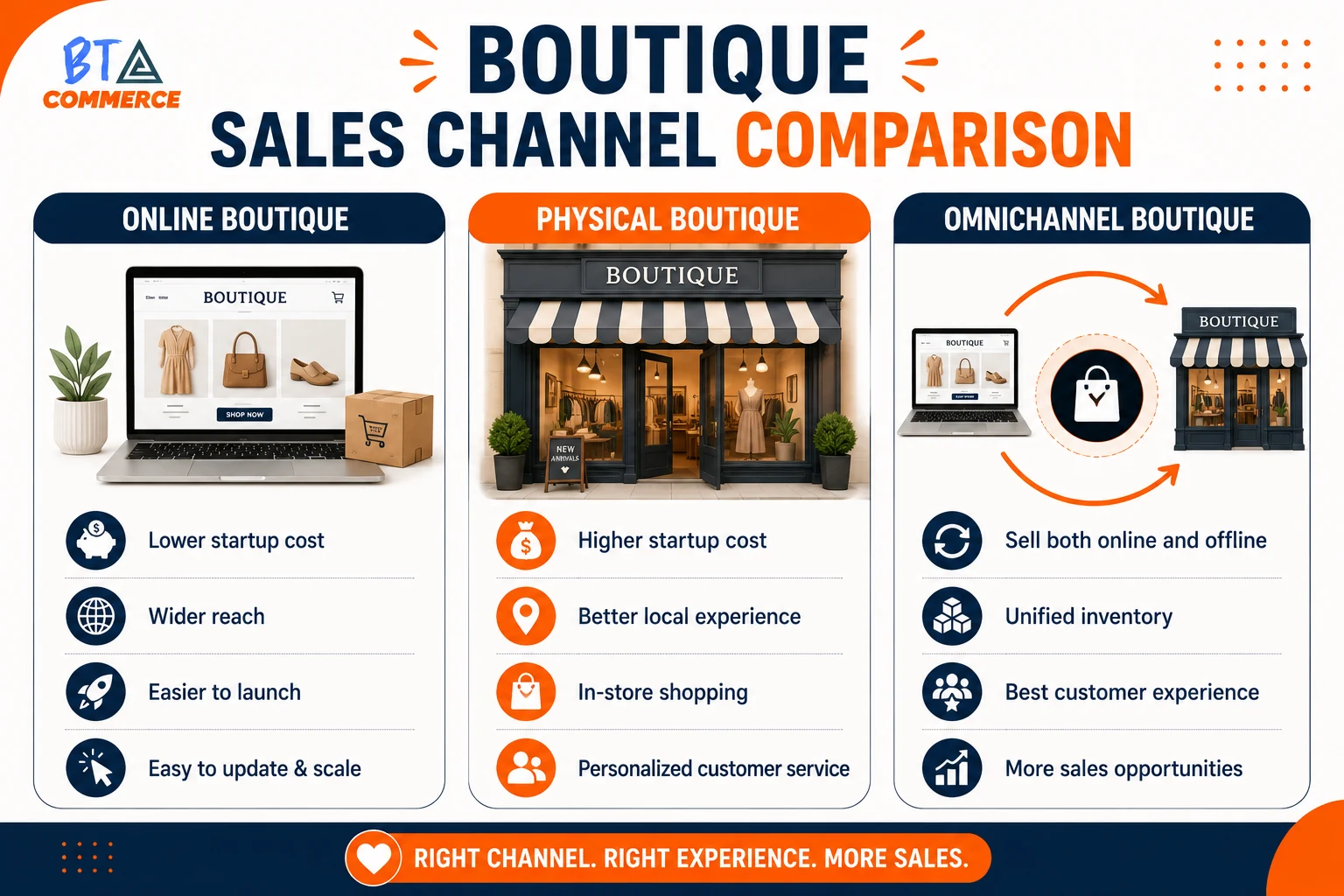
The next step is deciding where customers will shop. You can open an online boutique, a physical storefront, or combine both into an omnichannel business that reaches customers across multiple sales channels.
Set up your boutique by following these steps:
- Choose your sales channel: Decide whether an online boutique, a brick-and-mortar store, or a hybrid model best fits your budget, target audience, and long-term business goals. An online store generally requires lower startup costs, while a physical boutique offers a more personalized shopping experience.
- Select your location or ecommerce platform: For physical boutiques, look for locations with strong foot traffic, good visibility, convenient parking, and lease terms that fit your budget. If you’re selling online, choose an ecommerce platform such as Shopify, WooCommerce, or BigCommerce, and secure a domain name that matches your brand. If you plan to sell both online and offline, choose tools that can synchronize inventory across every sales channel.
- Design your shopping experience: Create a store layout or website that reflects your brand identity. For physical stores, focus on lighting, product displays, fitting rooms, and customer flow. For online boutiques, invest in professional product photography, mobile-friendly design, clear navigation, and simple checkout.
Step 8. Set Up Business Operations
Efficient operations are essential for delivering a smooth customer experience and supporting long-term growth. Set up the right systems early to manage inventory, process payments, fulfill orders, and deliver a consistent customer experience.
Organize your daily operations with these essentials:
- Choose a POS system: A reliable POS system helps you manage sales, inventory, customer information, and reporting from one place. If you operate both online and in-store, choose a system that synchronizes inventory across every sales channel in real time.
- Set up payment processing: Offer customers multiple payment options, including cash, credit and debit cards, gift cards, and digital wallets. Secure, flexible payment methods create a better shopping experience and reduce abandoned purchases.
- Organize inventory management: Track inventory accurately from the moment products arrive until they’re sold. Establish clear procedures for receiving shipments, tagging products, restocking shelves, fulfilling online orders, and monitoring inventory levels to prevent overstocking or stockouts.
- Create store policies and daily workflows: Prepare clear policies for shipping, returns, and exchanges before launch. Separate your personal and business finances with a dedicated business bank account, maintain organized bookkeeping records, and build reliable processes for working with suppliers and reordering inventory.
=> Read more: How to Start an Online Business (8-Step Beginner Guide)
Step 9. Prepare for Your Boutique Launch
Before opening your boutique to customers, make sure every part of your business is ready. Testing your operations in advance helps you identify issues early and creates a smoother launch experience.
Complete these final preparations:
- Stock your inventory: Receive your initial inventory, inspect product quality, attach price tags, organize product displays, and enter every item into your inventory management or POS system.
- Test your store and payment systems: Complete several test purchases to verify your checkout process, payment gateways (such as Stripe, PayPal, or Square), inventory synchronization, shipping calculations, and order confirmation emails. If you’re opening a physical boutique, test your Shopify POS or Square POS, barcode scanners, receipt printers, and payment terminals before opening day. Ask friends, family, or a small group of customers to place test orders and provide feedback before launch.
- Prepare your website or storefront: Ensure your store looks professional and is easy to navigate. Double-check product pages, pricing, store signage, business hours, shipping information, return policies, and contact details.
- Plan your opening event: Decide whether to host a soft opening to test daily operations with a limited audience or a grand opening to maximize publicity. Promote your launch through social media, email marketing, local events, or special opening-day offers to attract your first customers.
Step 10. Promote and Grow Your Boutique
Marketing doesn’t stop after launch. Consistent promotion and customer retention are essential for increasing sales and building a loyal customer base.
Grow your boutique with these strategies:
- Build your online presence: Create a professional website and maintain consistent branding across your website, Instagram Shopping, TikTok Shop, Facebook, Pinterest, and your Google Business Profile if you have a physical store.
- Use multiple marketing channels: Share new arrivals, styling tips, and behind-the-scenes content on social media. Complement organic content with local events, influencer collaborations, and targeted Google, Facebook, or Instagram ads to reach new customers.
- Increase customer loyalty: Launch a loyalty program with reward points, exclusive discounts, early access to new collections, or personalized offers based on purchase history to encourage repeat business.
- Measure and optimize performance: Track sales, inventory turnover, best-selling products, and marketing results. Reorder popular items quickly, clear slow-moving inventory, and adjust your marketing strategy based on customer data.
How to Start a Boutique Business FAQs
How much money does it cost to start a boutique business?
The cost to start a boutique business depends on whether you sell online, in a physical store, or both. An online boutique typically requires $1,500–$5,000, while a brick-and-mortar boutique often needs $10,000–$50,000+. Many independent clothing boutiques invest around $40,000–$50,000 to launch a physical retail store.
Typical startup costs include:
- Business registration and licenses: $100–$500
- Website, domain, and ecommerce platform: $100–$1,000
- Initial inventory: $500–$8,000+
- Branding and packaging: $50–$500
- Marketing and advertising: $300–$2,000
- Store lease, fixtures, and POS system (physical boutiques): $4,000–$25,000+
If you’re starting on a limited budget, consider launching online first with a small, curated inventory of 5–10 products. This lets you validate demand, reduce inventory risk, and reinvest profits before expanding into a larger product range or physical location.
Can I start a boutique business with no experience?
Yes. Many boutique owners start without previous retail experience. Focus on understanding your target market, choosing the right niche, sourcing quality products, and building a strong brand. You can learn inventory management and marketing as your business grows.
Is it better to open an online boutique or a physical boutique?
It depends on your budget and business goals. An online boutique has lower startup costs and can reach customers nationwide, while a physical boutique offers a more personalized shopping experience and stronger local brand recognition. Many successful boutiques eventually combine both through an omnichannel approach.
What products sell best in a boutique?
The best-selling products depend on your niche and target audience. Popular categories include women’s clothing, jewelry, handbags, shoes, beauty products, gifts, home décor, and seasonal accessories. Curated collections that match your brand typically perform better than offering a wide range of unrelated products.
How long does it take for a boutique to become profitable?
Most boutiques take 6 to 24 months to become consistently profitable, depending on startup costs, operating expenses, pricing strategy, inventory management, and marketing performance. Reaching profitability usually takes longer for physical stores than online boutiques.
Do I need a business license to open a boutique?
In most locations, yes. You may need a business license, tax registration, and other permits depending on your country, state, and local regulations. If you plan to sell taxable products, you’ll also typically need a sales tax permit or reseller certificate before opening your boutique.
Recommended Reading