Starting a catering business can be a rewarding way to turn your cooking skills into a profitable business. However, success depends on much more than preparing great food—it also requires careful planning, legal compliance, pricing, and effective marketing.
If you’re wondering how to start a catering business, this guide covers the essential steps, from choosing a niche and setting up your business to finding clients and growing sustainably.
What Is a Catering Business?
A catering business is a food service business that prepares, transports, and serves meals for pre-booked events rather than operating as a traditional restaurant. Depending on the client’s needs, services may include menu planning, food delivery, event setup, serving staff, and cleanup.
Unlike restaurants that serve walk-in customers, catering businesses operate by reservation for corporate events, weddings, private parties, and other special occasions.
This business is ideal for chefs, home cooks, restaurant professionals, and entrepreneurs who want to turn their culinary skills into a scalable business. It can start small and expand over time by serving larger events and offering additional services.
Read more:
- How to Start a Business in 10 Practical Steps to Succeed
- How to Start a Food Business Step-by-Step Guide
How to Start a Catering Business in 7 Steps
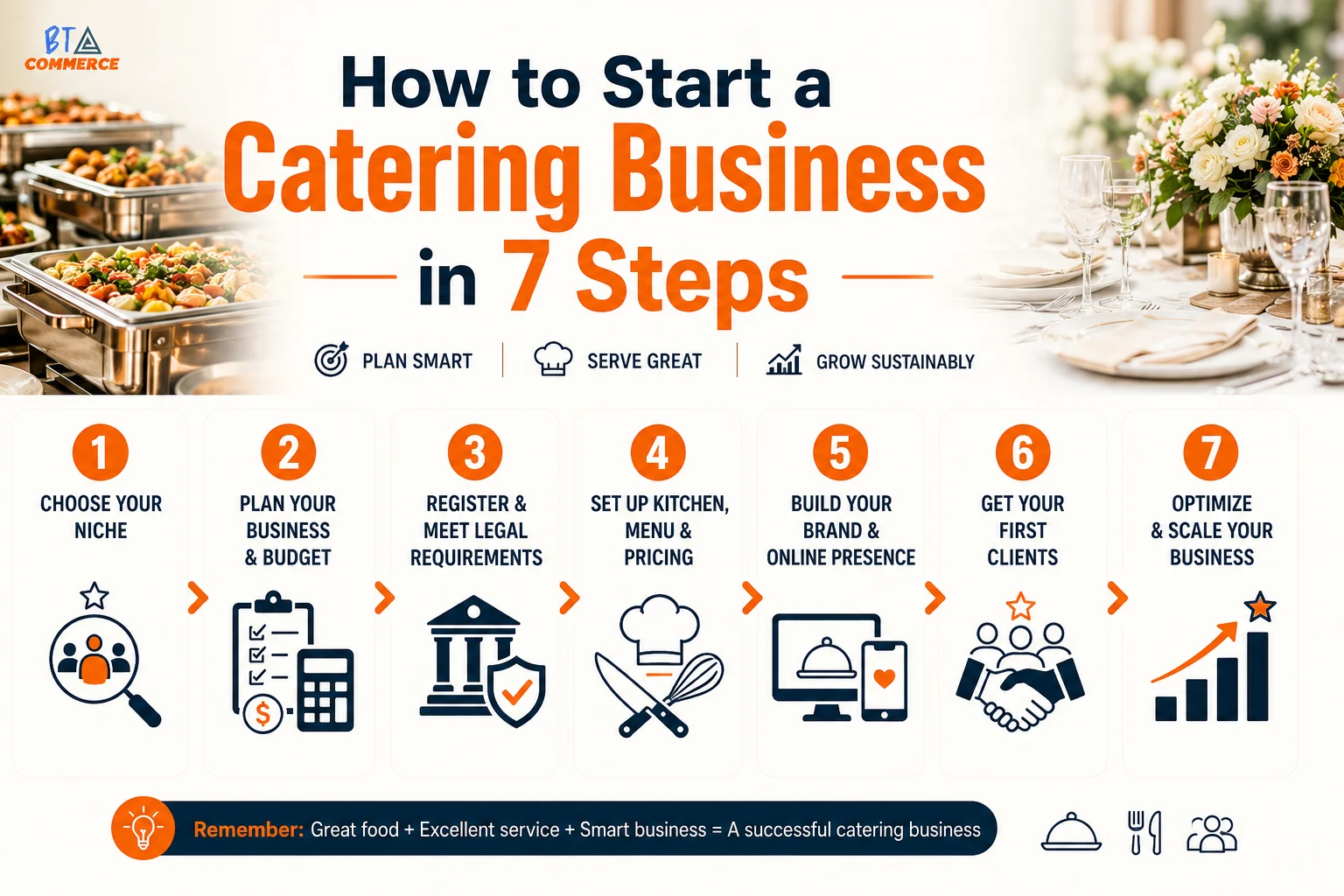
Step 1. Research the Market and Choose Your Catering Niche
Before starting your catering business, research your local market to understand customer demand and identify opportunities that competitors may have overlooked. Choosing a clear niche from the beginning will make it easier to market your services and build a loyal customer base.
When researching your market, focus on:
- Compare 5–10 local competitors, including their menus, pricing, service styles, and customer reviews.
- Identify service gaps, such as limited corporate lunch delivery, dietary-friendly menus, or late-night catering.
- Define your target customers, such as corporate clients, wedding couples, private event hosts, or community organizations.
Based on your research, choose a catering niche that matches both market demand and your expertise. For example, you might specialize in corporate catering, wedding catering, drop-off catering, or cuisine-specific and dietary-focused services like BBQ, vegan, or gluten-free catering.
Step 2. Create a Catering Business Plan and Budget
A well-prepared business plan turns your catering idea into a practical roadmap and helps you secure funding if needed. It should explain how your business will operate, who it will serve, and how it will generate profit. You can also use free planning resources from the U.S. Small Business Administration (SBA) when creating your plan.
Your business plan should include:
- Business overview: Executive summary, goals, and unique value proposition.
- Business concept: Catering niche, target market, and competitive positioning.
- Operations plan: Kitchen setup, Ingredient sourcing, inventory management, staffing and transportation.
- Marketing plan: Customer acquisition strategy and sales channels.
- Financial plan: Startup costs, operating expenses, revenue projections, profit margins, and funding requirements.
Estimate your startup budget before launching. Most catering businesses require $4,000–$10,000 to get started, depending on the equipment, kitchen arrangement, and business model.
Typical startup expenses include:
- Commercial kitchen rental.
- Catering equipment.
- Business registration and licenses.
- Food safety certifications.
- Insurance.
- Initial food inventory, packaging, transportation, marketing, and branding.
If additional capital is needed, consider personal savings, a small business loan, or investors. A realistic budget helps you forecast cash flow, secure financing, and avoid operating at a loss.
Step 3. Register Your Business and Meet Legal Requirements
Before serving customers, make sure your catering business complies with all applicable business and food safety regulations. Requirements vary by state and local authority, but most businesses need to complete the following steps:
- Choose a legal structure, such as an LLC, sole proprietorship, or corporation.
- Register your business and obtain an Employer Identification Number (EIN) if required.
- Apply for business licenses, food service permits, and food handler certifications, such as ServSafe, where required.
- Prepare food in a licensed commercial kitchen or commissary kitchen where required.
- Purchase general liability insurance to protect your business from property damage and foodborne illness claims. Some venues may also require a Certificate of Insurance (COI) before allowing you to cater events.
Completing these requirements protects your business, ensures compliance, and builds trust with clients and event venues.
Step 4. Set Up Your Kitchen, Equipment, Menu, and Pricing
Once your business is legally established, prepare your operations so you can deliver events efficiently and profitably.
Choose a kitchen that complies with local health codes and fits your budget:
- Shared-use kitchen or commissary kitchen, typically $300–$1,500 per month (or $20–$60 per hour).
- Leased commercial kitchen.
- Restaurant partnership for off-hours kitchen access.
- Home kitchen, only where local laws allow.
Invest in equipment that supports batch preparation and food safety, including chef’s knives, cutting boards, mixing bowls, digital food scales, instant-read thermometers, Cambro food carriers, coolers, and chafing dishes.
Keep your menu focused with 3–5 package-based options, such as boxed lunches, buffet packages, taco bars, or specialty event menus. Using shared ingredients across multiple dishes simplifies production and reduces food waste.
Price every package by factoring in Cost of Goods Sold (COGS), labor, kitchen rental, packaging, delivery, setup, and overhead. Many caterers target a food cost percentage of around 25%, then offer tiered packages to serve different budgets while maintaining healthy profit margins.
Step 5. Build Your Brand and Online Presence
Before promoting your business, create a professional brand that makes it easy for customers to find, evaluate, and contact you.
Build the essential marketing assets:
- A memorable business name and consistent visual branding.
- A website featuring your catering services, package options, sample menus, dietary accommodations, food photos, customer reviews, and a booking or inquiry form.
- A Google Business Profile optimized for Google Search and Google Maps.
- Social media profiles, particularly Instagram and Facebook, to showcase food, event setups, and behind-the-scenes content.
A professional online presence builds credibility and gives potential clients the information they need before contacting you.
=> Read more: 333+ Catering Business Name Ideas & How to Choose One
Step 6. Get Your First Catering Clients
With your business ready to operate, focus on generating your first bookings through relationships, referrals, and targeted outreach.
Effective customer acquisition strategies include:
- Build partnerships with venue coordinators, event venues, wedding planners, florists, photographers, and DJs to earn referrals and join preferred vendor lists.
- Join local business groups, such as Chambers of Commerce or BNI, to connect with companies that regularly purchase catering services.
- Launch a referral program that rewards existing customers for recommending new clients.
- Reach out directly to local businesses with corporate lunch packages or introductory offers. Once a client is ready to book, use a clear catering contract that outlines pricing, payment terms, guest counts, cancellations, and event responsibilities.
- Cater community events or nonprofit functions to build your portfolio, collect testimonials, and gain professional photos.
You can also expand your reach by listing your business on ezCater, Yelp, or Thumbtack while continuing to grow direct bookings through your own website.
Step 7. Optimize Operations and Scale Your Business
As your client base grows, focus on improving efficiency and increasing customer lifetime value rather than simply booking more events.
To scale successfully:
- Standardize recipes, prep schedules, packing checklists, and event workflows.
- Deliver consistent customer service and follow up within 24 hours after each event to collect feedback.
- Use a CRM system to manage repeat customers, recurring events, and seasonal opportunities.
- Increase revenue by offering beverage packages, dessert stations, equipment rentals, or premium catering packages.
- Expand production capacity by hiring staff, increasing commercial kitchen space, or moving to a ghost kitchen when demand exceeds your current operation.
A systemized business with efficient workflows and loyal repeat customers is easier to scale and more profitable over the long term.
Can You Start a Catering Business From Home?
Yes, you can start a catering business from home, but whether you can prepare food in your home kitchen depends on your local laws and health regulations. Some areas allow certain home-based food businesses under cottage food laws, while others require all catering food to be prepared in a licensed commercial kitchen or commissary kitchen.
Before launching a home-based catering business, make sure you:
- Check local regulations to determine whether home-based catering is allowed, including zoning rules, health department requirements, and applicable cottage food laws.
- Register your business and obtain any required business licenses, Employer Identification Number (EIN), food service permits, and food handler certifications.
- Arrange a compliant kitchen if home food preparation isn’t permitted. Many new caterers rent a shared-use commercial kitchen or commissary kitchen to meet health code requirements while keeping startup costs low.
- Purchase business insurance, especially general liability insurance, to protect your business from property damage and food-related claims.
- Start with a focused menu that is easy to prepare, transport, and scale. When setting prices, include ingredient costs, labor, packaging, delivery, and overhead to ensure every order remains profitable.
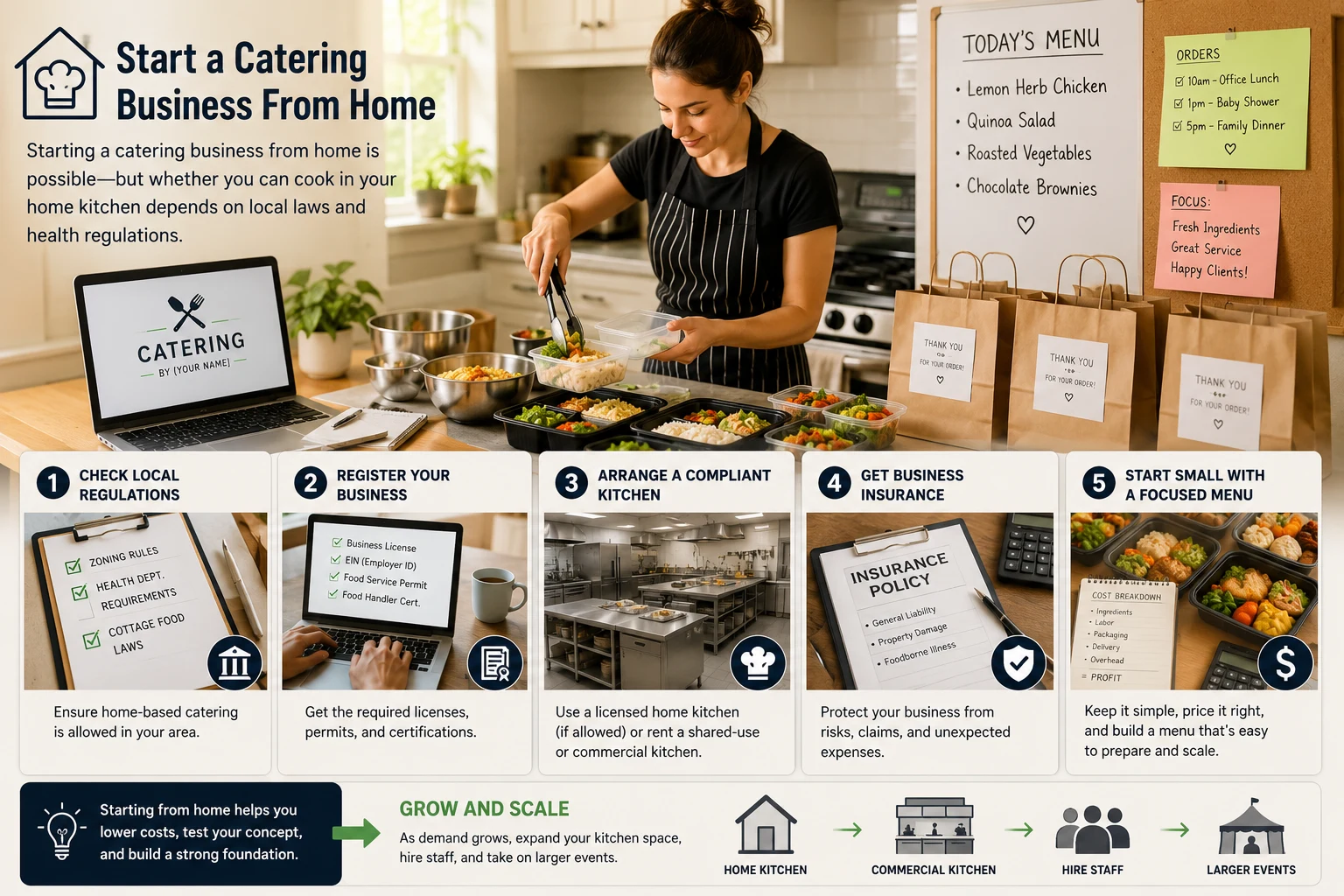
Starting from home can significantly reduce overhead and allow you to validate your business before investing in dedicated facilities. As demand grows, many successful caterers expand by renting commercial kitchen space, hiring staff, and serving larger events.
How to Start a Catering Business FAQs
What do you need to start a catering business?
You need a business plan, the required licenses and permits, a licensed kitchen, essential equipment, startup capital, and a plan to attract customers.
How do you start a small catering business?
Choose a specific niche, offer a simple menu, serve small events, keep startup costs low, and expand as your client base grows.
How do you run a successful catering business?
Focus on high-quality food, reliable service, effective cost management, and building long-term customer relationships.
What are the best tips for starting a catering business?
Research your local market, price your services correctly, market your business consistently, and deliver an excellent customer experience.