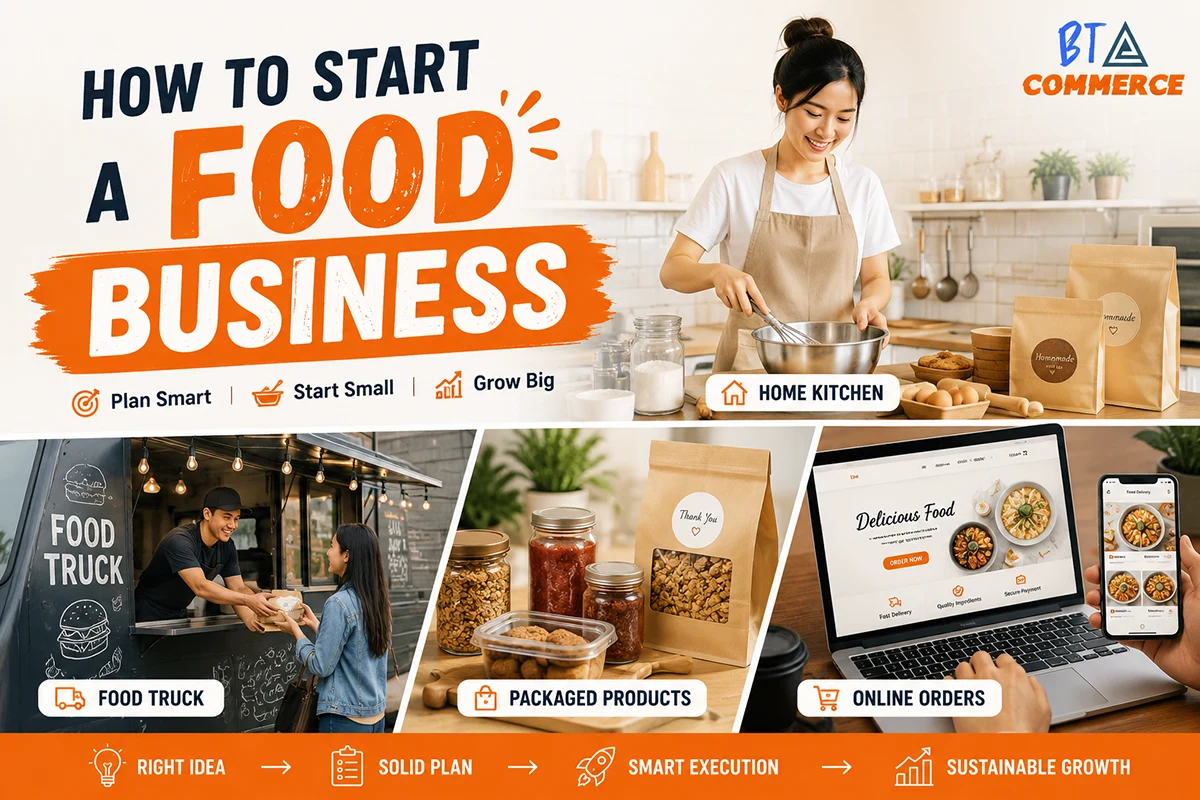
Many people assume that learning how to start a food business means opening a full restaurant, investing heavily in equipment, and managing a large team from day one. In reality, entering the food industry can be much more flexible and accessible than most people expect.
You can start with a home-based kitchen, packaged food products, a food truck, catering services, or an online food store. This guide walks you through the entire process—from choosing the right business idea and handling legal requirements to setting up operations and attracting your first customers.
Why Start a Food Business Today?
Starting a food business is more accessible today than it was in the past. You no longer need a large restaurant space or a major investment to enter the market. Many entrepreneurs now begin with smaller, lower-risk models and expand as demand grows.
- Lower startup barriers: You can start with a home kitchen, food truck, pop-up concept, or shared commercial kitchen instead of opening a full restaurant.
- More ways to sell online: Food businesses can reach customers through online stores, delivery platforms, subscriptions, and social media channels.
- Flexibility to start small and scale gradually: Test products locally, gather customer feedback, and grow your operations over time.
- Creative and branding opportunities: From meal prep services to packaged snacks and specialty foods, there are many ways to build a unique brand around your ideas.
- Consistent consumer demand: Food is part of everyday life, creating ongoing opportunities for businesses that can solve customer needs or offer something distinctive.
=> Read more:
- 750+ Food Business Name Ideas: Unique, Catchy & Creative
- How to Start a Business in 10 Practical Steps to Succeed
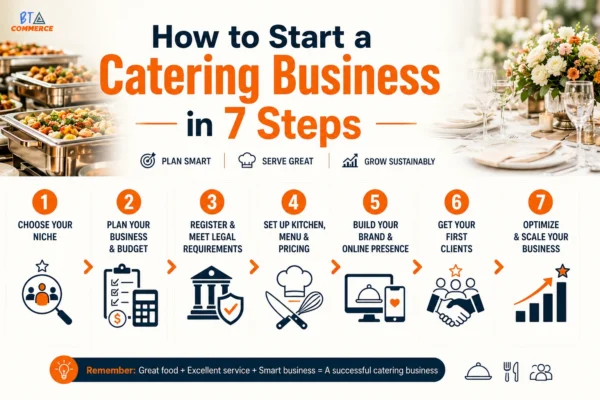
- How to Start a Catering Business in 7 Steps
Step 1: Choose the Right Food Business Idea
Choosing the right food business idea is one of the most important decisions you’ll make early on. The best option is not always the one with the biggest market—it is the one that matches your budget, skills, available resources, and long-term goals.
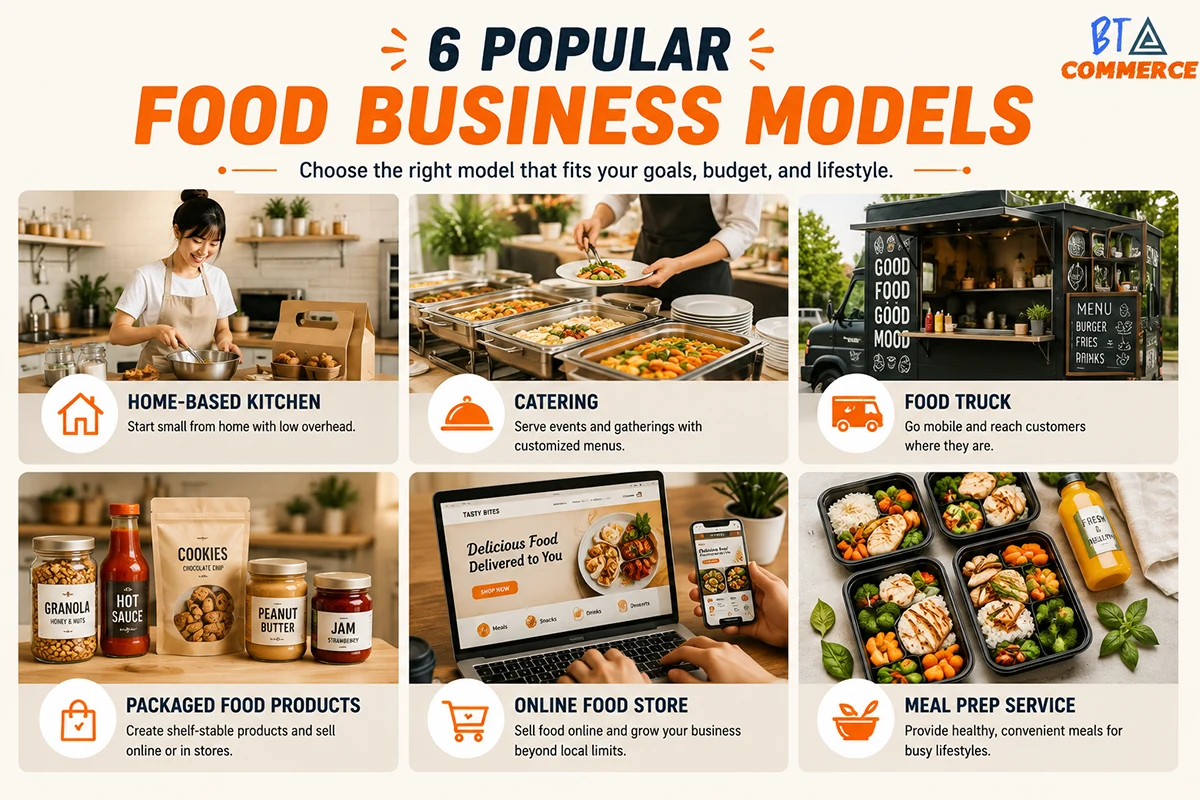
Popular Food Business Models
- Home-based food business: A common starting point for beginners because startup costs are usually lower. Depending on local regulations, you may be able to prepare and sell approved food products directly from your home kitchen.
- Catering: A flexible model that allows you to create custom menus for events, parties, or corporate clients without operating a traditional restaurant.
- Food truck: A mobile option that typically requires less investment than a full restaurant while allowing you to test different locations and customer markets.
- Packaged food products: Products such as sauces, snacks, baked goods, or specialty foods can be sold through retail stores, local markets, or online channels.
- Online food store: Selling directly through an ecommerce website can help you reach customers beyond your local area and create recurring sales opportunities.
- Meal prep service: Targets customers looking for convenient ready-to-eat meals, including busy professionals and health-conscious consumers.
=> Read more: 15 Food Business Ideas to Start and Grow Profitably
How to Validate Your Idea Before Investing
Before spending heavily on equipment, inventory, or commercial space, make sure your idea has real market potential.
- Target audience: Identify exactly who your customers are and understand their preferences, buying habits, and specific needs.
- Competition: Research similar businesses and identify gaps where you can offer better products, pricing, convenience, or customer experience.
- Demand: Test your concept on a smaller scale through pre-orders, local markets, pop-up events, or limited product launches.
- Profit potential: Calculate ingredient costs, packaging, labor, and operating expenses to ensure your pricing remains competitive while still generating profit.
Step 2: Create a Simple Food Business Plan
A food business plan does not need to be long or overly complicated. Even a simple plan can help you stay focused, organize your ideas, and make better decisions as your business grows. Think of it as a roadmap that outlines what you plan to sell, who you want to serve, and how you intend to generate revenue.
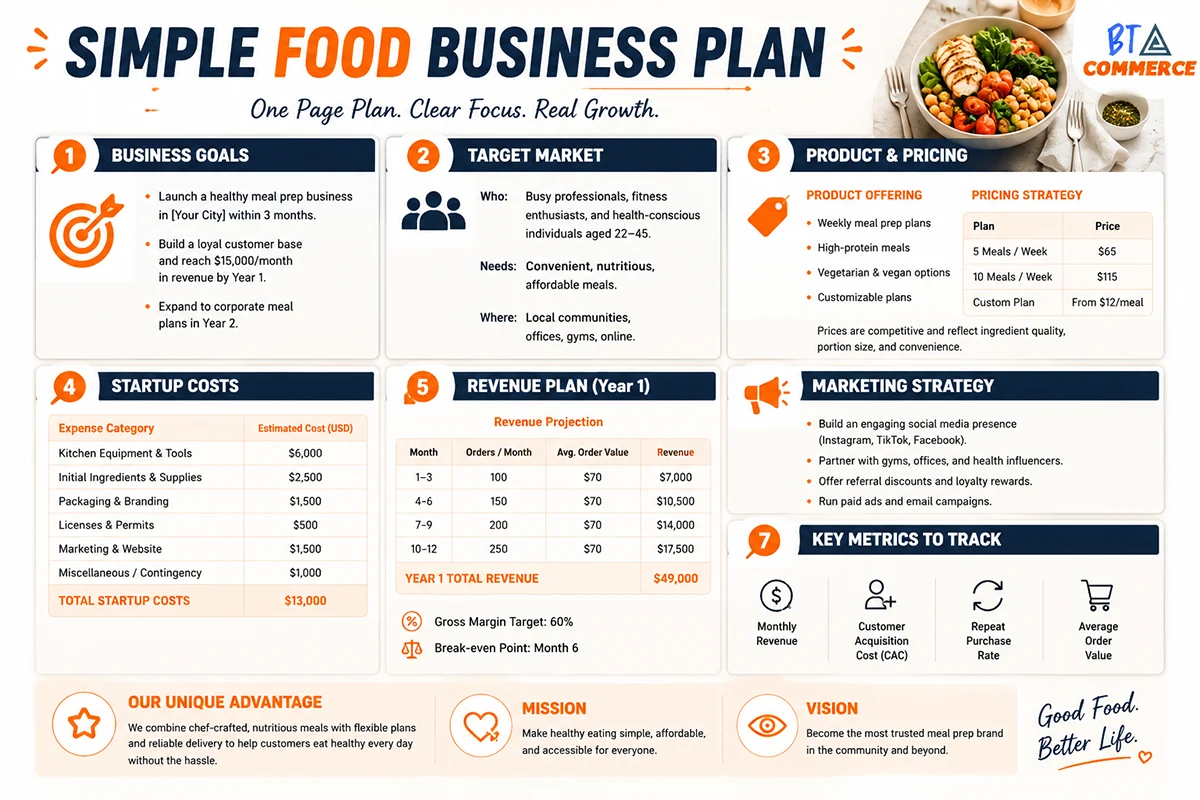
Include these key elements in your plan:
- Business goals: Define what you want to achieve in the short and long term. For example, your goal could be launching locally within three months or expanding into multiple sales channels within a year.
- Target market: Identify who your ideal customers are and understand their preferences, buying habits, and spending behavior.
- Product offering: List the products or services you plan to sell and highlight what makes them different from competitors.
- Pricing: Set prices that remain competitive while covering ingredient costs, packaging, labor, and operating expenses.
- Startup costs: Estimate your initial expenses, including equipment, licenses, inventory, packaging, marketing, and workspace costs.
- Revenue plan: Outline how your business will generate income and estimate realistic sales targets during the early stages.
Keep your first business plan practical rather than perfect. You can refine and expand it as you gather customer feedback and better understand your market.
=> Explore more: How to Write a Business Plan for Startups & Small Businesses
Step 3: Calculate Startup Costs and Funding Needs
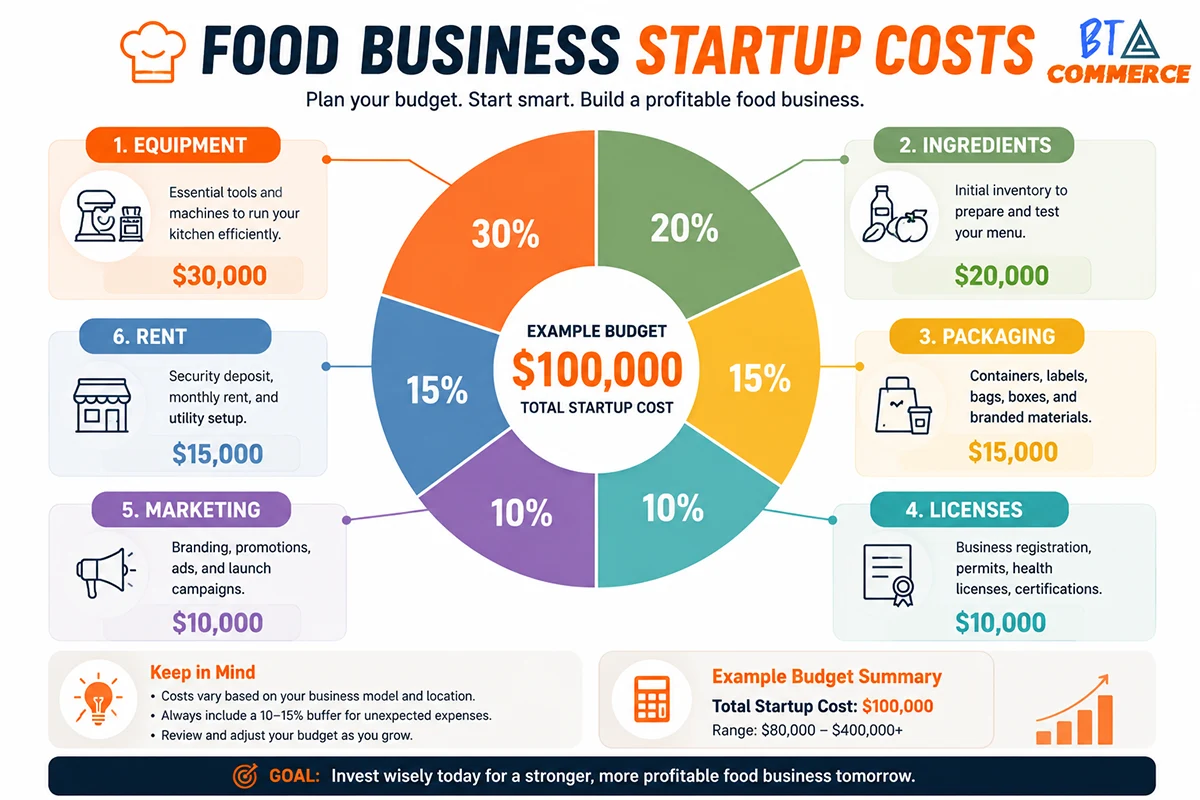
Estimating startup costs early helps you plan realistically and avoid budget issues later. Costs vary significantly by business model: a home-based setup may require a smaller investment, while food trucks or restaurants often need much larger budgets. Industry estimates suggest startup costs can range from $80,000 to over $400,000, depending on equipment, location, and operating scale.
Common Food Business Expenses
To build a realistic budget, account for both initial setup costs and ongoing operating expenses.
- Equipment: Include items such as ovens, refrigerators, cooking tools, POS systems, food preparation equipment, and other essential business tools. This is often one of the largest upfront expenses.
- Ingredients: Calculate the cost of your initial inventory and estimate ongoing ingredient expenses needed for daily operations.
- Packaging: Include containers, labels, boxes, bags, cups, and branded materials. Small packaging costs can add up quickly as order volume grows.
- Licenses: Budget for business registration fees, health permits, food handling certifications, and any required local licenses.
- Marketing: Include costs for branding, website development, social media campaigns, advertising, and launch promotions.
- Rent: Consider security deposits and recurring payments if you plan to use a commercial kitchen, office, retail location, or production space.
Ways to Fund a Food Business
After estimating your startup costs, identify funding options that fit your business goals and financial situation.
- Personal savings: Using your own money gives you full control of the business and avoids debt obligations.
- Small business loans: Banks and small business programs can provide funding, although they often require a business plan, financial records, and a good credit history.
- Investors: Angel investors or business partners may provide capital in exchange for equity or future returns.
- Grants: Some government agencies and organizations offer grants for small businesses that do not need to be repaid. Research local and industry-specific opportunities that may fit your business type.
Step 4: Decide Where and How You Will Operate
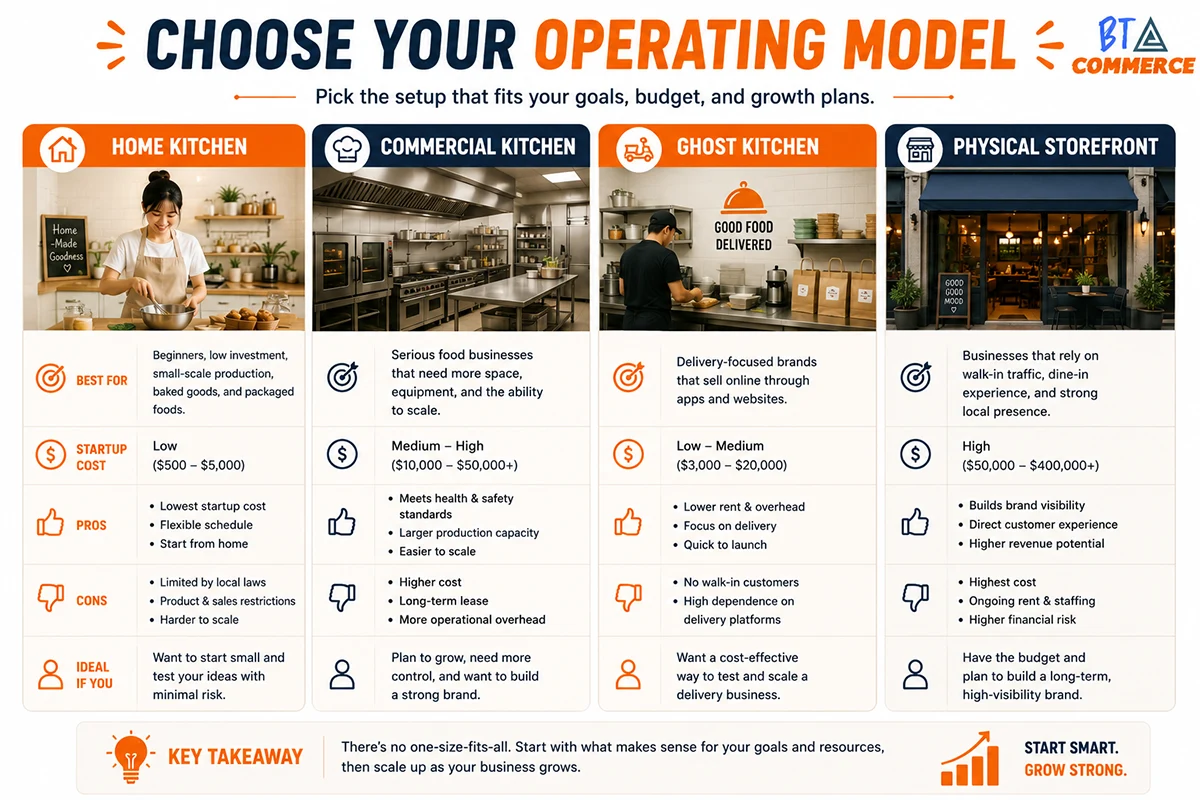
Your operating model affects more than just where you make or sell food. It influences startup costs, daily workflow, customer reach, and licensing requirements. Choose a setup that aligns with your product type, target market, and available budget.
Home-Based vs Commercial Kitchen
Both options have advantages depending on your business stage and goals.
- Home-based kitchen: Usually requires a smaller investment and works well for baked goods, packaged foods, or small-scale production. However, local regulations may limit the types of products you can sell and how much you can produce.
- Commercial kitchen: Provides access to professional equipment and often meets health and safety requirements from the beginning. This option can be a better fit if you need more production capacity or plan to scale faster.
Physical Location vs Online Selling
The way you reach customers can directly impact operating costs and growth opportunities.
- Physical location: A storefront, food truck, or local market presence creates direct interaction with customers and helps build local visibility. However, it usually comes with higher costs such as rent and staffing.
- Online selling: Ecommerce websites, delivery platforms, and subscriptions can help you reach a larger audience without maintaining a large physical space.
When a Ghost Kitchen Makes Sense
A ghost kitchen is a delivery-only setup without a traditional dining area. It can be a practical option if your business relies mainly on online orders and delivery services.
This model often works well for businesses that want to launch quickly, reduce overhead expenses, or test demand before investing in a full restaurant location. However, it also means relying heavily on delivery platforms and having fewer opportunities for in-person brand experiences.
Step 5: Register Your Business and Get Required Licenses
Registering your business and obtaining the necessary permits is an essential step before selling food to customers. While requirements vary by location, setting up the right legal structure and securing the proper licenses helps protect your business, reduce liability risks, and ensure compliance with local health regulations.
Choose Your Business Structure
The structure you choose affects taxes, ownership, liability protection, and administrative requirements.
- Sole proprietorship: The simplest structure to establish and manage. However, there is no legal separation between your personal and business assets, meaning you may be personally responsible for debts or legal claims.
- LLC (Limited Liability Company): One of the most common options for small food businesses because it separates personal assets from business liabilities while offering flexible tax treatment.
- Partnership: Designed for businesses owned by two or more people. Partners typically share responsibilities, profits, and legal obligations based on the partnership agreement.
- Corporation: Provides stronger liability protection and can support larger growth plans, but usually involves more formal requirements such as corporate records, reporting obligations, and separate tax structures.
Common Licenses Food Businesses May Need
Food businesses often need multiple permits before launching operations. The exact requirements depend on your business model, location, and the products you sell.
- Business license: Required by many cities or counties to legally operate within their jurisdiction. Applications are typically submitted through local government offices.
- Food handling permit: Often required for owners and employees to demonstrate knowledge of food safety practices, sanitation standards, and proper food preparation procedures.
- Health permits: Usually issued by local health departments after inspections confirm that your kitchen or production space meets safety and sanitation requirements.
- Food processing license: May be required if your business manufactures, packages, processes, or distributes food products for retail or wholesale purposes.
- Sales tax permit: Required to legally sell food and beverages and collect sales tax where applicable. Registration is commonly completed through your state’s tax authority or Department of Revenue.
Depending on your setup, additional approvals such as zoning permits, fire inspections, or home-based food operation registrations may also apply. Before signing a lease or purchasing equipment, verify local requirements to avoid unexpected compliance issues later.
Step 6: Prepare Equipment and Find Suppliers
Preparing your equipment and supplier network turns your business plan into an operational system. The goal is not simply to buy equipment and order ingredients—it is to create a setup that balances cost, efficiency, food safety requirements, and future growth.
Essential Equipment Checklist
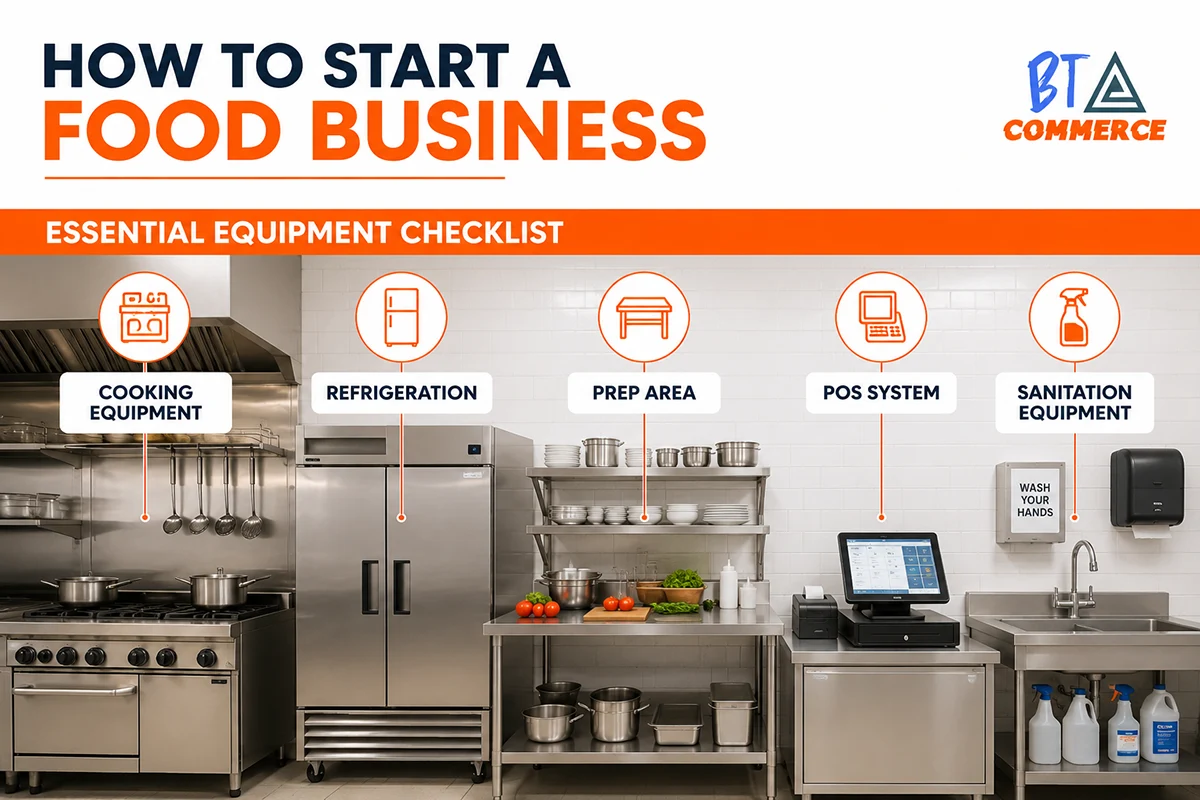
The equipment you need will vary depending on your menu and business model, but most food businesses require these core categories:
- Cooking equipment: Ovens, ranges, grills, fryers, and specialized cooking equipment should match your expected production volume. Purchasing oversized equipment too early can increase both upfront and operating costs.
- Refrigeration equipment: Reach-in refrigerators, freezers, refrigerated prep tables, and ice machines help maintain product quality and food safety standards. Refrigeration failures can quickly result in inventory losses, making reliability more important than price alone.
- Food preparation equipment: Commercial mixers, food processors, slicers, stainless steel prep tables, and measuring tools improve workflow and maintain consistency across products.
- Smallwares and kitchen tools: Knives, cutting boards, pots, pans, storage containers, and serving utensils may seem minor individually, but underestimating these items can create unexpected expenses.
- Sanitation equipment: Three-compartment sinks, commercial dishwashing systems, storage racks, and cleaning tools help maintain hygiene standards and support health inspections.
- Technology and operations tools: POS systems, kitchen display systems, receipt printers, and inventory software can reduce operational errors and improve order management.
- Compliance requirements: Verify that food-contact equipment carries certifications such as NSF, UL Sanitation, ETL Sanitation, or 3-A sanitary standards, as some health departments require approved commercial-grade equipment. Household appliances may not satisfy local commercial food regulations.
Tip: Durable items such as shelving, work tables, and basic cooking equipment can often be purchased used to reduce startup costs. However, refrigeration units and technology systems are generally safer long-term investments when purchased new because unexpected downtime can interrupt operations.
How to Choose Reliable Suppliers
Reliable suppliers influence product quality, delivery consistency, and customer experience. Evaluate suppliers beyond pricing before entering long-term agreements.
- Product quality and consistency: Request samples and detailed specifications before committing. Variations in ingredients can affect taste, appearance, and consistency across orders.
- Delivery reliability: Confirm delivery schedules, lead times, and emergency restocking options. A low-cost supplier provides little value if frequent delays disrupt operations.
- Minimum order quantities (MOQs): Review order minimums and payment terms to ensure they align with your inventory needs and cash flow.
- Certifications and documentation: Request ingredient specifications, allergen statements, and food safety documentation when necessary, particularly for packaged or processed products.
- Warranty and post-sale support: For equipment vendors, review warranty coverage, repair response times, and maintenance services before purchasing.
- Scalability: Choose suppliers capable of supporting both small initial orders and larger production volumes as your business expands.
Before negotiating with suppliers, prepare a purchasing specification sheet that includes product grade, quantity requirements, packaging preferences, and delivery expectations. Clear specifications make vendor comparisons more accurate and improve your negotiating position.
Step 7: Set Up Sales and Payment Systems
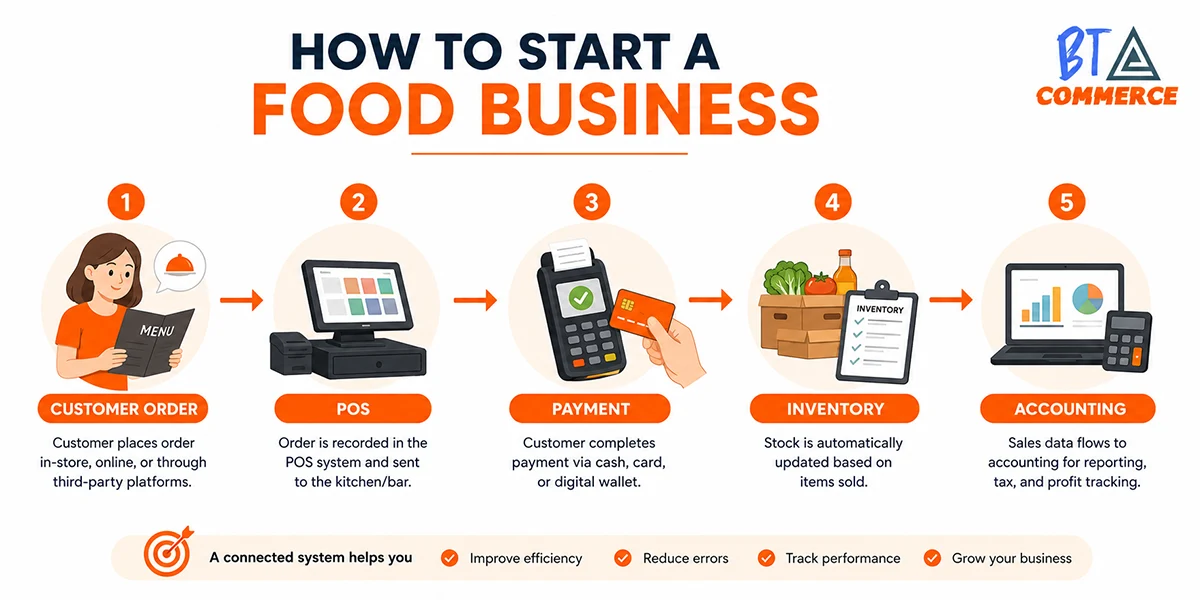
Your sales and payment system affects more than checkout speed. The right setup can improve order accuracy, simplify inventory tracking, and reduce operational issues as your business grows.
- Choose a food-specific POS system: Look for features such as menu modifiers, inventory tracking, tipping, and support for high-order volumes. Food businesses often need to process custom requests like “extra cheese” or “no onions” quickly and accurately.
- Select hardware based on your setup: Food trucks and pop-ups may benefit from portable card readers or tablet-based systems, while restaurants often require countertop terminals, receipt printers, and customer-facing screens.
- Configure your menu correctly: Add item prices, descriptions, tax settings, and customization options. Proper menu setup reduces order mistakes and improves workflow.
- Set up payment processing: Accept multiple payment methods including credit cards, digital wallets, and contactless payments. Payment processing fees typically range from 1.5%–3.5% per transaction, so compare costs before choosing a provider.
- Integrate essential business tools: Connecting your POS with inventory, accounting, and payroll systems can automate tasks and improve reporting accuracy.
- Control access and train staff: Create staff accounts with role-based permissions and test the system before launch to ensure employees can process orders efficiently.
Step 8: Build Your Brand and Start Marketing
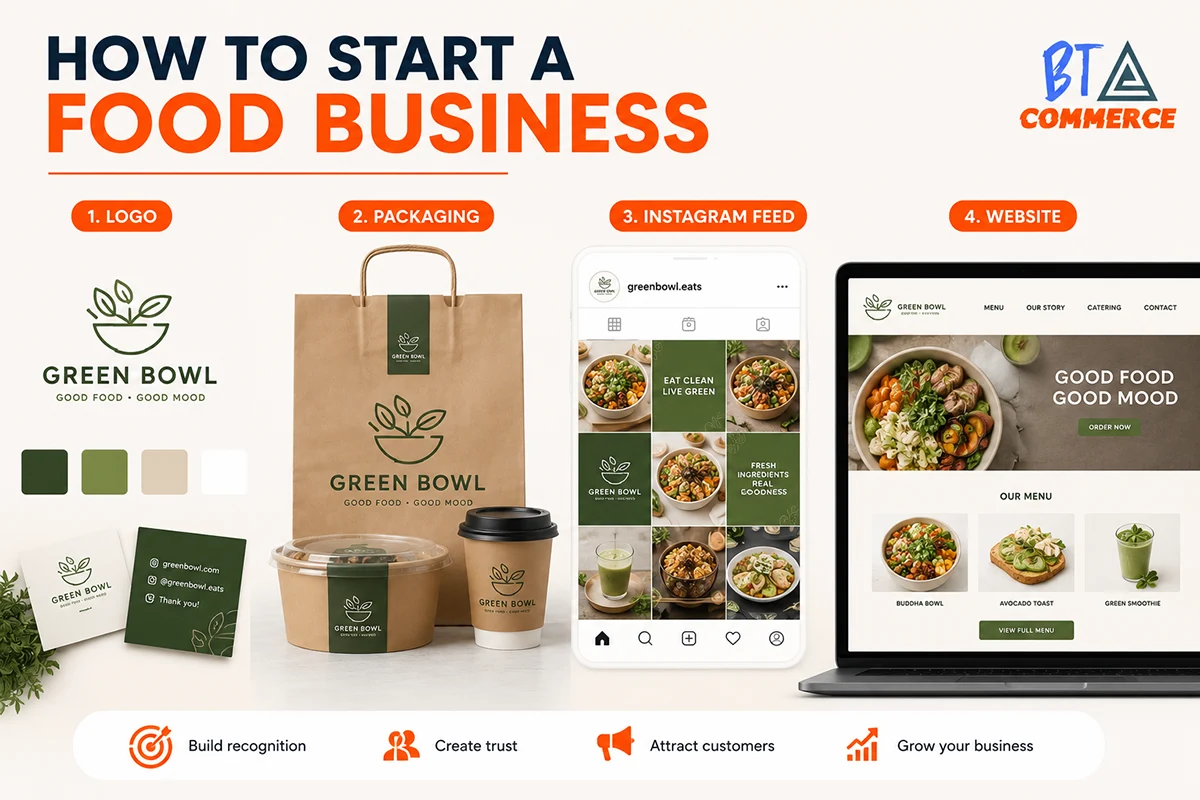
A strong product alone does not guarantee customers will remember your business. Your brand helps people recognize, trust, and choose your food over competitors, while marketing creates awareness and drives repeat sales.
- Define your brand identity: Establish your business story, core values, and unique selling proposition (USP). Whether you focus on family recipes, organic ingredients, or convenience, customers should quickly understand what makes your business different.
- Create a consistent visual identity: Use the same logo, colors, packaging style, and tone of voice across your website, menus, social media, and marketing materials. In food businesses, packaging often acts as a silent marketing tool.
- Build your digital presence: Create a website with your menu, pricing, business hours, and contact information. Set up social media accounts and optimize your business listings so customers can easily find you online.
- Focus on high-impact marketing channels: Early-stage food businesses often see results from social media content, local partnerships, email marketing, and local SEO rather than trying to invest everywhere at once.
- Generate early awareness: Consider a soft launch, local events, free samples, or limited-time promotions to attract first customers and collect feedback.
- Encourage repeat customers: Loyalty programs, referral offers, and customer reviews can help turn one-time buyers into long-term customers.
=> Read more:
- How to Start an Online Business (8-Step Beginner Guide)
- How to Start a Clothing Brand: Step-by-Step Guide for Beginners
Starting a Food Business From Home: What Changes?
Starting a home-based food business can lower startup costs, but it usually comes with stricter operating rules. Instead of full commercial regulations, many businesses operate under local Cottage Food Laws, which can limit products, sales channels, and business growth.
- Permits and licensing: Home businesses often require cottage food registration or home-processing permits rather than full restaurant licensing, depending on local rules.
- Products you can sell: Most regulations focus on shelf-stable foods such as baked goods, jams, candies, and dry mixes. Foods requiring refrigeration, meat, or dairy products commonly require a commercial kitchen.
- Sales restrictions: Some jurisdictions only allow direct-to-consumer sales, such as farmers markets, local delivery, pickup, or online pre-orders.
- Labeling and compliance: Packaging may require ingredient lists, allergen disclosures, contact information, and statements indicating the product was made in a home kitchen.
- Growth limitations: Some states set annual sales caps for cottage food businesses. Expanding into wholesale or larger production often requires moving to a licensed commercial kitchen.
FDA Requirements for Food Businesses: What You Need to Know
FDA requirements mainly affect businesses that manufacture, process, package, or store food products. While some restaurants and home-based businesses may be exempt from certain rules, food safety and compliance should be reviewed before launching.
- FDA facility registration: Required for many facilities involved in manufacturing, processing, packing, or holding food for U.S. distribution. Registration is free and generally renewed every two years. Retail restaurants are commonly exempt.
- CGMP compliance: Facilities must follow Current Good Manufacturing Practices (CGMPs) covering sanitation, employee hygiene, equipment, and production processes to reduce contamination risks.
- Food safety plans: Some businesses must create written safety plans or HACCP-based controls to identify and prevent biological, chemical, and physical hazards.
- Labeling requirements: Packaged products may require product names, ingredient lists, allergen disclosures, manufacturer details, net quantity, and nutrition information.
- Additional regulations: Certain products, including canned foods, acidified foods, and dietary supplements, can have extra FDA requirements.
- Local rules still matter: FDA compliance does not replace state or local requirements such as health permits, commercial kitchen rules, and business licensing.
Food Business Startup Checklist
Use this checklist to track the key steps required to launch your food business. Completing these items early can help reduce delays, compliance issues, and unexpected costs.
☐ Choose a food business idea
☐ Research market demand
☐ Create a business plan
☐ Estimate startup costs
☐ Secure funding
☐ Register your business
☐ Apply for licenses and permits
☐ Choose your kitchen or location
☐ Buy equipment and tools
☐ Find suppliers
☐ Set up payment systems
☐ Build your brand
☐ Create your website and social profiles
☐ Train staff and complete certifications
☐ Run a soft launch
☐ Start marketing and sales
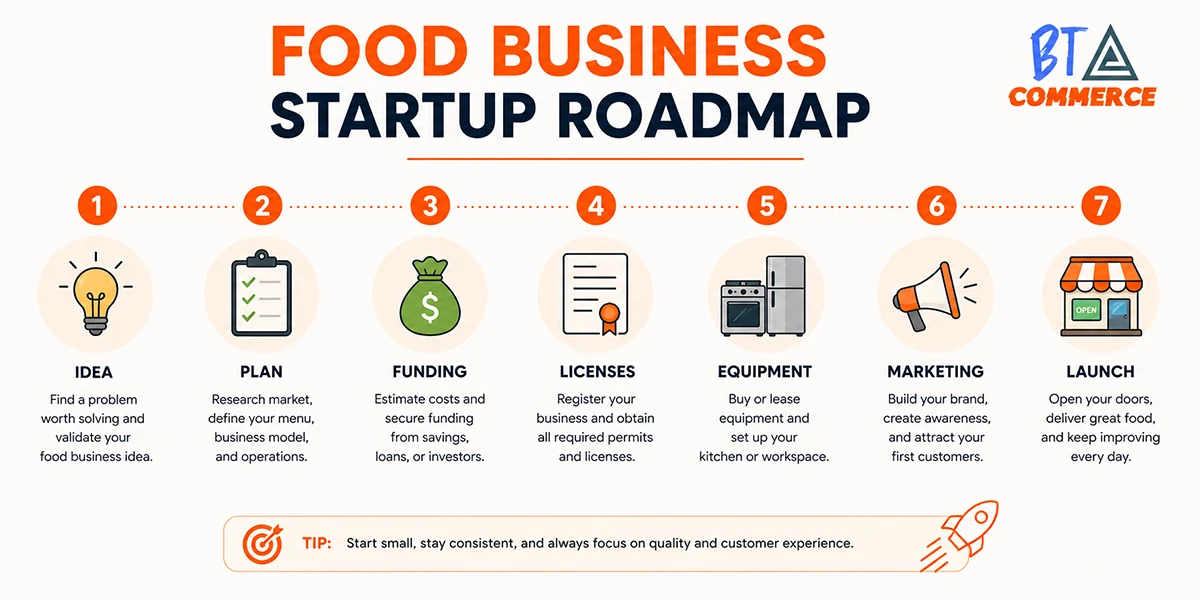
Treat this checklist as a working document rather than a one-time task list. Requirements can vary depending on your business model, product type, and local regulations.
Starting a food business does not require launching a large restaurant on day one. Many successful brands begin with a smaller model, test demand, and expand gradually over time. Start with a concept that fits your budget, validate it before making larger investments, and build systems that can support future growth. Small steps taken early often create stronger foundations for long-term success.
Recommended Reading