Clothing business ideas are growing fast as fashion keeps changing and online selling becomes easier. There are many ways to start a fashion business today, from simple low-cost models to building your own clothing brand.
This guide from BTA Commerce will help you explore practical ideas and find the right direction to start your own clothing business.
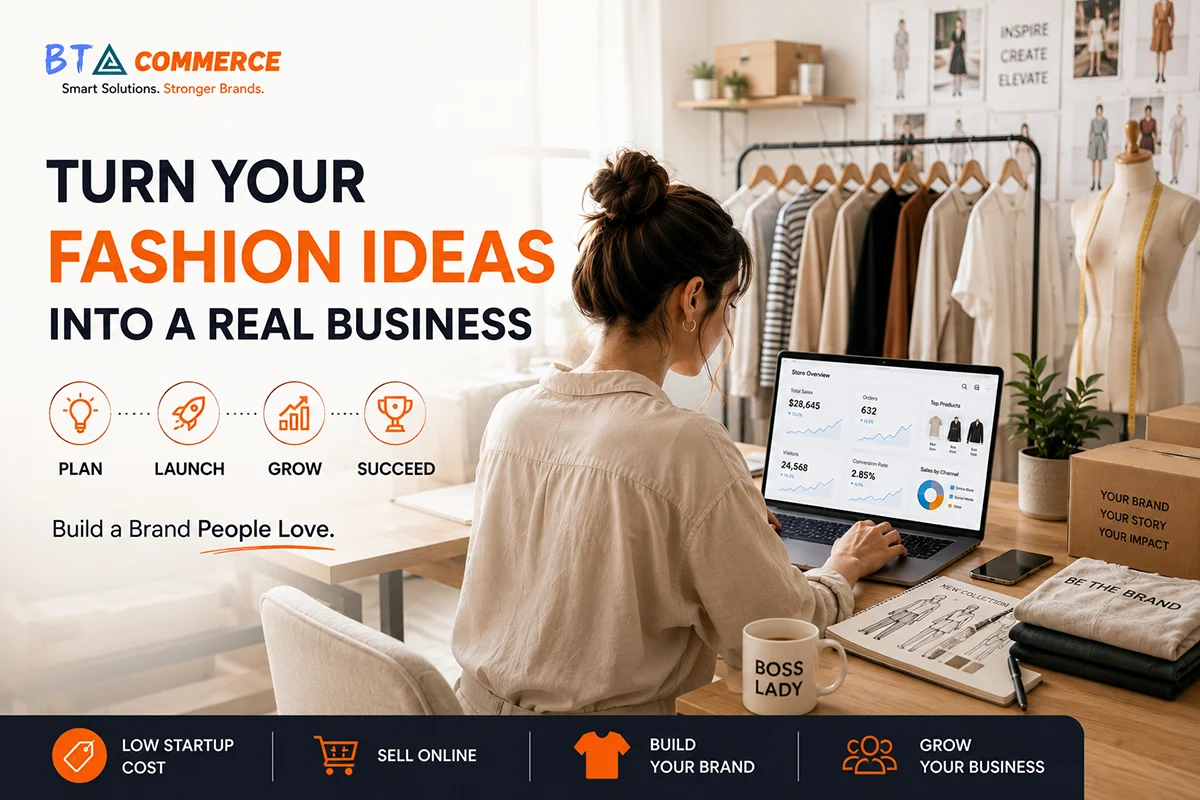
How to Choose the Right Clothing Business Ideas
Choosing the right clothing business idea is one of the most important steps before starting your fashion journey. A good idea is not only about trends, but also about budget, skills, and real market demand.
Based on budget (low-cost vs scalable)
Your budget will decide which clothing business model you can start.
- Low-cost options: Print-on-demand, dropshipping fashion store, resale or thrift business
- Medium to high investment: Streetwear brand, private label clothing, manufacturing business
If you have limited capital, start with models that don’t require inventory or production upfront, then scale later when you understand the market.
Based on skill (design, sourcing, marketing)
Your skills will help you choose a business that is easier to execute.
- If you are strong in design: handmade clothing, streetwear brand, fashion illustration
- If you are good at sourcing/products: dropshipping, boutique, resale business
- If you are strong in marketing/content: fashion content creation, online boutique, influencer-based brand
Choosing based on your strengths helps you grow faster and reduce early mistakes.
Based on market demand & trends
A good clothing business idea must have real demand.
- Look for growing niches like sustainable fashion, activewear, or plus-size clothing
- Check what people are searching for and buying online
- Avoid ideas with no clear audience or declining trends
The goal is to choose a niche that is both profitable and scalable, not just interesting.
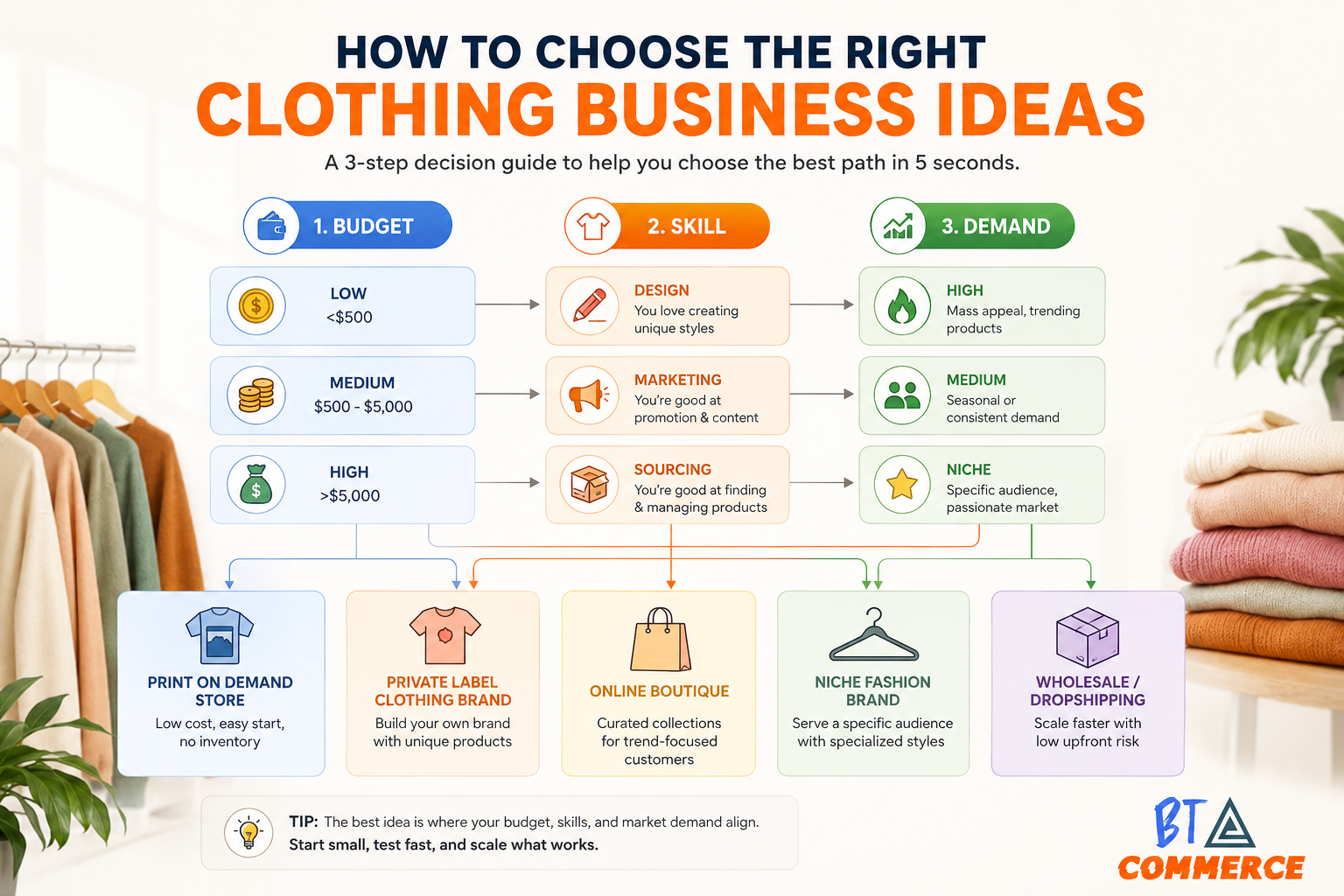
=> Read more:
- Clothing Business Plan for Boutique and Online Fashion Brands
- 500+ Clothing Brand Name Ideas for a Memorable Fashion Brand
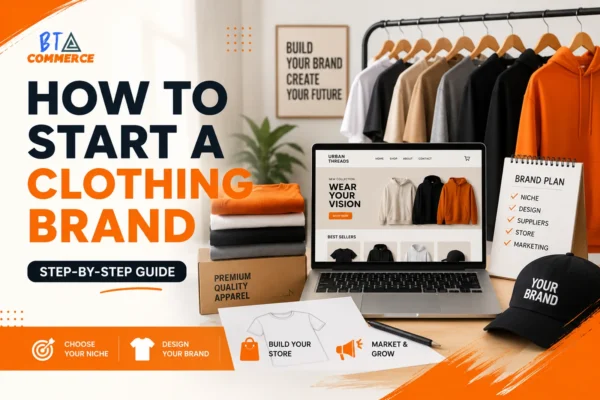
- How to Start a Clothing Brand: Step-by-Step Guide for Beginners
Best Clothing Business Ideas to Start
Don’t have time to read 20 detailed business plans? Below is a visual, action-focused guide to the 20 best clothing business models in 2026. Each idea is broken down by Profit, Viability for Beginners, and First Step.
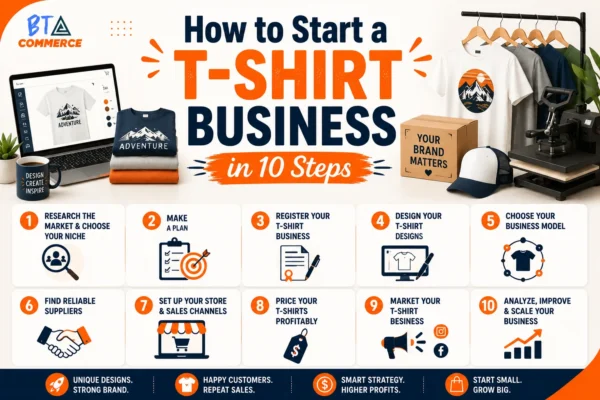
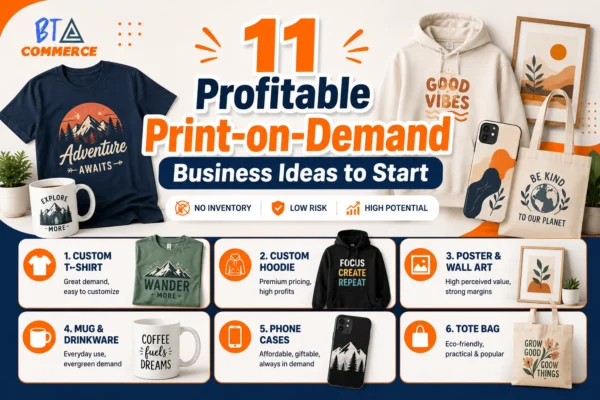
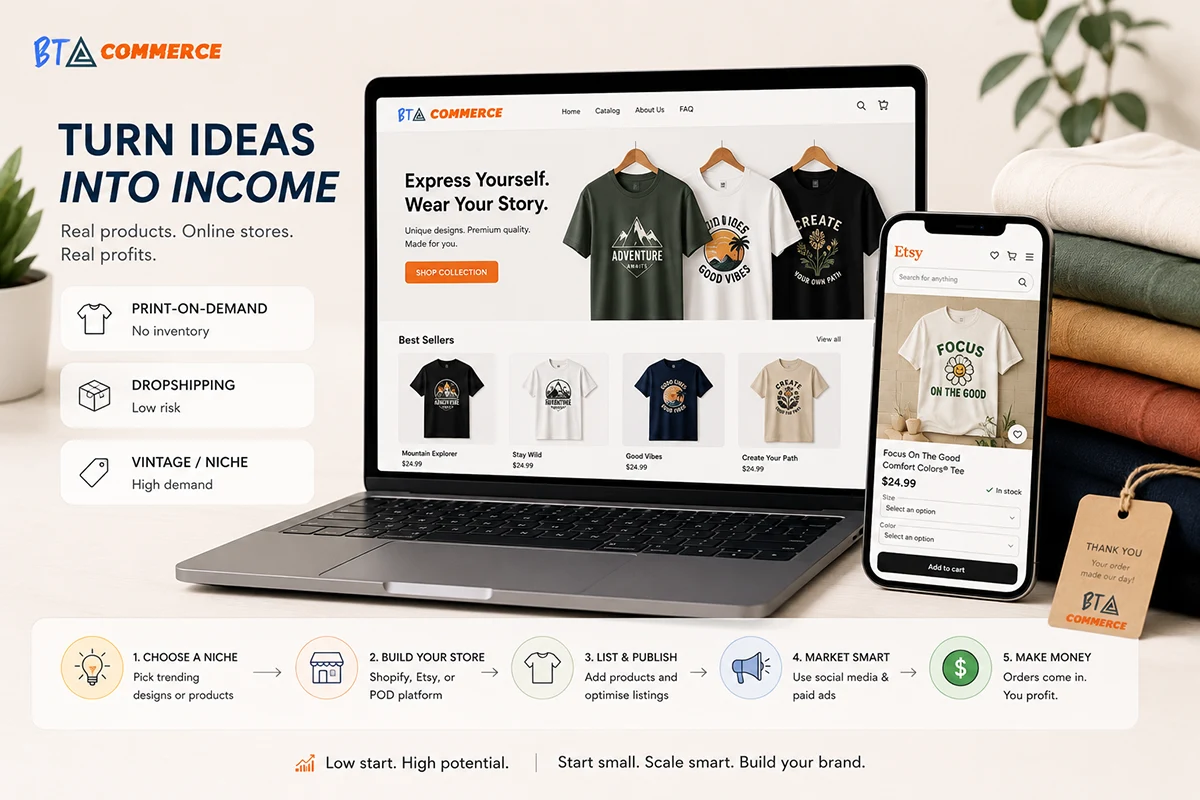
1. Print-on-Demand T-shirt Business
The Model: You sell custom designs on t-shirts. A third party prints and ships the shirt only after you make a sale. This eliminates inventory risk entirely.
- Viability: Excellent for beginners. You can start for $0 using free platforms like Amazon Merch on Demand.
- Market Trend & Profit: High. Margins range from 30% to 65% ($5–$15 per shirt). The market is projected to hit $39 billion by 2027.
- How to Start (The 10-Minute Overview): Pick a specific niche (e.g., “Golf Dads” not just “Funny”), create a simple text-based design using Canva, and upload it to Amazon Merch or Redbubble.
=> Discover more:
- 300+ Print on Demand Business Name Ideas for Your Brand
- 800+ T-Shirt Business Name Ideas: Unique, Creative & Brandable
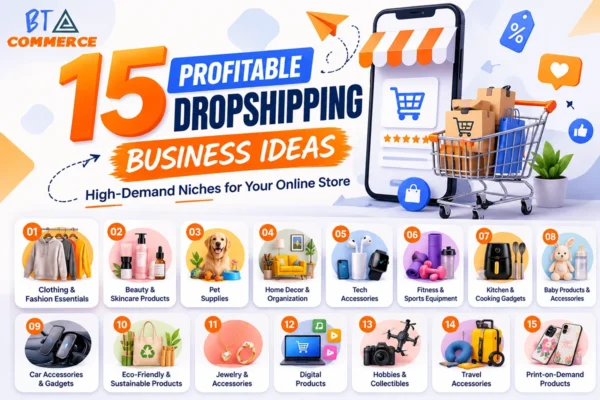
2. Dropshipping Fashion Store
The Model: You list products from a supplier (like AliExpress) in your store. When a customer buys, the supplier ships it directly to them. You act as the retailer without holding stock.
- Viability: Moderate. Requires capital for ads ($500–$2,000) to test winning products because competition is high.
- Market Trend & Profit: Lower margins (15–30%). You compete on price, not uniqueness. Profit is eaten by ad spend and returns.
- How to Start (The 10-Minute Overview): Set up a Shopify store ($29/mo), install an app like DSers, import trending fashion items, and run TikTok ads to drive traffic. Winning requires fast shipping and great customer service.
=> Discover more: 450+ Modern & Catchy Dropshipping Business Name Ideas
3. Handmade Clothing and Knitwear Brand
The Model: You physically create garments by hand (knitting, crochet, tailoring). This is the opposite of mass production.
- Viability: Skill-dependent. High profit per item, but very slow to scale. Best for Etsy.
- Market Trend & Profit: High. Customers pay a premium for “slow fashion” and unique craftsmanship. Profit margins can exceed 70% because there is no wholesale middleman.
- How to Start (The 10-Minute Overview): Master your craft, then photograph your items in natural light on a live model. List on Etsy with keywords like “handmade cashmere beanie” to reach buyers looking for quality, not cheap prices.
4. Streetwear Fashion Label
The Model: Creating a branded clothing line (hoodies, tees, caps) that taps into youth culture, skate, or hip-hop scenes. Success is driven by hype and community.
- Viability: Hard for beginners. You need a strong “aesthetic” and marketing budget for influencers.
- Market Trend & Profit: Very High (if you hit). Oversized fits and heavyweight fabrics (10–12 oz) are the standard in 2026. Use the “Drop Model” (small, scarce releases) to drive urgency.
- How to Start (The 10-Minute Overview): Buy high-quality “blanks” (heavyweight hoodies), get your logo screen printed (puff print), and launch a waitlist on Instagram. Do not buy inventory for 500 units; start with 50 to test the hype.
5. Vintage and Thrift Resale Business
The Model: Sourcing second-hand clothing from garage sales, thrift stores, or estate sales and selling it online for a higher price (“Flipping”).
- Viability: Great for beginners with a good eye. Requires “hustle” more than cash.
- Market Trend & Profit: Very High. The US online resale market is expected to reach $40 billion by 2029. Margins often range from 50% to 80% (buy a jacket for $10, sell for $50).
- How to Start (The 10-Minute Overview): Go to a local thrift store, look for specific high-demand brands (Carhartt, Nike, Vintage Band Tees). Check the sold price on eBay while in the store. Clean the item, take great photos, and list it on Depop or Poshmark.
=> Read more: 37 Online Business Ideas for Beginners (Low Cost & Scalable)
6. Upcycled and Sustainable Fashion Brand
The Model: Taking discarded materials (deadstock fabric, old jeans, plastic bottles) and transforming them into new, high-fashion garments.
- Viability: Moderate. Requires design skills and a strong “green” marketing angle.
- Market Trend & Profit: Growing. Gen Z actively seeks sustainable options. You can charge luxury prices ($100+ for a jacket made from scraps).
- How to Start (The 10-Minute Overview): Partner with a local tailor or learn to sew. Document the “transformation” process on TikTok (before/after videos of trash to treasure). Sell via your own website with a strong sustainability mission statement.
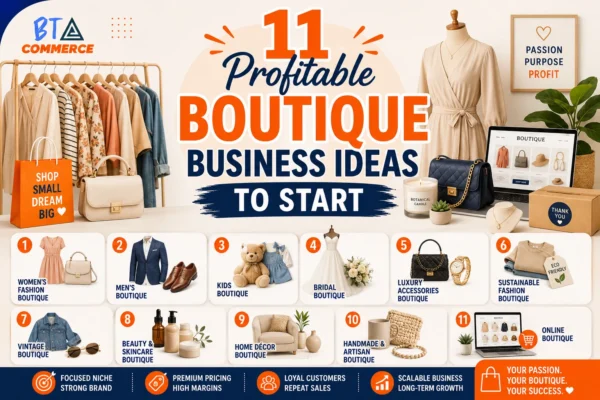
7. Online Fashion Boutique
The Model: A curated online store selling a specific aesthetic (e.g., “Coastal Grandmother” or “Boho Chic”). You buy wholesale inventory and sell at retail markup.
- Viability: Moderate. Risk involves getting stuck with unsold inventory.
- Market Trend & Profit: Standard. Standard retail markup is keystone (100%). Success relies entirely on your Instagram aesthetic and customer loyalty.
- How to Start (The 10-Minute Overview): Find a wholesale supplier (like Faire or LA Showroom). Buy a small “capsule” collection (10-15 styles). Use Shopify and run Facebook ads targeting your specific aesthetic niche.
=> Discover more: 500+ Boutique Business Name Ideas: Unique, Cute & Trendy Names
8. Clothing Subscription Box Business
The Model: Customers pay a monthly fee, and you send them a box of curated clothes (Stitch Fix model) or surprise items.
- Viability: Hard. High logistics complexity (returns, sizing) and customer acquisition costs.
- Market Trend & Profit: Stable niche. Recurring revenue is great, but churn is high if the customer doesn’t like the fit.
- How to Start (The 10-Minute Overview): Start very niche (“Box for Vegan Runners”). Use a tool like Cratejoy to manage subscriptions. You will need cash upfront to buy the initial inventory to pack in the boxes.
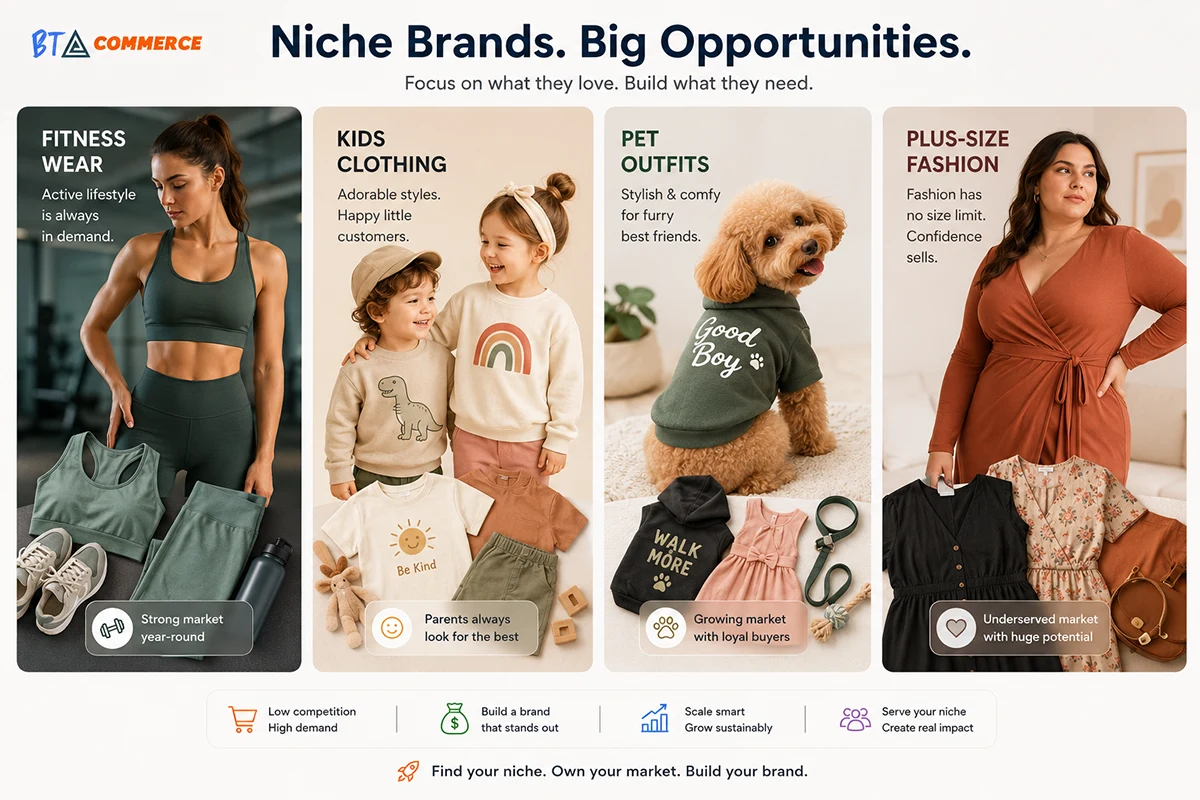
9. Kids Clothing Line
The Model: Designing or sourcing clothes for children (0–12 years). Focus is on durable fabrics, safety, and adorable prints.
- Viability: Moderate. Higher liability regarding safety standards (testing for choking hazards/flammability).
- Market Trend & Profit: Recession-resistant. Parents always buy. Matchy-matchy family sets are a huge trend on Instagram and TikTok.
- How to Start (The 10-Minute Overview): Use Print-on-Demand (POD) to test designs on onesies and toddler tees. If a design sells out quickly, invest in bulk manufacturing for higher margins.
10. Plus-Size Fashion Brand
The Model: Creating stylish clothing specifically for sizes 14+ (or 1X+).
- Viability: Requires careful fit testing. You cannot just “scale up” a straight-size pattern; you need specific blocks.
- Market Trend & Profit: High Demand. The market is often described as “underserved.” Customers in this niche are extremely loyal to brands that fit them correctly and show real plus-size models.
- How to Start (The 10-Minute Overview): You cannot do this easily with standard POD (fit is too risky). Partner with a manufacturer who specializes in plus-size patterns. Launch with one hero product (“The Perfect Blazer”) and host a fit testing party before selling.
11. Pet Clothing and Accessories Business
The Model: Making functional or cute clothing for pets (dogs mainly: sweaters, bandanas, raincoats).
- Viability: Excellent. Pet owners are emotional spenders and less price-sensitive.
- Market Trend & Profit: High. The humanization of pets trend continues. Bandanas have extremely high margins (cost $0.50, sell for $15).
- How to Start (The 10-Minute Overview): Use a POD service like Printify to print custom patterns on dog bandanas. Create an Instagram page featuring your own dog wearing the products. Partner with local dog walkers for promotion.
12. Athletic and Fitness Wear Brand
The Model: Selling performance gear (leggings, sports bras, training tees) that wicks sweat.
- Viability: Expensive. Fabric tech (nylon/spandex blends, anti-odor) is costly and requires large Minimum Order Quantities (MOQs).
- Market Trend & Profit: High competition (Lululemon, Gymshark). You need a unique angle (e.g., weightlifting specific, or “tall girl” leggings).
- How to Start (The 10-Minute Overview): Find a manufacturer on Alibaba that specializes in activewear. Order samples to test the squat-proof quality. Use influencer marketing (micro-fitness trainers) rather than generic ads.
13. Cultural and Traditional Clothing Brand
The Model: Selling traditional ethnic wear (Ao Dai, Kimonos, Dashikis, Saris) or modern fusion styles for the diaspora market.
- Viability: Good if you have access to supply chains in the home country.
- Market Trend & Profit: Steady. High demand during wedding seasons and cultural holidays (Tet, Lunar New Year, Diwali).
- How to Start (The 10-Minute Overview): Partner with artisans or factories in your heritage country. Use Facebook groups targeted to your specific cultural community in the US/EU. Focus on made-to-measure services to overcome sizing issues.
14. Gender-Neutral Fashion Brand
The Model: Clothing designed without gender norms (boxy fits, unisex sizing, diverse models).
- Viability: Niche. Marketing must be authentic. Fits can be tricky (if its just a “unisex” mens shirt, women may not like the fit).
- Market Trend & Profit: Growing. Gen Z strongly supports gender fluidity. It generates good PR and media attention organically.
- How to Start (The 10-Minute Overview): Start with oversized hoodies and joggers (which naturally fit all bodies). Feature diverse models (trans, non-binary) explicitly in your marketing. Partner with LGBTQ+ creators.
15. Clothing Alteration and Tailoring Service
The Model: A local service business where you hem pants, take in dresses, or repair zippers.
- Viability: Requires technical skill (sewing). Low digital marketing required.
- Market Trend & Profit: Very Stable. The global market is over $10 Billion. As people buy more online clothes that don’t fit, tailors are in high demand.
- How to Start (The 10-Minute Overview): (Service) You don’t need a storefront. Partner with local dry cleaners (they often outsource tailoring). Advertise on Nextdoor or Facebook Marketplace. Pickup and delivery services are a huge competitive advantage.
16. Personal Styling and Shopping Service
The Model: A service where you help clients clean out their closets (“Wardrobe Audit”) and create new outfits (shopping for them).
- Viability: Low overhead. You just need taste and interpersonal skills.
- Market Trend & Profit: High hourly rate ($100–$300/hour). Busy professionals with money but no time are your targets.
- How to Start (The 10-Minute Overview): Create a portfolio on Instagram with before/after closet transformations. Offer 3 free consultations in exchange for video testimonials. Serve your local wealthy suburbs.
17. Fashion Illustration and Design Service
The Model: A B2B (Business to Business) service where you draw technical flat sketches or fashion illustrations for clothing brands that lack designers.
- Viability: Requires drawing software (Adobe Illustrator) and fashion knowledge.
- Market Trend & Profit: Moderate. Many small streetwear brands need tech packs but cant afford full-time designers.
- How to Start (The 10-Minute Overview): Build a portfolio on Upwork or Fiverr. Learn how to create a “Tech Pack” (spec sheet for factories). You make money per project, usually $50–$500 per design.
18. Fashion Content Creation for TikTok and Instagram
The Model: You produce “Outfit of the Day” (OOTD) or styling videos and monetize via brand deals, affiliate links (LTK), or ad revenue.
- Viability: Low barrier. You just need a phone, lighting, and a unique “angle” (e.g., “corporate girl outfits” or “thrift flip”).
- Market Trend & Profit: Massive. Fashion is the #1 category for influencer marketing. Creators earn commissions (10-20%) on sales via affiliate links.
- How to Start (The 10-Minute Overview): Pick a micro-niche (e.g., “Petite workwear”). Post 3 reels/tiktoks per day for 30 days. Join the Amazon Influencer Program or LTK to get paid commission on clothes you link.
19. Fashion Coaching and Online Courses
The Model: Teaching others how to dress better or start a clothing brand.
- Viability: Requires Authority (credentials or successful past brand).
- Market Trend & Profit: High scalability. A $200 digital course costs nothing to duplicate. You are selling “transformation” (confidence/wealth).
- How to Start (The 10-Minute Overview): Build an audience first on YouTube giving away free styling advice. Once you have 1,000 engaged followers, launch a low-cost “Style Guide” PDF ($27) to validate demand before creating a $500 video course.
20. Clothing Production and Small Fashion Manufacturing Business
The Model: A B2B manufacturing service helping small brands bring their designs to life (cut-and-sew).
- Viability: Very Hard. Expensive machinery (industrial sewing machines), need for skilled labor, and management of supply chains.
- Market Trend & Profit: High capital requirement. There is a massive shortage of “small-batch” manufacturers (brands need 50 units, not 5,000).
- How to Start (The 10-Minute Overview): You need industrial machines and a workshop. Advertise on Maker’s Row or to local design students. Focus on a specific service (e.g., “Only Sampling” or “Only Leather Goods”) to reduce complexity.
=> Read more: 100+ Small Business Ideas for 2026 (Low-Cost & Profitable)
Where to Sell Your Clothing Business Products
Shopify or Your Own eCommerce Store
Your home base. Best for building a real brand, owning customer emails, and keeping more profit per sale. You control the look, prices, and return policy. Downside: you bring your own traffic. Start with a basic paid plan. Use a free fashion theme. Add products via manual upload or a dropshipping app. Go live in one day.
Online Marketplaces
These give you instant traffic because buyers are already searching. Each fits a different model.
- Etsy – For handmade, vintage, or custom print on demand clothing. Buyers expect unique items and pay higher prices. Fees include listing fees and transaction fees. Good for slow, steady sales if your photos stand out.
- Poshmark – For reselling brand names like Nike, Lululemon, or Free People. Also good for vintage. Poshmark sends a prepaid shipping label. Fee is around 20 percent for items over 15 dollars. Activity matters: sharing your listings daily helps sales.
- eBay – Best for vintage, deadstock, bulk lots, and branded clothing. Global audience. Check sold listings before pricing. Provide exact measurements to reduce returns.
- Amazon – Only for scaling print on demand or branded basics. Not for one off vintage items. High fees and heavy competition. Only consider if you have consistent inventory and can run ads.
Social Commerce
Selling directly inside social apps. Works best for impulse buys and viral trends.
- TikTok Shop – Fashion is the top selling category. You tag products in videos and live streams. Buyers check out without leaving the app. Fees are lower than most marketplaces. Post raw, authentic styling videos daily to grow. No polished ads needed.
- Instagram Shopping – Best for aesthetic, curated brands. Connect your product catalog from Shopify or Facebook. Tag products in every post and story. Higher average order value than TikTok but less viral reach.
Which One Should You Pick
Most successful clothing sellers combine a home base with one growth channel. A common setup is Shopify for control plus TikTok Shop for traffic plus Etsy or Poshmark depending on your model. Start with one platform until you make consistent sales, then add another.
Tips to Increase Profitability for a Clothing Business
Most clothing businesses fail because they run out of cash, not because the clothes are bad. Here is how to keep more money in your pocket.
- Focus on a niche. A “vintage streetwear for short men” store will outsell a “clothes for everyone” store every time. Niche customers are desperate for solutions. They pay faster and complain less because you are the only option that fits.
- Build branding that feels like a person. People buy from brands they recognize. Not logos. Voice, photos, shipping notes, reply speed. When your brand feels human, customers stop hunting for coupons. They pay what you ask.
- Use social media like a portfolio, not an ad account. Show the stain you removed. Show the hoodie after ten washes. Show the customer who cried because a dress finally fit. That content sells better than any discount code because it builds belief before the buy button.
- Test with ten dollars before you spend a thousand. Run a single Facebook ad to a pre-order page. List one design on Etsy. Post a TikTok and ask “who wants this?” If no one bites, change the product, not the price. Small tests save big heartbreaks.
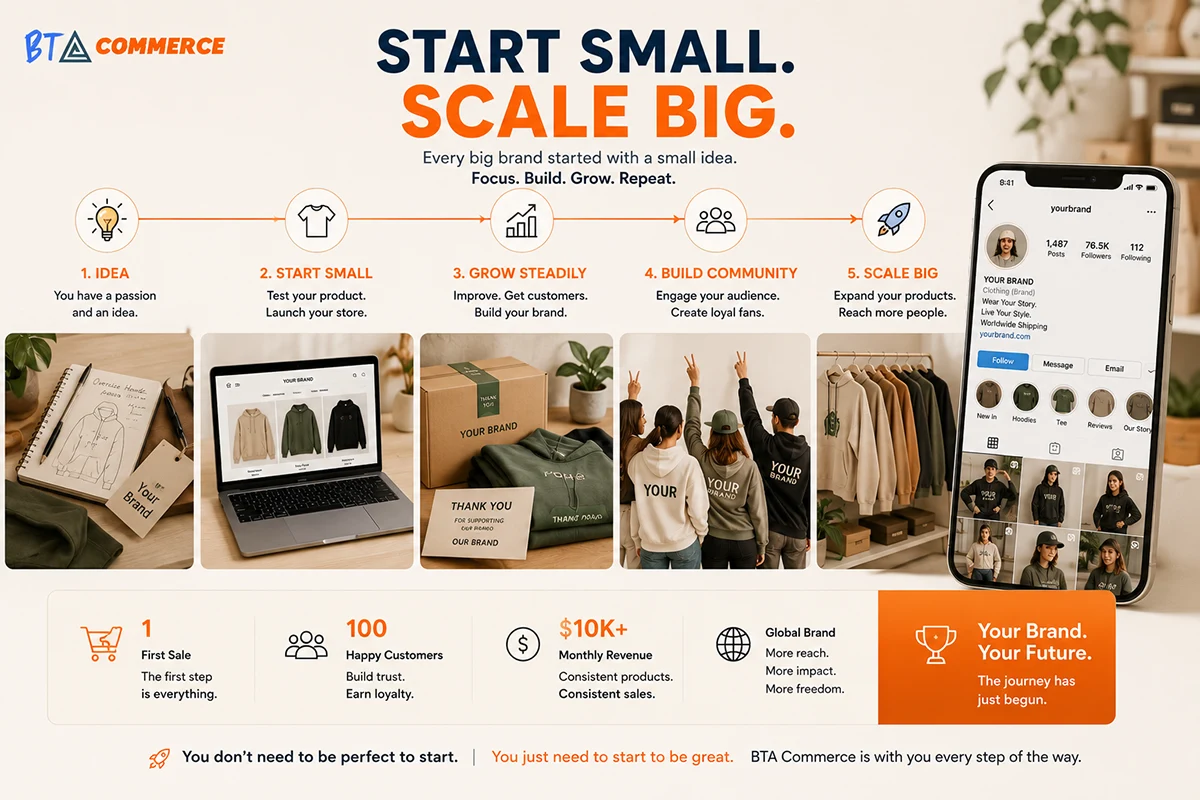
Profit does not come from working harder. It comes from selling to the right person, earning their trust, showing proof, and betting small until the market tells you to bet big.
Recommended Reading