A hair business is becoming an attractive opportunity for entrepreneurs who want to enter the beauty industry. Whether you plan to sell hair extensions, wigs, or hair care products, knowing how to start a hair business can help you build a brand in a market with steady demand and different ways to begin, including small-scale and home-based models.
In this guide, BTA Commerce explains the essential steps to launch a hair business, from choosing a business model and sourcing products to building your brand, marketing, and managing daily operations.
Why Start a Hair Business?
The hair industry is one of the most attractive segments in the beauty market because it combines steady demand, repeat purchases, and multiple ways to build a profitable business. Products such as wigs, hair extensions, hair care products, and styling products continue to attract customers who want to enhance their appearance, protect natural hair, or solve specific hair concerns.
A hair business offers several growth opportunities compared with many other beauty niches:
- Recurring customer demand: Hair extensions, wigs, and maintenance products often require replacement, upgrades, or regular care, creating opportunities to generate repeat sales and build long-term customer relationships.
- High profit potential: Hair products can generate strong margins, especially when businesses develop their own brand or source directly from manufacturers. Depending on the product category and market positioning, some premium hair products can achieve 100%–300% markups, creating opportunities for attractive returns.
- Flexible growth opportunities: The hair industry supports both product-based and service-based businesses, allowing entrepreneurs to scale gradually as demand and experience grow.
- Brand-building opportunities: Unlike generic retail products, hair businesses can create strong customer loyalty through unique products, specialized niches, and personalized brand experiences.
As consumer preferences continue to diversify, businesses that specialize in a clearly defined market often find it easier to build customer loyalty and stand out from larger competitors.
Read more:
- 550+ Hair Business Name Ideas by Category, Style & Niche
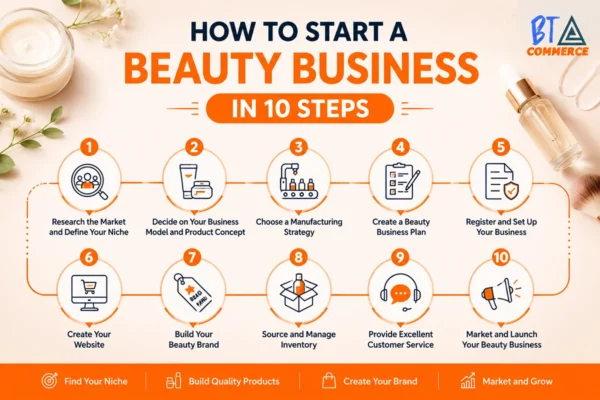
- How to Start a Beauty Business: Step-by-Step Beginner Guide
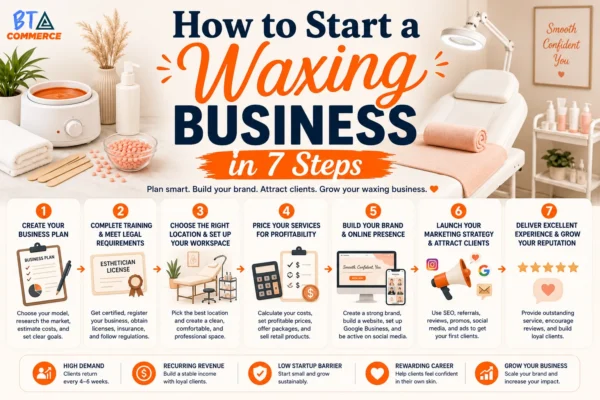
- How to Start a Waxing Business in 7 Steps
- How to Start a Nail Business in 9 Steps
How to Start a Hair Business in 7 Steps
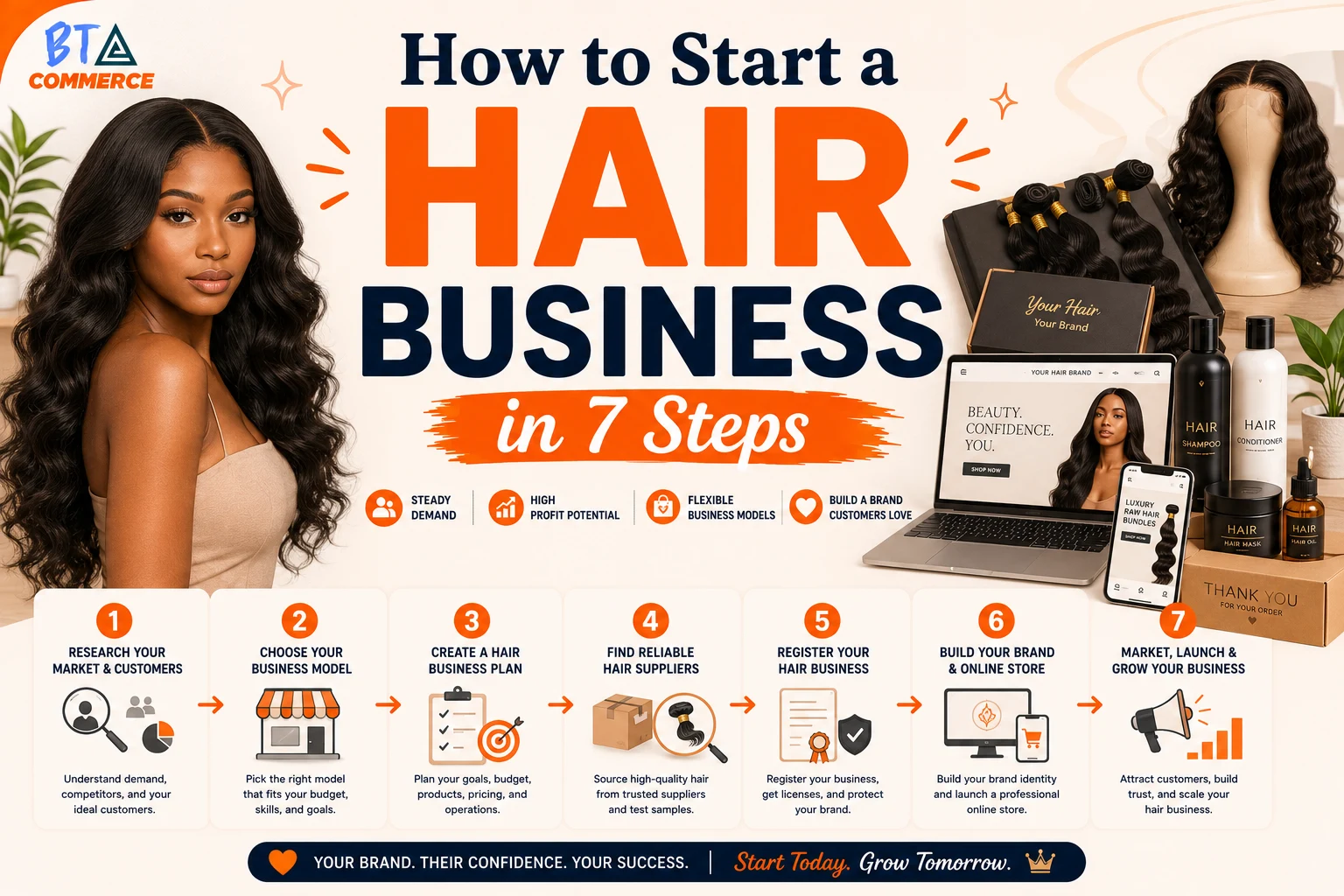
Step 1: Research Your Hair Market and Target Customers
Before launching your hair business, research the market to understand customer demand, identify profitable opportunities, and reduce the risk of investing in the wrong products or audience.
- Identify your target customers: Define your audience based on demographics, lifestyle, purchasing power, hair needs, and buying behavior. For example, Gen Z often follows hair trends, while working professionals may prioritize premium products and convenience.
- Research your competitors: Compare their products, pricing, branding, customer reviews, and customer experience. Look for recurring complaints, such as inconsistent quality, limited product selection, or slow shipping, to identify opportunities for your brand.
- Evaluate market demand: Use Google Trends and Facebook Audience Insights to validate demand, discover seasonal trends, and identify growing interest in products such as natural hair products and specialized hair treatments.
- Look for market gaps: Focus on underserved customer needs, including scalp health, hair damage, textured hair, or ethically sourced hair extensions that competitors do not fully address.
- Choose your niche: Build your business around a focused category, such as hair extensions, lace front wigs, natural hair products, curly hair products, luxury wigs, or affordable hair solutions.
Step 2: Choose Your Hair Business Model
Choosing the right hair business model affects your startup costs, daily operations, and long-term growth. Select a model that matches your budget, experience, and business goals.
- Compare common business models: Consider a hair extensions business, wig business, hair care product line, hair salon, barbershop, or hair accessories business based on your target market and expertise.
- Evaluate operating models: Decide whether to run a traditional salon, a commission salon, a booth rental business, a mobile hair styling service, or an online store selling hair products.
- Compare key requirements: Look at startup costs, required skills, inventory needs, operational complexity, and scalability before making a decision.
- Explore beginner-friendly options: An online hair store, home-based business, private label brand, or dropshipping business can help you start with lower startup costs and less financial risk than opening a physical salon.
- Choose a model that supports long-term growth: Start with a focused business that fits your current resources, then expand your products or services as demand increases.
=> Read more: How to Start a Dropshipping Business (9-Step Guide for Beginners)
Step 3: Create a Hair Business Plan
A clear business plan helps you organize your ideas, estimate costs, and make informed decisions before launching your hair business.
- Define your business concept: Summarize your products or services, business goals, unique value proposition, and long-term vision.
- Set financial goals: Estimate startup costs, monthly expenses, expected revenue, cash flow, and the approximate break-even point to understand how much funding your business needs.
- Develop your product and pricing strategy: Decide on your core products or services, set competitive prices, and calculate profit margins based on your costs and market conditions.
- Create an operations plan: Outline how you will manage inventory, fulfill orders, handle daily operations, and support customers as your business grows.
- Plan your sales strategy: Decide how customers will purchase your products, estimate sales targets, and outline a simple customer acquisition budget for your launch.
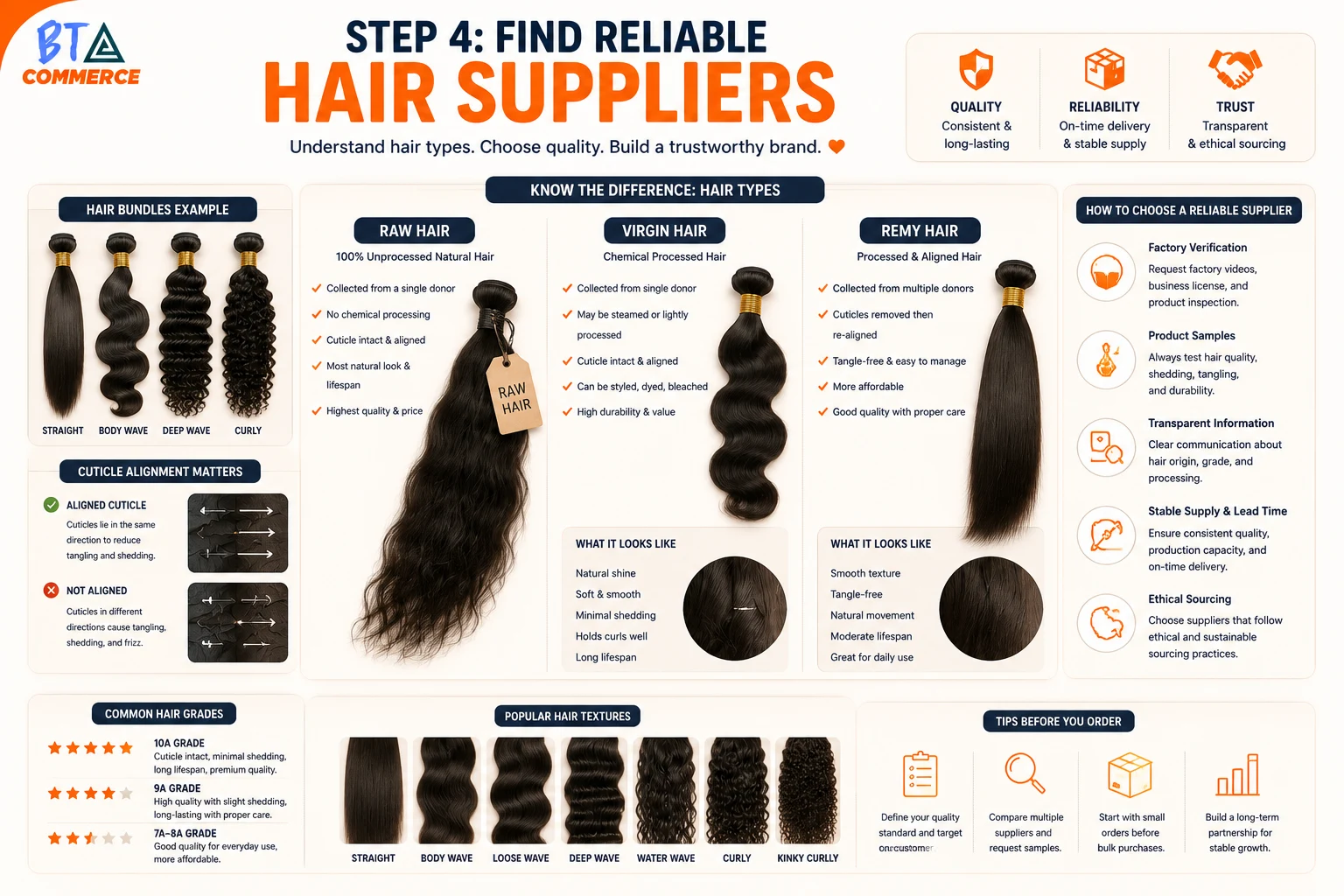
Step 4: Find Reliable Hair Suppliers
The quality of your hair products depends on the suppliers you choose. Reliable suppliers help you maintain consistent quality, protect your reputation, and reduce long-term business risks.
- Compare supplier types: Evaluate hair manufacturers, hair wholesalers, private label suppliers, and custom manufacturers based on pricing, product quality, Minimum Order Quantities (MOQs), and shipping times.
- Understand hair grades: Learn the differences between Raw Hair, Virgin Hair, Virgin Hair Bundles, and Remy Hair so you can accurately evaluate quality and avoid misleading supplier claims.
- Research reputable suppliers: Consider established manufacturers such as Apohair, Sunny Hair Vietnam, Unihairvn, Mic Hair, Belady Factory, K-Hair, and MCSARA Hair. Many offer factory-direct pricing, large production capacity, and transparent sourcing.
- Verify supplier credibility: Request factory videos or live product inspections, review customer feedback, and confirm ethical sourcing, production capacity, and communication quality.
- Test before buying: Always order product samples to evaluate texture, shedding, tangling, heat resistance, and durability before placing bulk orders.
Step 5: Register Your Hair Business
Registering your hair business creates a legal foundation, protects your brand, and makes it easier to work with suppliers, payment providers, and financial institutions.
- Choose a business structure: Select a Sole Proprietorship, LLC, or Corporation based on your liability protection, tax requirements, and long-term growth plans.
- Register your business name: Secure a unique name and check that the matching domain name and social media handles are available to build a consistent brand.
- Apply for an EIN: An Employer Identification Number (EIN) is commonly required for taxes, hiring employees, opening a business bank account, and working with suppliers.
- Obtain required licenses: Depending on your business model, you may need a business license, seller’s permit, or a cosmetology license if you provide salon services.
- Protect your business: If you plan to build a long-term brand, consider registering your business name as a trademark, comply with cosmetic regulations when selling hair care products, and keep personal and business finances separate with a dedicated business bank account.
Step 6: Build Your Hair Brand and Online Store
Your brand and online store are often the first impression customers have of your hair business. A professional brand builds trust, while a well-designed store makes it easier for customers to buy.
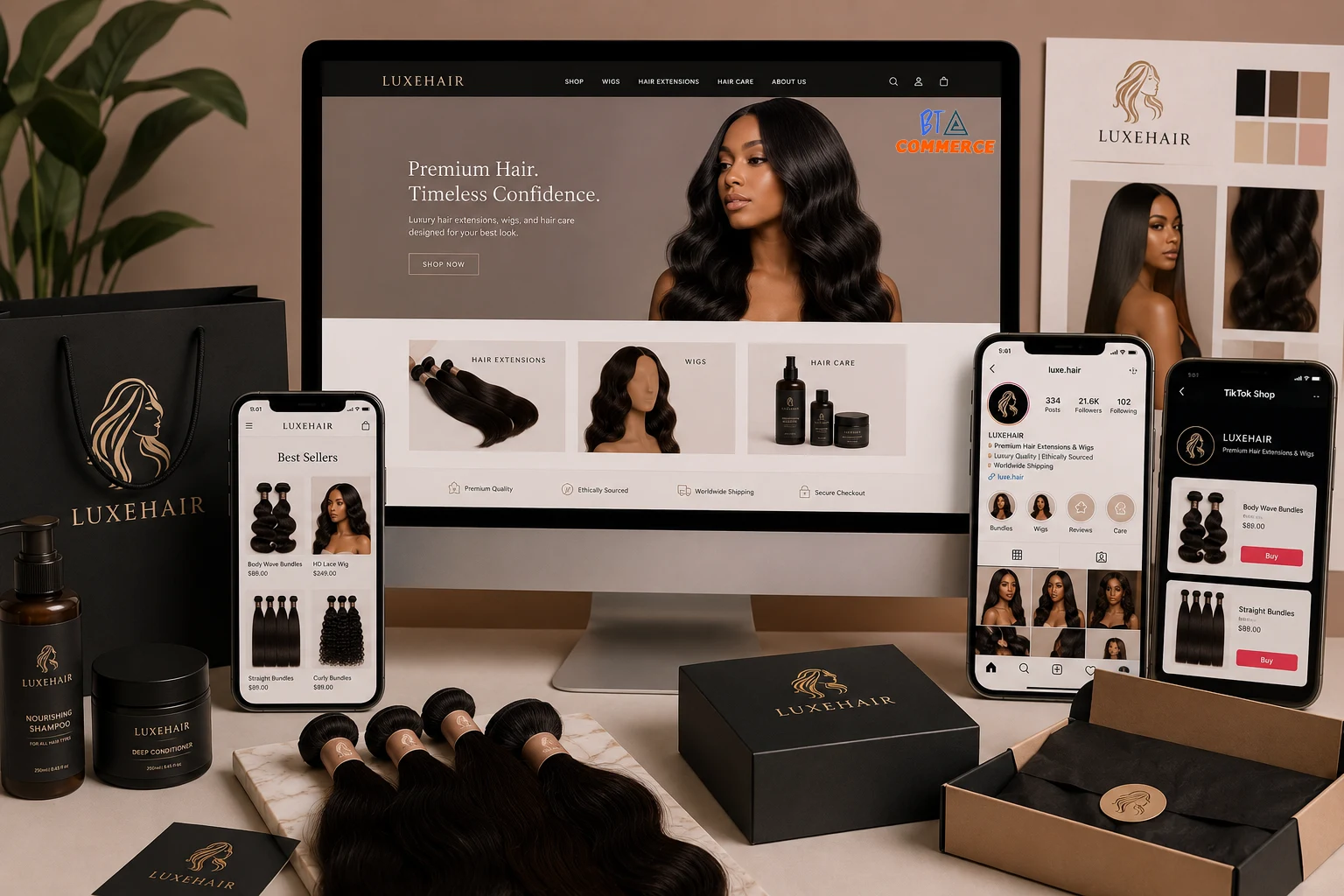
- Create a memorable brand: Develop a business name, logo, visual identity, and packaging that reflect your niche and create a consistent experience across every customer touchpoint.
- Build your ecommerce store: Launch a direct-to-consumer (DTC) ecommerce website using Shopify or a similar platform. Include professional product photos, detailed descriptions, transparent pricing, shipping information, and hair care instructions.
- Optimize the shopping experience: Set up secure payments with Stripe or PayPal, organize products into clear collections, simplify navigation, and make checkout fast and easy on any device.
- Connect multiple sales channels: Expand beyond your website by integrating Instagram, TikTok Shop, Etsy, or Amazon so customers can discover and purchase your products across multiple platforms.
=> Explore more: How to Start an Online Business (8-Step Beginner Guide)
Step 7: Market, Launch, and Grow Your Hair Business
A successful launch attracts your first customers, but sustainable growth comes from consistent marketing, strong customer relationships, and continuous improvement.
- Plan your launch campaign: Announce your opening date, build anticipation through email and social media, prepare introductory offers, and ensure your inventory and fulfillment process are ready before accepting orders.
- Create engaging content: Publish styling tutorials, product demonstrations, and before-and-after transformations on Instagram, TikTok, and YouTube Shorts to showcase real results and educate potential customers.
- Build trust through social proof: Partner with micro-influencers, encourage customer reviews, and feature user-generated content (UGC) to increase credibility and influence purchase decisions.
- Turn first-time buyers into repeat customers: Launch referral programs, loyalty rewards, personalized email or SMS campaigns, and excellent customer support to increase customer lifetime value (CLV).
- Scale with data: Monitor your best-selling products, repeat purchase rates, customer feedback, and marketing performance before expanding inventory, introducing new product lines, or investing more heavily in advertising.
Can You Start a Hair Business With No Money?
Yes, you can start a hair business with little or no upfront investment, especially if you focus on selling hair extensions, wigs, or hair care products online. While opening a physical salon requires significant startup capital, ecommerce models make it possible to launch by investing your time and skills instead of large amounts of money.
- Delay major expenses: Instead of investing heavily in inventory or a retail location, use dropshipping, preorders, or low minimum order suppliers to keep startup costs as low as possible.
- Work from home: Run your business from home to eliminate expenses such as commercial rent, utilities, and salon equipment while focusing on building your brand online.
- Create content yourself: Use your smartphone to film product demonstrations featuring hair bundles, wigs, and hair extensions, along with styling videos and customer transformations instead of paying for professional photography or advertising.
- Reinvest early profits: Use your first sales to purchase more inventory, improve packaging, or expand your product range instead of taking on unnecessary debt.
- Avoid large financial commitments: Wait until your sales become consistent before leasing commercial space, hiring employees, or purchasing large amounts of inventory.
How to Start a Hair Business FAQs
1. How Much Does It Cost to Start a Hair Business?
The cost of starting a hair business depends on the business model you choose.
- Dropshipping hair store: around $0–$500 for a domain, ecommerce platform, branding, and basic marketing.
- Online hair store with inventory: approximately $500–$2,000 for inventory, packaging, shipping supplies, and website setup.
- Hair product brand: typically $5,000–$15,000+ for product development, manufacturing, packaging, and testing.
- Hair salon: generally $10,000–$100,000+ for rent, equipment, licenses, insurance, and renovations.
An online hair business is usually the most affordable option for beginners.
2. What Type of Hair Business Is Most Profitable?
Human hair extensions made from Raw Hair or Remy Hair, along with premium wigs, are generally the most profitable because they offer high margins and strong customer demand.
3. How Do I Start a Hair Business From Home?
A home-based hair business is usually easiest to start online. Focus on a dedicated workspace, reliable suppliers, efficient order fulfillment, and social media marketing while keeping overhead costs low.
4. How Do I Start My Own Hair Product Line?
Choose a niche, partner with a private label or custom manufacturer, test your products, create compliant packaging, and sell through your website or online marketplaces.
5. Can I Start a Hair Business Without Experience?
Yes. Many successful hair business owners start without hairstyling experience by selling products online. Focus on building product knowledge, improving customer service, and learning from customer feedback as your business grows.
Recommended Reading