Starting a shoe business can be a great opportunity to turn a footwear idea into a real brand while meeting the needs of specific customer groups. Whether you want to sell sneakers, fashion footwear, or custom shoes, choosing the right niche and business model is essential.
In this guide, BTA Commerce explains how to start a shoe business step by step, covering everything from researching the market and developing products to finding shoe manufacturers, setting up an online store, and promoting your brand.
How to Start a Shoe Business Step by Step
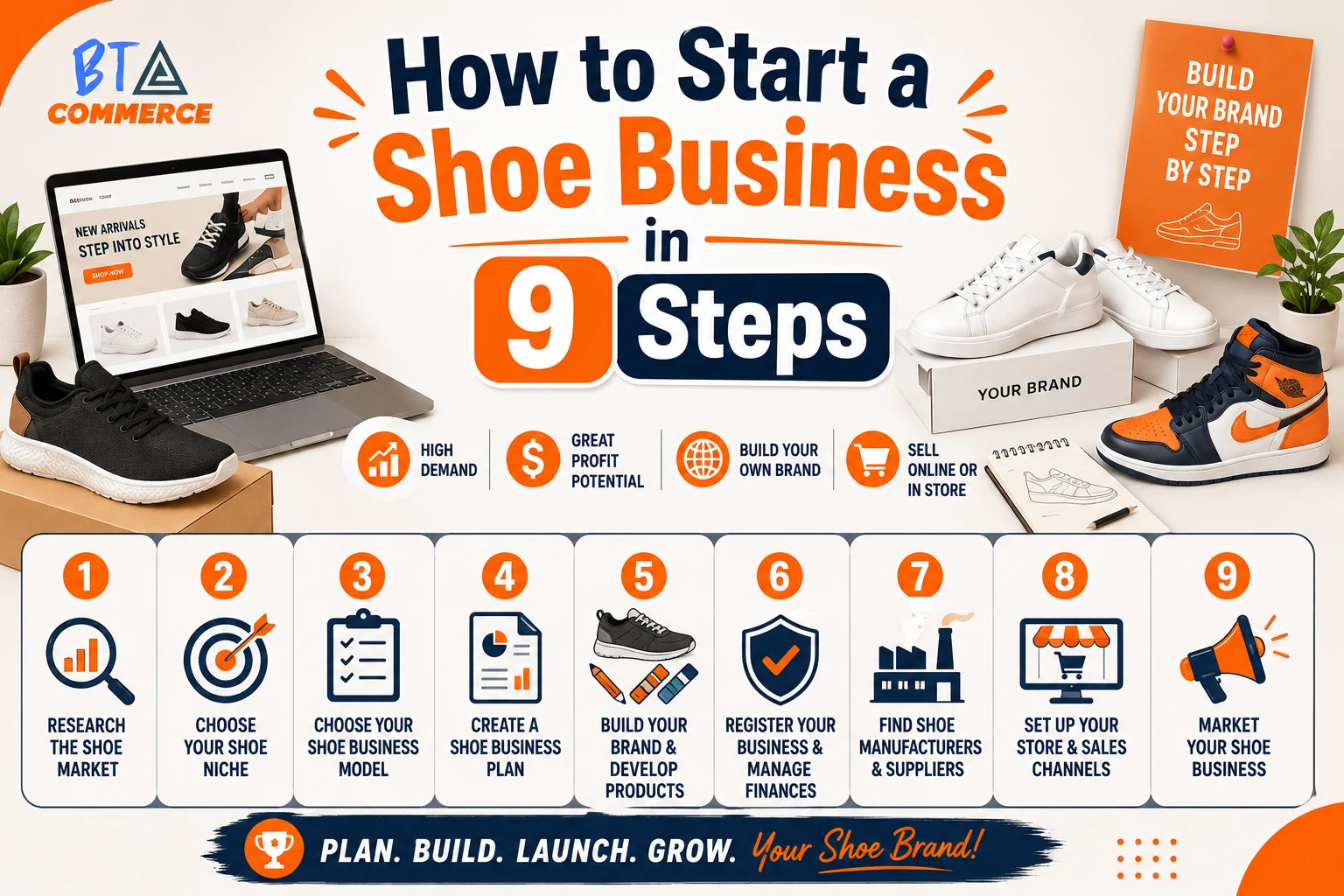
Step 1. Research the Shoe Market
Before starting a shoe business, research the footwear industry to understand customer demand, competitors, and market opportunities. This helps you identify profitable products, define your target market, and position your shoe brand effectively.
Key areas to research include:
- Study competitors: Analyze what other shoe brands sell, their pricing, branding, strengths, and weaknesses. Read customer reviews to learn what buyers value and where competitors fall short.
- Research products and trends: Explore fashion trends, best-selling products, and popular footwear categories. Browse Amazon, eBay, Etsy, and Walmart using searches like “popular shoes,” “trending footwear,” or “trending athletic shoes for women” to discover high-demand products.
- Understand your target market: Define your ideal customers based on age, gender, location, income, lifestyle, fashion preferences, and buying behavior to better match their needs.
- Analyze pricing and positioning: Compare competitor pricing, product quality, and customer expectations to determine how your business can stand out through pricing, unique designs, customization, or value.
- Track market demand: Use Google Trends to analyze related queries, demographics, search trends, and seasonality. Check whether demand is growing, stable, or declining before investing in a product.
Read more:
- How to Start a Business in 10 Practical Steps to Succeed
- How to Start a Clothing Brand: Step-by-Step Guide for Beginners
- 495+ Shoe Business Name Ideas for Brands & Stores
Step 2. Choose Your Shoe Niche
Choosing a niche helps you target the right customers, differentiate your products, and build a stronger shoe brand. The more focused your niche, the easier it is to position your business and create products that meet specific customer needs.
Popular shoe niches include:
- Athletic shoes: High and consistent demand from sports and fitness customers, but strong competition. Position your products around performance, comfort, or both.
- Fashion footwear: Targets trend-conscious shoppers. Demand changes quickly, and competition is high, making design and pricing key differentiators.
- Luxury shoes: Serves premium customers seeking craftsmanship, exclusivity, and quality. Demand is smaller but often comes with higher profit margins.
- Children’s shoes: A stable market driven by growing children. Focus on safety, comfort, durability, and affordability.
- Sustainable footwear: Appeals to eco-conscious consumers looking for environmentally friendly materials and ethical production.
- Custom shoes: Offers personalized designs for customers seeking unique styles or specialized sizing. Competition is lower, but demand is more niche.
- Work shoes: Targets professionals who need durable or protective footwear, creating steady demand throughout the year.
When evaluating a niche, consider:
- Target customers: Age, occupation, income, lifestyle, and style preferences.
- Market demand: Whether customers are actively searching for and buying these products.
- Competition level: The number of brands already serving the market.
- Product positioning: How your shoes will compete on price, quality, design, or unique value.
- Profit potential: Estimate your production costs, pricing, and expected profit margins.
Step 3. Choose Your Shoe Business Model
Your business model determines how you source, produce, and sell your shoes. Choose a model that matches your budget, business goals, and the level of control you want over your products and operations.
Common shoe business models include:
- Online shoe store: Sell through your own ecommerce website or online marketplaces. It has lower overhead than a physical store and allows you to reach a wider audience.
- Physical shoe store: Operate a retail location where customers can browse and try on products. This requires higher startup costs for rent, inventory, and daily operations.
- Private label shoe brand: Design your own shoes and work with a manufacturer to produce them under your brand. This offers greater control over quality and branding but requires a larger investment.
- Wholesale business: Purchase shoes in bulk from manufacturers or distributors and resell them through retail or online channels. Inventory management and storage are key considerations.
- Custom footwear business: Create personalized shoes for individual customers or niche markets. This model focuses on customization and premium value.
- Dropshipping: Partner with a supplier who stores inventory and ships products directly to customers. It requires minimal upfront investment but provides less control over product quality and shipping.
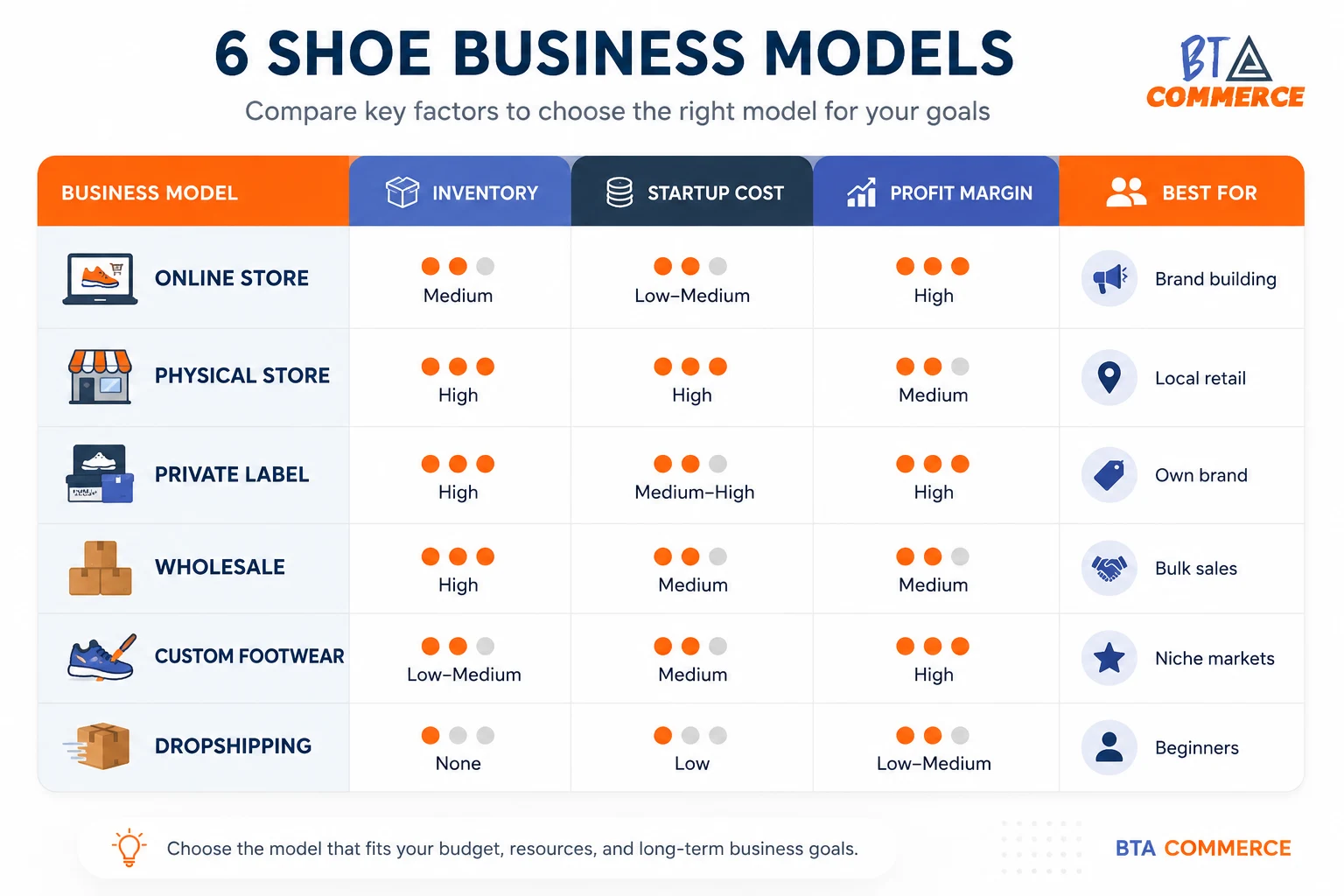
When comparing business models, consider:
- How the model works: Product sourcing, manufacturing, and order fulfillment.
- Startup requirements: Budget, inventory, equipment, and operational needs.
- Advantages and challenges: Level of control, scalability, risk, and profit potential.
Step 4. Create a Shoe Business Plan
A shoe business plan serves as a roadmap for launching and growing your business. It outlines your goals, business strategy, financial planning, and daily operations, helping you make informed decisions and secure funding if needed.
Your business plan should include:
- Executive summary: Introduce your business, mission, objectives, and overall business concept.
- Target customers: Define who you want to serve and the problems your products solve.
- Product strategy: Describe your shoe categories, materials, sizing, and unique selling proposition (USP).
- Market analysis: Summarize your competitors, industry research, and target market.
- Manufacturing and sourcing: Explain where your products will be made, how suppliers will be selected, and your quality control process.
- Pricing strategy: Set prices based on production costs, competitor pricing, and your desired profit margin.
- Operations plan: Outline your inventory management, fulfillment process, suppliers, and primary sales channels.
- Marketing plan: Outline how you’ll attract customers through SEO, social media, paid advertising, email marketing, or other channels.
- Financial plan: Estimate startup costs, funding needs, projected revenue, operating expenses, and profit goals.
If you’re launching a small shoe business with a simple structure, a lean business plan may be enough. For businesses seeking investors or financing, prepare a more detailed plan with financial projections and growth strategies.
Step 5. Build Your Shoe Brand and Develop Products
A successful shoe business sells more than footwear—it sells a brand with a clear identity and products designed for a specific audience. Whether you want to create your own shoe brand or design your own shoe brand, focus on building a consistent brand before moving into production.
Key steps include:
- Choose a Shoe business name: Select a short, memorable name that reflects your niche and brand story. Check domain availability with tools like GoDaddy or DomainWheel, and register a trademark if you plan to build a long-term brand.
- Create your brand identity: Define your target customers, brand story, brand values, logo, messaging, and unique selling proposition (USP). A clear brand identity helps your business stand out in a competitive footwear market.
- Develop shoe designs: Decide whether your products prioritize fashion, performance, comfort, or functionality. Create design briefs with specifications such as materials, cushioning, arch support, sizing, and intended use. You can sketch ideas with tools like Canva or Tinkercad.
- Select materials: Choose materials that match your brand positioning, such as full-grain leather, canvas, recycled rubber, or other sustainable materials.
- Create product prototypes and samples: Work with a designer or manufacturer to produce physical prototypes. Review fit, comfort, durability, appearance, and packaging before mass production.
- Test and improve your products: Collect feedback from testers and refine your designs, materials, or construction until the final product meets customer expectations and quality standards.
Step 6. Register Your Shoe Business and Manage Finances
Setting up the right legal and financial foundation protects your business, simplifies daily operations, and prepares you for long-term growth.
Key steps include:
- Choose a business structure: Select a legal structure such as a Sole Proprietorship, Partnership, LLC (Limited Liability Company), or Corporation, depending on your business goals and liability protection needs.
- Register your business: Complete the required business registration in your country. If you’re operating in the United States, you may also need an Employer Identification Number (EIN) for taxes and business banking. If you’re building your own brand, consider registering your trademark as well.
- Understand licenses and permits: Research the licenses, permits, and sales tax requirements that apply to your location before selling products.
- Open a business bank account: Keep business and personal finances separate to simplify bookkeeping, tax filing, and cash flow management. Consider using a dedicated business credit card for business purchases.
- Manage expenses and financial records: Track startup costs, inventory purchases, revenue, operating expenses, and profits using accounting software such as QuickBooks or Xero. It’s also wise to budget for taxes and maintain an emergency fund to cover several months of operating expenses.
Step 7. Find Shoe Manufacturers and Suppliers
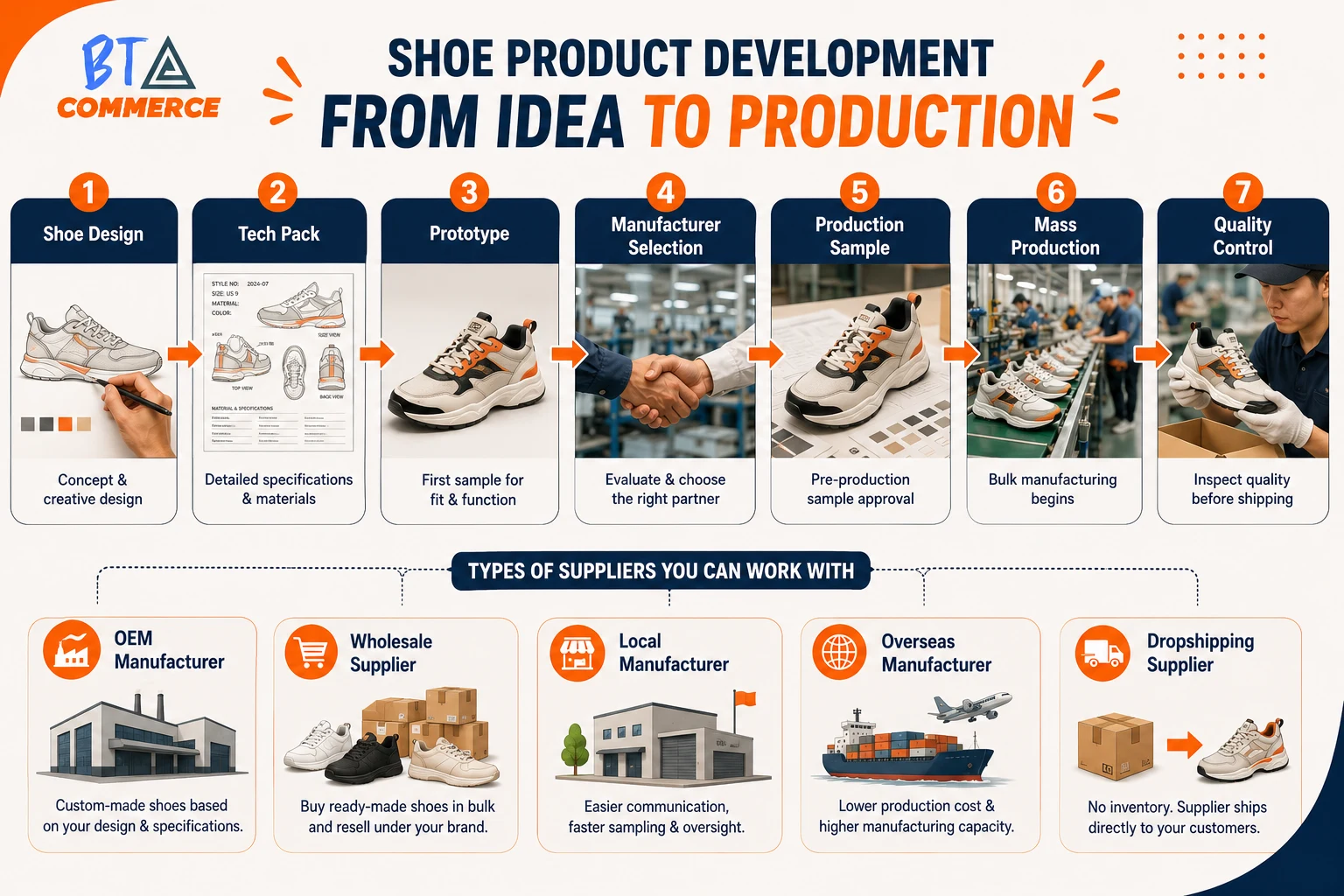
The right manufacturing partner directly affects your product quality, costs, and customer satisfaction. Before contacting suppliers, prepare detailed product specifications so manufacturers clearly understand your requirements.
Common sourcing options include:
- Custom shoe manufacturers (OEM): Produce shoes based on your original designs, materials, and specifications. This offers maximum customization but requires a higher investment.
- Wholesale suppliers: Sell ready-made footwear in bulk, allowing you to launch quickly without developing your own products.
- Local manufacturers: Easier communication, faster sampling, and better production oversight, though manufacturing costs may be higher.
- Overseas manufacturers: Often provide lower production costs and larger manufacturing capacity. Major footwear manufacturing hubs include Vietnam, India, and Italy.
- Dropshipping suppliers: Store inventory and ship products directly to customers, making them a low-risk option for new businesses with limited capital.
Before choosing a supplier, compare:
- Minimum order quantity (MOQ): Ensure the supplier’s minimum order fits your budget.
- Product quality: Request physical samples to evaluate materials, comfort, sizing, workmanship, and packaging.
- Manufacturing cost: Compare production, tooling, shipping, and other related costs.
- Lead time: Ask how long prototypes, production, and shipping will take.
- Communication and reliability: Choose suppliers that respond clearly, provide consistent updates, and demonstrate reliable production capabilities. Starting with a small trial order can help reduce risk before placing larger orders.
Step 8. Set Up Your Store and Sales Channels
Once your products are ready, choose the sales channels that best fit your target customers. Many successful shoe businesses combine online and offline channels to maximize reach and create a seamless shopping experience.
Online sales channels:
- Build an ecommerce website: Create your own online store to showcase products, accept payments, and manage orders while maintaining full control over your brand and customer experience.
- Choose the right ecommerce platform: Select a platform that matches your budget, technical skills, and business goals. Popular options include Shopify, WooCommerce, BigCommerce, Wix, Squarespace, and Adobe Commerce. Compare pricing, ease of use, integrations, and scalability before making a decision.
- Sell on online marketplaces: Expand your reach through marketplaces such as Amazon, Etsy, eBay, and Walmart, where customers are already searching for footwear. These platforms can also help validate product demand before investing heavily in your own website.
=> Read more: How to Start an Online Business (8-Step Beginner Guide)
Offline sales channels:
- Open a shoe store: A retail store gives customers the opportunity to see, try on, and compare products before purchasing, helping build trust and increase conversion rates.
- Launch a boutique: A boutique is ideal for premium, niche, or curated footwear collections that emphasize your brand identity and customer experience.
- Test with pop-up shops: Sell at local markets, trade shows, or seasonal events to introduce your brand, collect customer feedback, and generate sales without committing to a permanent retail location.
For many businesses, the most effective approach is to combine an ecommerce website with marketplaces and selected offline channels. An omnichannel strategy makes it easier for customers to discover and purchase your products wherever they prefer to shop.
Step 9. Market Your Shoe Business
Marketing helps you build brand awareness, attract qualified customers, and generate repeat sales. Rather than targeting everyone, focus on a specific audience and communicate what makes your footwear unique.
Effective marketing strategies include:
- Social media marketing: Build your brand on Instagram, Facebook, TikTok, and Pinterest by sharing product launches, styling inspiration, behind-the-scenes content, and short-form videos. Since footwear is highly visual, high-quality photos and videos can significantly improve engagement.
- Influencer collaborations: Work with micro-influencers who have engaged audiences within your niche. Authentic reviews and user-generated content (UGC) often build more trust than traditional advertisements.
- SEO: Optimize your website, product pages, category pages, images, and blog content with relevant keywords to improve search rankings and drive long-term organic traffic.
- Email marketing: Grow your email list by offering discounts or exclusive content through your website. Use tools like Mailchimp to send welcome emails, product launches, abandoned cart reminders, and seasonal promotions.
- Loyalty programs: Reward repeat customers with points, exclusive discounts, or early access to new collections to encourage long-term customer retention.
- Referral marketing: Encourage satisfied customers to recommend your brand by offering rewards or discounts for successful referrals.
- Local events and pop-up promotions: Participate in local markets, fashion events, and pop-up shops where customers can try on your shoes, experience product quality firsthand, and connect with your brand.
As your business grows, combine these strategies into a multichannel or omnichannel marketing approach to create a consistent customer experience across your website, marketplaces, social media, and offline sales channels.
How to Start a Shoe Business FAQs
Can I start a shoe business from home?
Yes. Many shoe businesses start from home by selling online and outsourcing manufacturing or fulfillment. As your business grows, you can expand into warehousing or a physical store.
Can I start a shoe business without inventory?
Yes. Business models like dropshipping and print-on-demand let you sell shoes without purchasing inventory upfront. Products are made or shipped only after a customer places an order.
How do I start my own shoe company?
Start by choosing a niche, creating your brand, developing your products, finding a manufacturer, registering your business, and launching your sales channels. Then focus on marketing to attract your first customers.
What’s the difference between a shoe brand and a shoe store?
A shoe brand develops and sells products under its own name, while a shoe store primarily resells footwear from one or more brands.
Should I manufacture my own shoes or use private label suppliers?
Manufacturing your own shoes gives you more control over design and quality but requires a larger investment. Private label suppliers are faster and more affordable for launching a new brand.
Recommended Reading