
Learning how to start a photography business is the first step toward turning your passion into a profitable career. Whether you want to photograph portraits, weddings, products, or events, you can build a successful business even with limited experience or a modest budget.
In this BTA Commerce guide, you’ll learn every step of the process—from choosing a niche and creating a business plan to registering your business, finding your first clients, and growing a sustainable photography business.
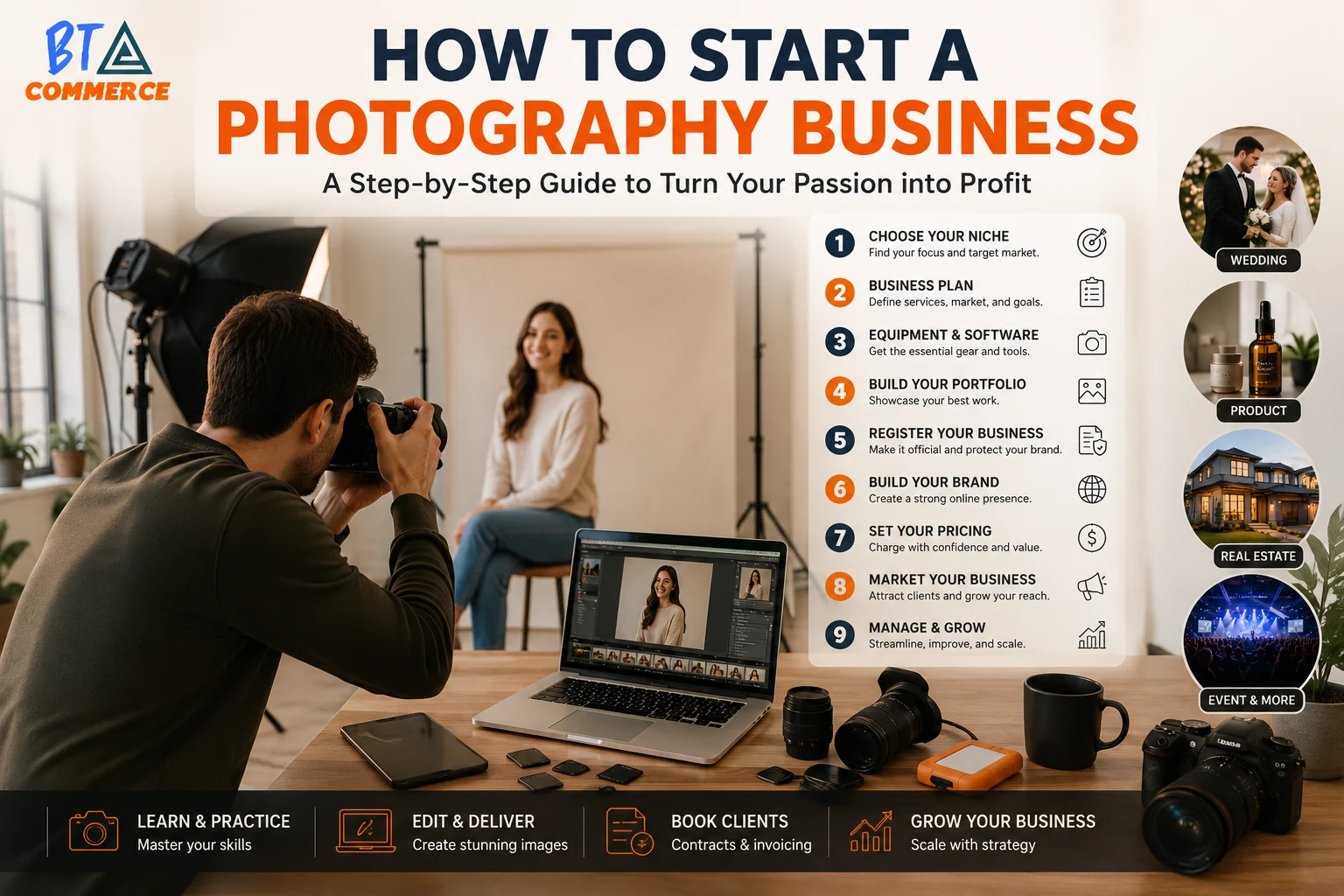
How to Start a Photography Business
Step 1. Learn Photography and Choose Your Niche
You don’t need professional experience to start a photography business, but you should be able to consistently deliver high-quality work. Before accepting paid clients, learn your camera’s manual settings, practice in different lighting conditions, and become comfortable using editing software like Adobe Lightroom or Adobe Photoshop.
Next, choose one photography niche instead of offering every type of service. Specializing helps you build a stronger portfolio, attract the right clients, and stand out in a competitive market. Popular niches include:
- Portrait photography – Individuals, families, maternity, and senior portraits.
- Wedding photography – Engagement sessions, weddings, and elopements.
- Product photography – Images for eCommerce stores, catalogs, and advertising.
- Real estate photography – Residential and commercial property listings.
- Commercial photography – Corporate branding, headshots, and marketing campaigns.
- Event photography – Conferences, parties, concerts, and community events.

Finally, define your target audience by understanding who your ideal clients are, what services they need, and how much they’re willing to pay. Choosing a niche with strong local demand will make it easier to market your services and grow your business.
Read more:
- How to Start a Business in 10 Practical Steps to Succeed
- How to Start a Flower Business: A 7-Step Beginner’s Guide
Step 2. Create a Photography Business Plan
A photography business plan gives your business a clear direction before you start booking clients. It doesn’t have to be lengthy, but it should define your services, target market, business model, and growth objectives.
Your business plan should include:
- Photography services: Define the services you’ll offer, such as portrait, wedding, product, commercial, or real estate photography. Focusing on a specific niche makes it easier to position your business.
- Target market: Identify your ideal customers based on their location, budget, and photography needs so you can tailor your services and marketing.
- Competitor analysis: Research local photographers to understand their specialties, target audience, and market positioning. Look for opportunities to differentiate your business with a unique style or better customer experience.
- Business model: Decide how your business will operate, such as working on location, from a home studio, renting a commercial studio, or offering mobile photography services. Define how clients will inquire, book sessions, and receive their final photos.
- Business goals: Set realistic short-term goals, such as launching your website or booking your first clients, along with long-term goals like expanding your services or opening a photography studio.
A well-structured business plan helps you make informed decisions, stay focused on your goals, and build a sustainable photography business with confidence.
Step 3. Buy the Essential Equipment and Software
You don’t need the most expensive gear to start a photography business, but you do need reliable equipment that allows you to consistently deliver professional results. Start with the essentials and upgrade your kit as your skills, client base, and business grow.
Your starter kit should include:
- Camera and lenses: Choose a reliable mirrorless camera or DSLR camera with a versatile lens that suits your niche. A 50mm prime lens is a great option for portrait photography, while wide-angle lenses are often preferred for real estate photography and zoom lenses work well for events.
- Lighting and accessories: Depending on your niche, invest in basic lighting equipment such as an external flash or ring light, along with a tripod, extra batteries, and multiple high-speed SD cards to ensure every shoot runs smoothly.
- Editing software: Use professional tools like Adobe Lightroom for organizing and color-correcting photos, and Adobe Photoshop for advanced retouching and image editing.
- Storage and backup: Store your files on an external hard drive and maintain a second backup using another drive or cloud storage. A reliable backup system helps protect client photos from accidental loss.
- Computer: Make sure you have a computer capable of editing RAW files smoothly. If you’re working with high-resolution images, sufficient RAM, storage, and a color-accurate display will significantly improve your editing workflow.
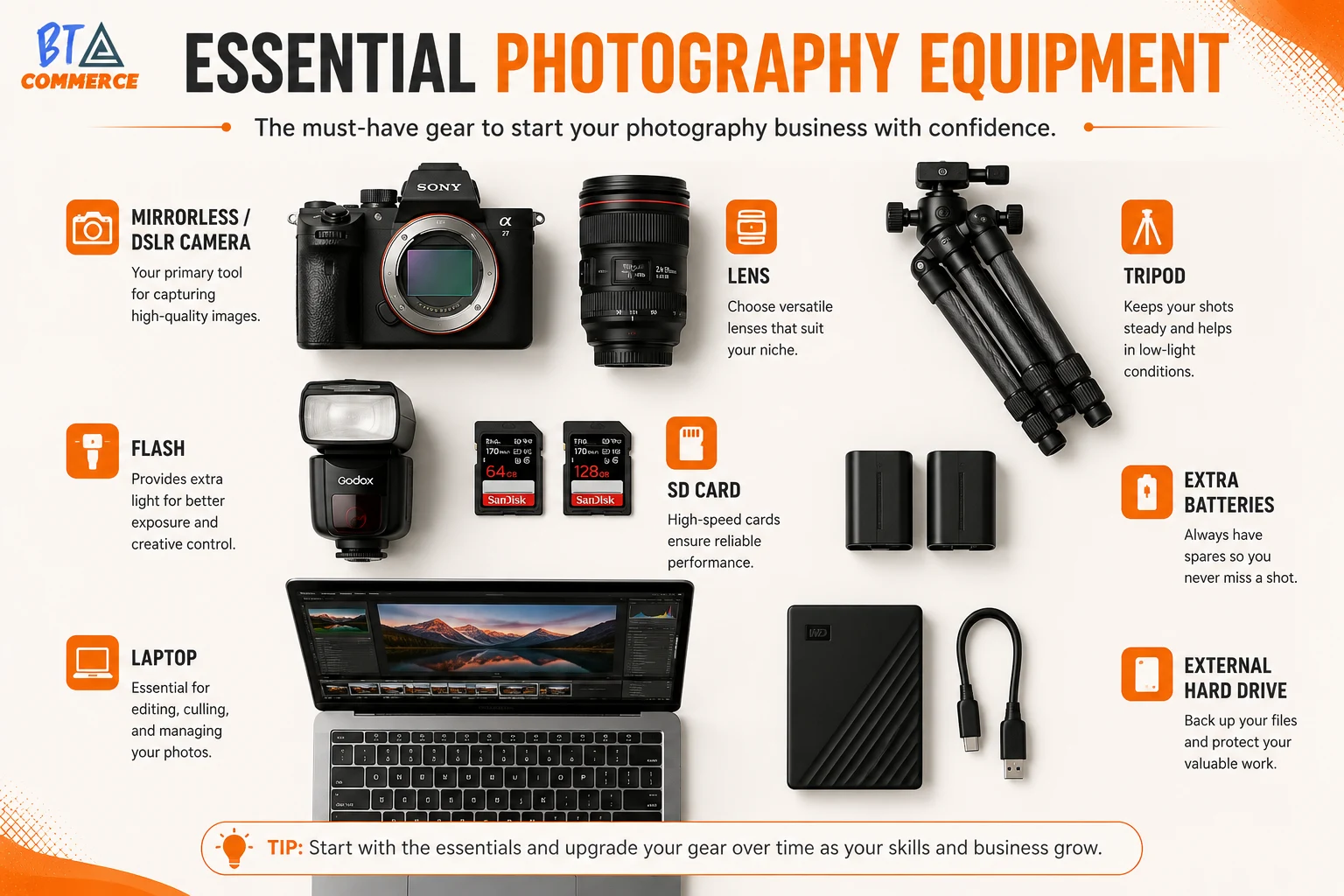
Focus your initial investment on the equipment you’ll use most often. Specialized lenses, advanced lighting setups, and other accessories can be added later as your business expands.
Step 4. Build Your Portfolio
Your photography portfolio is one of the most important factors clients consider before hiring you. If you’re just starting out, don’t wait for paying clients—create opportunities to build a portfolio that showcases the type of work you want to sell.
A professional portfolio should include:
- Generate portfolio-worthy work: If you don’t have client projects yet, photograph friends and family, organize personal projects, or collaborate with local models through TFP (Time for Print) sessions. These shoots allow you to practice, experiment with lighting, and produce professional-quality images.
- Focus on one niche: Build your portfolio around the niche you want to specialize in, such as portrait, wedding, product, commercial, or real estate photography. Clients are more likely to hire photographers who demonstrate expertise in a specific area rather than a broad mix of unrelated work.
- Curate only your best images: Quality matters more than quantity. Include around 15–30 carefully selected photos that share a consistent editing style and represent the type of projects you want to book. As your skills improve, regularly replace older work with stronger images.
- Present your work professionally: Publish your portfolio on a mobile-friendly website with clearly organized galleries, making it easy for potential clients to browse your work, learn about your services, and contact you.
A well-curated portfolio demonstrates your skills, builds trust with potential clients, and serves as one of your most effective marketing tools when launching a photography business.
Step 5. Register Your Photography Business
Registering your photography business helps separate your personal and business finances while ensuring you comply with local regulations. The exact requirements vary by country, state, or city, so always check the rules that apply where you plan to operate.
Before accepting clients, complete these essential legal steps:
- Choose a business name: Pick a name that’s memorable, reflects your brand, and is available to register. If you plan to operate under a name different from your legal name, you may need to register a DBA (Doing Business As), depending on your local regulations.
- Register your business: Select a business structure that fits your needs. Many photographers start as a Sole Proprietorship because it’s simple to set up, while others choose a Limited Liability Company (LLC) for additional legal protection by separating personal and business liabilities.
- Check license and tax requirements: Some locations require a business license, home occupation permit, or sales tax permit before you can legally operate. If you’re in the United States, you may also need an Employer Identification Number (EIN) from the Internal Revenue Service (IRS) for tax purposes or when opening business accounts.
- Consider business insurance: Liability insurance and equipment insurance can help protect your business against accidents, property damage, equipment loss, or legal claims—especially if you photograph weddings, events, or commercial projects.
- Open a business bank account: Keep your personal and business finances separate by using a dedicated business bank account. This makes it easier to track income and expenses, manage taxes, and present a more professional image to clients.
Completing these legal steps early helps you build a credible photography business, stay compliant with local regulations, and avoid administrative issues as your business grows.
=> Read more: 450+ Photography Business Name Ideas (Creative, Unique & Catchy)
Step 6. Build Your Brand and Online Presence
Your brand is more than a logo—it’s how potential clients recognize and remember your photography business. A consistent brand identity and professional online presence help build trust before someone even contacts you.
Focus on these key areas:
- Create a recognizable brand: Define your brand identity by choosing a business name, logo, color palette, fonts, and brand voice that reflect your photography style and appeal to your target audience. Consistency across your website, social media, and marketing materials makes your business look more professional.
- Build a professional website: Your website serves as your digital storefront. Showcase your strongest portfolio, introduce yourself with an About page, explain your photography services, and provide a simple way for potential clients to contact you. Prioritize quality over quantity by featuring only your best work.
- Establish your social media presence: Focus on platforms that suit visual content, such as Instagram and Pinterest. Use a Business or Creator account, maintain a consistent visual style, and keep your branding aligned with your website.
- Optimize your online business profiles: If you serve local clients, create a Google Business Profile so your business can appear in Google Search and Google Maps. Keep your business information accurate and encourage satisfied clients to leave reviews to strengthen your online credibility.
A strong brand and online presence make your photography business look more trustworthy, memorable, and professional, helping you establish credibility before potential clients inquire about your services.
Step 7. Set Your Photography Pricing
Setting the right photography pricing is essential for building a profitable business. Rather than copying competitors or guessing your rates, calculate your costs first, then adjust your prices based on your niche and local market.
When creating your pricing strategy, consider the following:
- Calculate your Cost of Doing Business (CODB): Add up your annual business expenses, including equipment, software subscriptions, website hosting, insurance, marketing, and other operating costs. Then include the annual income you want to earn to determine the minimum amount your business needs to generate.
- Factor in your time: A photography session includes much more than taking pictures. Account for time spent communicating with clients, traveling, setting up equipment, photographing, culling images, editing, and delivering the final gallery. Your pricing should reflect the entire workflow—not just the hours spent behind the camera.
- Create pricing packages: Choose a pricing model that fits your niche. You might charge an hourly rate for commercial or event photography, offer all-inclusive packages for portraits and weddings, or separate the session fee from printed products and digital files.
- Research the local market: Compare your prices with photographers who offer similar services and have comparable experience. This helps you understand market expectations while ensuring your rates remain competitive.
When you’re just starting out, avoid setting prices too low simply to win clients. Pricing below your actual costs can make your business unsustainable and may also reduce the perceived value of your work. Instead, build competitive prices based on your costs, experience, and the value you provide.
Step 8. Market Your Photography Business
Once your business is ready, the next step is attracting your first clients. A successful marketing strategy combines a strong online presence with local networking and customer referrals to build long-term visibility.
Focus on these marketing channels:
- Find your first clients: Start with your personal network by letting friends, family, and former colleagues know about your services. Early projects can help you gain experience, expand your portfolio, and generate valuable testimonials.
- Use social media: Share your best work on platforms like Instagram, Facebook, Pinterest, or TikTok. Post completed projects, behind-the-scenes content, and photography tips to keep your audience engaged and reinforce your brand.
- Optimize your website for SEO: Publish a professional portfolio website that’s optimized for search engines so potential clients can discover your business through Google Search. Use clear service pages, location-based keywords, and contact information to improve visibility.
- Leverage referrals and word-of-mouth: Encourage satisfied clients to recommend your business to friends and family. You can also create a referral program that rewards existing customers for successful recommendations.
- Partner with local businesses: Build relationships with businesses that serve the same audience, such as wedding venues, wedding planners, florists, makeup artists, real estate agencies, or event organizers. These partnerships can generate a steady stream of referrals.
- Collect customer reviews: Ask clients to leave reviews on your Google Business Profile, Facebook, or other relevant platforms. Positive reviews strengthen your online reputation and help potential customers feel more confident about choosing your services.
Consistently marketing your photography business—even when you’re busy with client work—helps build brand awareness, generate referrals, and create a reliable pipeline of future bookings.
Step 9. Manage and Grow Your Business
As your photography business grows, efficient management becomes just as important as your photography skills. Building the right systems early will save time, improve the client experience, and support long-term growth.
Focus on these key areas:
- Manage clients and bookings: Use a calendar or Client Relationship Management (CRM) software to organize inquiries, bookings, shooting schedules, and follow-ups. A streamlined workflow reduces administrative work and helps you stay organized.
- Use contracts and invoices: Create professional contracts that define the project scope, payment terms, and delivery timelines. Send invoices promptly and keep your business finances well documented.
- Track your financial performance: Monitor your revenue, expenses, and profit regularly to understand your business performance and make better financial decisions.
- Keep improving your skills: Invest in workshops, online courses, and industry resources to refine your photography, editing, and business knowledge as trends evolve.
- Grow strategically: As your experience and demand increase, expand your services, introduce higher-value packages, or adjust your pricing to reflect the value you provide.
Managing your business effectively allows you to spend less time on administrative tasks and more time delivering excellent work while building a sustainable photography business.
How Much Does It Cost to Start a Photography Business?
Starting a photography business typically costs between $3,000 and $15,000, although your actual investment depends on your niche, location, and the equipment you already own. If you’re starting part-time with existing gear, you may only need $1,000–$2,500. In contrast, launching a professional wedding, commercial, or studio photography business can require $10,000–$25,000+.
Estimated Startup Budget by Business Size:
| Expense Category | Lean Startup | Standard Professional | High-End / Studio |
|---|---|---|---|
| Camera gear & backups | $1,200 | $4,500 | $12,000+ |
| Editing software & computer | $200 | $1,500 | $3,500 |
| Business registration & insurance | $150 | $600 | $1,200+ |
| Website & marketing | $100 | $800 | $2,500+ |
| Estimated total | $1,650 | $7,400 | $19,200+ |
The largest startup expenses usually include:
- Camera equipment ($1,200–$12,000+): A capable mirrorless or DSLR camera, two versatile lenses, lighting equipment, a tripod, memory cards, spare batteries, and protective carrying cases. If you photograph weddings or events, investing in a backup camera body is strongly recommended.
- Computer and software ($200–$3,500): A computer powerful enough to edit RAW files, along with software such as Adobe Lightroom and Adobe Photoshop. You may also need online gallery platforms and cloud or external storage for file backups.
- Business registration and legal setup ($150–$1,200): Depending on your location, this may include business registration, an LLC or Sole Proprietorship, business licenses, insurance, and professionally drafted client contracts.
- Website and marketing ($100–$2,500): Budget for a domain name, website hosting, portfolio platform, branding materials, and client management tools for booking, scheduling, and invoicing.
To reduce your startup costs, consider these practical strategies:
- Use your existing equipment before upgrading to identify what you actually need.
- Rent specialized lenses or lighting for occasional jobs instead of buying them immediately.
- Start with a simple business structure if local regulations allow, then upgrade as your business grows.
- Take advantage of natural light for portrait or lifestyle sessions to postpone expensive studio lighting purchases.
- Launch a basic portfolio website first, then invest in premium platforms and marketing tools once your business generates steady income.
This approach helps you launch with a realistic budget while leaving room to upgrade your equipment and operations as your photography business grows.
Photography Business Startup Checklist
Use this checklist to make sure you’ve completed the essential steps before launching your photography business and booking your first paying client.
- ☐ Choose your photography niche.
- ☐ Learn your camera’s manual settings and editing workflow.
- ☐ Create a photography business plan.
- ☐ Purchase the essential photography equipment and software.
- ☐ Build a professional photography portfolio.
- ☐ Choose and register your business name.
- ☐ Register your photography business and obtain any required licenses or permits.
- ☐ Apply for an EIN (if applicable) and open a business bank account.
- ☐ Build a professional website and set up your social media profiles.
- ☐ Create your photography pricing and service packages.
- ☐ Prepare client contracts, invoices, and booking documents.
- ☐ Set up a file backup system and client workflow.
- ☐ Launch your marketing and promote your photography services.
- ☐ Collect your first client inquiry and book your first paid photography session.
Common Questions About Starting a Photography Business
Can You Start a Photography Business with No Experience?
Yes. You don’t need professional experience to start a photography business. Focus on learning the fundamentals, practicing consistently, and building a portfolio before taking on paid clients. Many successful photographers started with self-study and hands-on experience.
Can You Start a Photography Business from Home?
Yes. Many photographers start from home to keep startup costs low. You can manage clients, edit photos, and market your services online while traveling to client locations for photo sessions. A dedicated studio can come later as your business grows.
Do You Need a Photography License to Start a Business?
It depends on your location. Most areas don’t require a photography-specific license, but you may need to register your business, obtain a general business license, or meet local tax requirements. Always check your local regulations before accepting paid work.
Can You Start a Photography Business with No Money?
Yes, but it can be challenging. If you already own a camera or can borrow equipment, start by building your portfolio and finding your first clients. Reinvest your early earnings to gradually upgrade your gear and grow your business.
What Type of Photography Business Is Best to Start?
The best niche depends on your skills, interests, and local market demand. Popular options include portrait, wedding, product, real estate, and event photography. Starting with one niche makes it easier to build expertise and attract your ideal clients.
Recommended Reading