Learning how to start a print-on-demand business is one of the easiest ways to enter ecommerce without investing in inventory or managing fulfillment yourself. With the print-on-demand (POD) model, products are created only after customers place an order, allowing you to launch an online store with lower upfront costs and less operational risk.
This guide walks you through nine practical steps to choose a profitable niche, set up your store, price your products, market your business, and build a successful print-on-demand business.
What Is a Print-on-Demand Business?
A print-on-demand (POD) business is an ecommerce business model that allows you to sell custom products without purchasing inventory in advance. Instead of producing items in bulk, products are printed only after a customer places an order. A third-party POD supplier handles printing, packing, and shipping, while you focus on creating designs, managing your online store, and marketing your brand.
Here’s how the print-on-demand process works:
- Create original designs or artwork for your products.
- Choose products, such as T-shirts, hoodies, mugs, tote bags, or phone cases, from a POD supplier’s catalog.
- List your products on an ecommerce platform or online marketplace.
- When a customer places an order, the supplier prints, packs, and ships the product directly to the customer.
- You earn the difference between the selling price and the fulfillment cost.
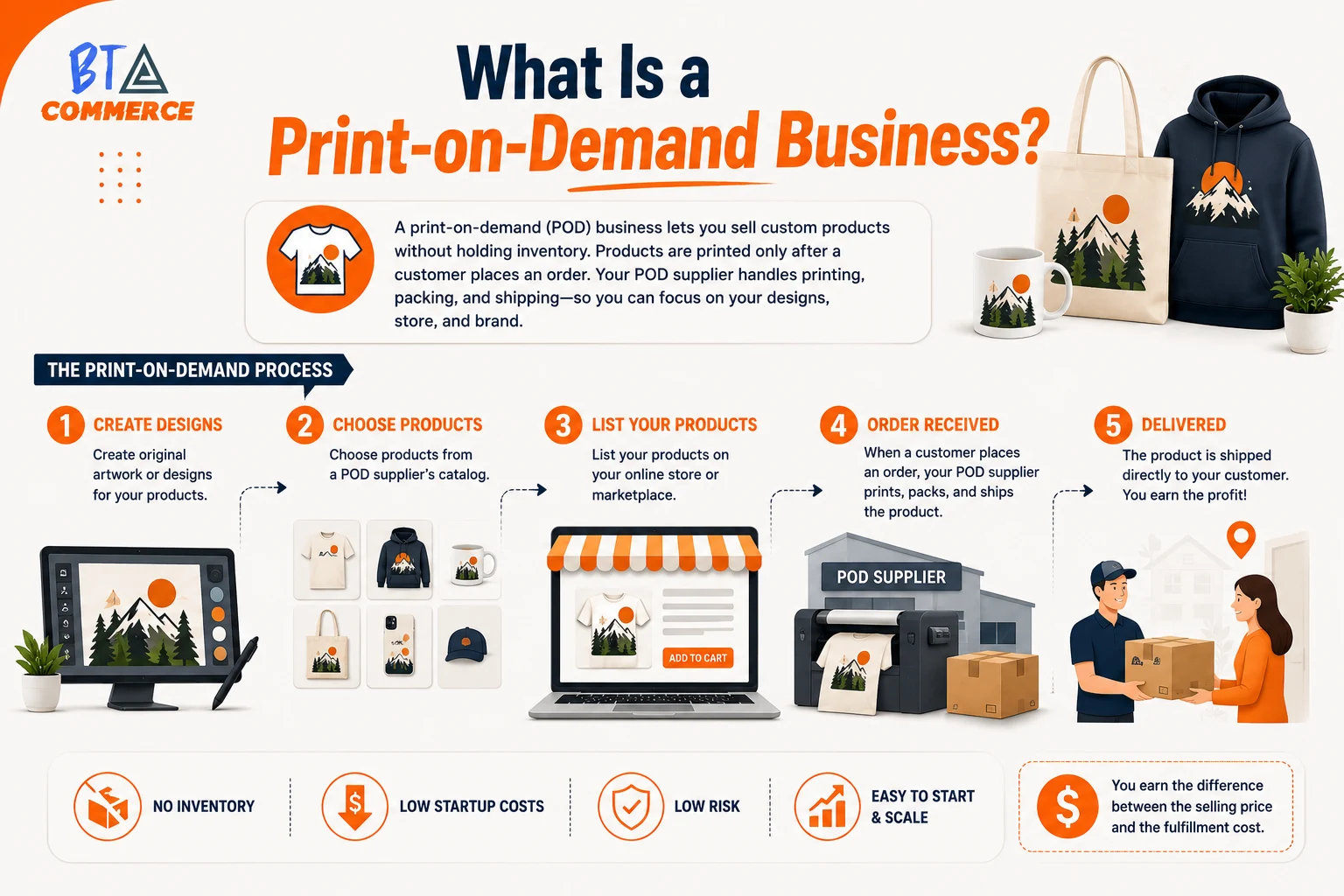
Because production only begins after a sale is made, the print-on-demand business model reduces financial risk and makes it easy to launch an online business with minimal upfront investment.
Read more:
- How to Start a Business in 10 Practical Steps to Succeed
- How to Start an Online Business (8-Step Beginner Guide)
Why Start a Print-on-Demand Business?
Print-on-demand has become one of the most accessible ecommerce business models for entrepreneurs, creators, and small business owners. It removes many of the barriers associated with starting a traditional retail business while giving you the flexibility to build your own brand.
Some of the biggest advantages include:
- Low startup costs: There’s no need to purchase inventory, invest in printing equipment, or rent warehouse space before making your first sale.
- No inventory management: Products are manufactured only after they’re ordered, eliminating the risk of unsold stock.
- Flexible business model: You can run your business from anywhere, experiment with new designs, and add products whenever you want.
- Easy to scale: As sales grow, your POD supplier continues handling fulfillment, allowing you to expand your product catalog without increasing operational complexity.
Like any business model, print-on-demand also has trade-offs to consider.
| Pros | Cons |
|---|---|
| Low startup costs with minimal financial risk | Lower profit margins than bulk manufacturing |
| No inventory or warehouse management | Limited control over product quality and shipping |
| Easy to launch and test new product ideas | High competition in many popular niches |
| Simple to scale by adding new products and designs | Your fulfillment depends on the reliability of your POD supplier |
How to Start a Print-on-Demand Business Step by Step
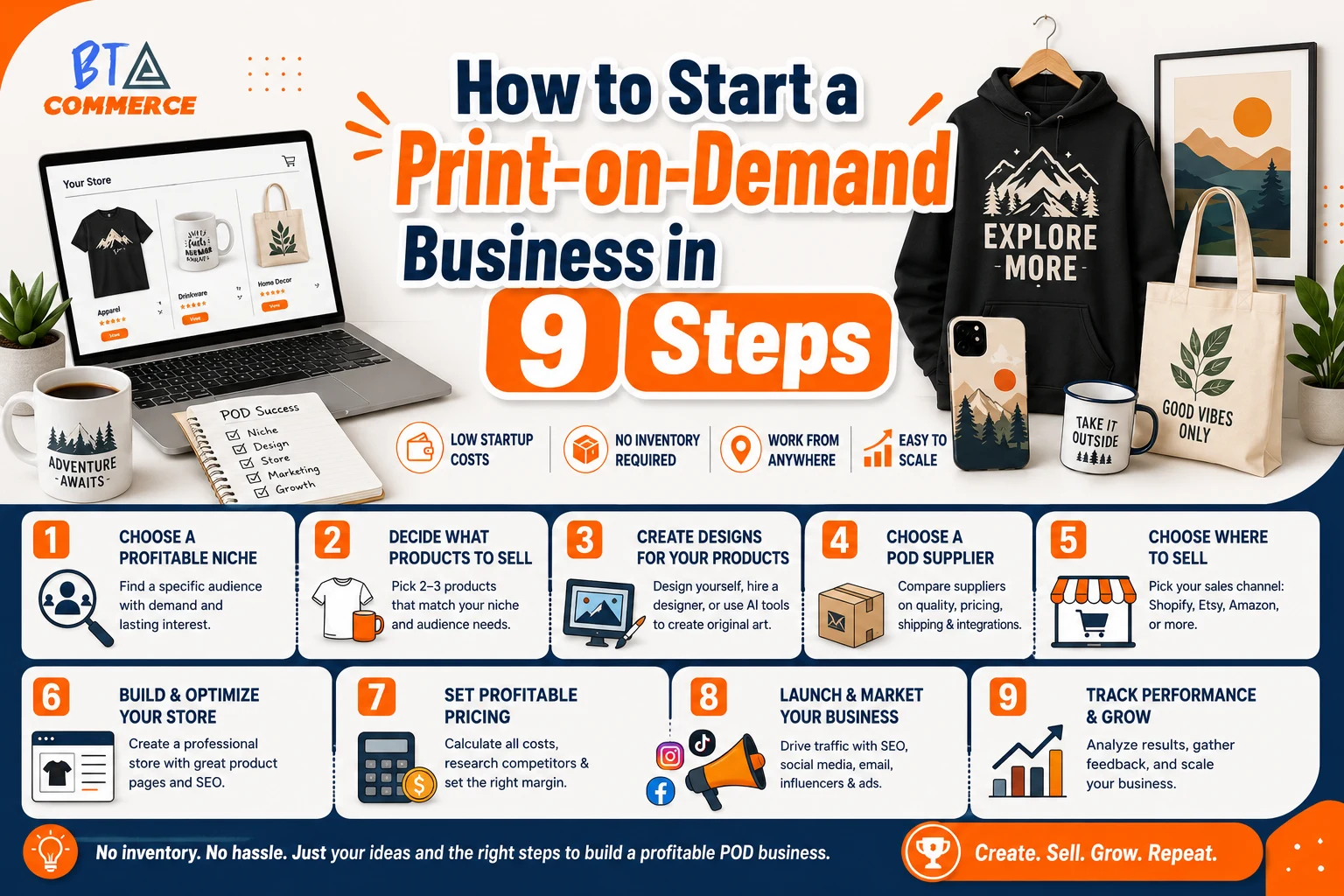
Step 1. Choose a Profitable Niche
Choosing the right niche is one of the most important decisions you’ll make. Rather than trying to sell to everyone, focus on a specific audience with shared interests, hobbies, or lifestyles. A well-defined niche helps you create products people actually want, build a recognizable brand, and stand out in a competitive market.
Start with a broad category, then narrow it down into a more targeted niche. For example:
- Fitness → CrossFit moms, marathon runners, or yoga enthusiasts.
- Pets → Golden retriever owners, cat moms, or reptile lovers.
- Gaming → Retro gamers, RPG fans, or cozy game enthusiasts.
Before creating your first design, make sure your niche has enough demand. You can validate your idea by:
- Searching Etsy or Amazon for products with “Bestseller” or similar popularity badges to identify proven demand.
- Using Google Trends to evaluate whether interest is growing, stable, or seasonal.
- Researching search volume and competition with tools like Ahrefs or Semrush.
- Exploring Reddit, Facebook Groups, or other online communities to see whether your target audience is active and engaged.
- Prioritizing evergreen niches with year-round demand instead of relying only on short-lived trends.
Finally, choose a niche that matches your interests or expertise whenever possible. It will be easier to create authentic designs, connect with your audience, and stay motivated as you grow your print-on-demand business.
=> Read more: 11 Profitable Print-on-Demand Business Ideas to Start
Step 2. Decide What Products to Sell
The products you sell should match your niche and appeal to your target audience. Instead of launching dozens of products, start with two or three core items to keep your store focused and make it easier to identify what sells best.
Some of the most popular print-on-demand products include:
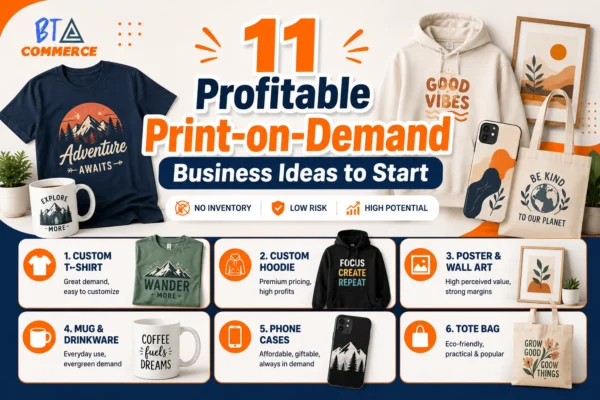
- T-shirts – A versatile product with year-round demand.
- Hoodies – Ideal for premium pricing and seasonal collections.
- Mugs – Popular gifts that are easy to customize.
- Tote bags – Practical, reusable, and suitable for many niches.
- Posters – Great for artwork, quotes, and home décor.
- Phone cases – Everyday accessories with broad appeal.
Before adding products to your store, compare base product costs and shipping rates from different suppliers. Understanding your costs early will help you choose the right products and maintain healthy profit margins.
Step 3. Create Designs for Your Products
Your designs are what set your brand apart from competitors. They should reflect your niche, resonate with your target audience, and look professional when printed.
There are several ways to create POD designs:
- Design them yourself using tools like Canva for beginner-friendly graphics or Adobe Illustrator and Photoshop for more advanced artwork.
- Hire a freelance designer through platforms like Fiverr or Upwork if you need custom, professional-quality designs.
- Use AI design tools to generate ideas or artwork, then refine them to create original designs that fit your brand.
Before publishing your products, follow your supplier’s artwork guidelines. In most cases, you’ll want to upload high-resolution files (300 DPI) in the recommended format, such as a transparent PNG, to ensure your products print clearly and look professional.
Step 4. Choose a Print-on-Demand Supplier
Your print-on-demand supplier is responsible for producing and shipping every order, so choosing the right partner is essential. A reliable supplier can improve customer satisfaction, while a poor one can lead to delays, complaints, and negative reviews.
When comparing suppliers, consider:
- Product quality and the range of products they offer.
- Pricing, including base product costs and shipping fees.
- Shipping speed and fulfillment locations, especially if your customers are concentrated in a specific region.
- Platform integrations with ecommerce platforms like Shopify or marketplaces such as Etsy.
- Customer support in case you need help resolving order issues.
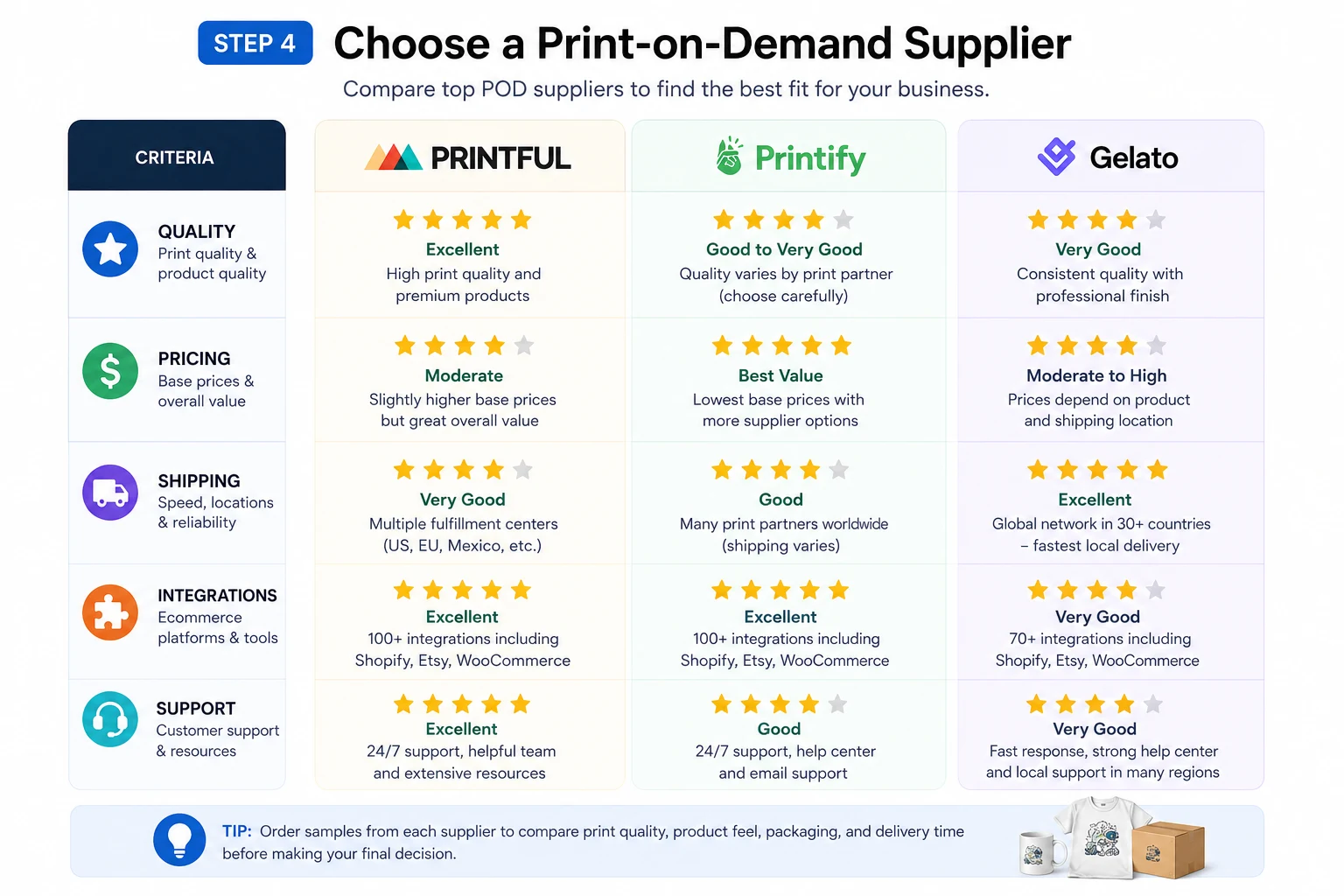
Popular POD suppliers include Printful, Printify, and Gelato. Before making your final decision, order sample products to evaluate print quality, materials, packaging, and delivery times from the customer’s perspective.
Step 5. Choose Where to Sell
The next step is deciding where customers will buy your products. In general, online marketplaces provide built-in traffic, while your own online store gives you greater control over branding, customer relationships, and long-term growth.
Some of the most popular selling channels include:
- Shopify – The best option for building your own branded online store.
- Etsy – Ideal for reaching customers looking for unique or personalized products.
- Amazon – Offers access to a massive customer base but comes with higher competition.
- WooCommerce – A flexible choice if you want to build a WordPress-based ecommerce store.
- TikTok Shop – A strong option for visually appealing products promoted through short-form videos.
Many sellers begin with one sales channel and expand over time. For example, you might launch your own Shopify store while also selling on Etsy or Amazon to reach a wider audience and diversify your sales.
Step 6. Build and Optimize Your Store
Once you’ve chosen your products and supplier, it’s time to build a professional online store. A clean, trustworthy storefront improves the shopping experience and increases the likelihood of converting visitors into customers.
Focus on these essentials:
- Build your brand with a memorable store name, logo, and a custom .com domain that matches your business.
- Connect your ecommerce platform (such as Shopify) with your POD supplier so orders are processed automatically.
- Organize products into logical collections to make browsing easier.
- Create high-quality product pages with realistic mockups that clearly showcase your designs.
- Write informative product descriptions that include materials, sizing, fit, and care instructions.
- Apply basic SEO by using descriptive, keyword-focused product titles and descriptions to improve visibility in search results.
- Set up essential store pages, including your Shipping Policy, Return Policy, and Privacy Policy, to build customer trust.
A polished store not only looks more professional but also provides a better shopping experience before you begin marketing your products.
=> Read more: 300+ Print on Demand Business Name Ideas for Your Brand
Step 7. Set Profitable Pricing
Pricing your products correctly is essential for building a sustainable print-on-demand business. Your goal is to stay competitive while leaving enough room for healthy profit margins.
When calculating your selling price, consider:
- Base product costs charged by your POD supplier.
- Shipping costs, whether charged separately or included in the product price.
- Platform fees, payment processing fees, taxes, and other operating expenses.
- Your desired profit margin after all costs are covered.
Next, research competitor pricing on platforms like Etsy or Amazon to understand what customers are willing to pay. Avoid setting prices too low simply to compete on price alone, as this can quickly reduce your profits.
As a general guideline, aim for a 20%–40% profit margin, or at least $7 profit per product, depending on your niche and product category. You can also build discounts into your pricing strategy by setting a higher regular price and running occasional promotions.
Step 8. Launch and Market Your Business
Once your store is live, your focus shifts to attracting customers. The most successful print-on-demand businesses use multiple marketing channels instead of relying on a single source of traffic.
Some effective marketing strategies include:
- Improve your store’s SEO by optimizing product titles, descriptions, and relevant keywords.
- Use Pinterest to share product images that link directly to your store.
- Post short-form videos and lifestyle content on Instagram and TikTok to showcase your products and behind-the-scenes design process.
- Build an email marketing list to announce new products, promotions, and seasonal collections.
- Partner with influencers or content creators in your niche to reach a highly targeted audience.
- Run paid ads on platforms like Meta or Google to test new products and scale successful campaigns.
Start with one or two marketing channels that fit your audience, then expand your strategy as your business grows.
Step 9. Track Performance and Grow
Launching your store is only the beginning. Regularly reviewing your results helps you identify what’s working, improve weak areas, and uncover new growth opportunities.
Track key performance metrics such as:
- Analytics, including traffic, conversion rate, and your best-selling products.
- Customer feedback and product reviews to identify opportunities for improvement.
- Sales trends throughout the year to prepare for holidays and other seasonal peaks.
As your business grows, look for ways to scale efficiently:
- Expand your product line by introducing complementary products that match your niche.
- Add seasonal products for holidays, special events, or trending occasions.
- Increase marketing investment in your best-performing channels.
- Use automation tools or outsource repetitive tasks such as customer support, design work, or social media management so you can focus on growing your business.
Print-on-Demand vs. Dropshipping
Although print-on-demand (POD) is a type of dropshipping, the two business models operate differently. POD focuses on selling custom-designed products that are made only after an order is placed, while traditional dropshipping typically involves reselling pre-manufactured products from suppliers.
| Feature | Print-on-Demand (POD) | Traditional Dropshipping |
|---|---|---|
| Products | Blank products customized with your own designs | Pre-manufactured products sourced from suppliers |
| Customization | High—unique designs and personalized products | Limited or no product customization |
| Branding | Easier to build a unique brand around original designs | More difficult because many sellers offer the same products |
| Competition | Lower direct competition through product differentiation | Higher competition, often based on price |
| Profit Margins | Typically 20%–40% | Typically 10%–30% |
| Fulfillment | Products are printed after each order is placed | Products are ready to ship immediately from the supplier |
| Best For | Creators, artists, and entrepreneurs building a branded business | Sellers focused on trending products and rapid scaling |
=> Read more: How to Start a Dropshipping Business (9-Step Guide for Beginners)
Common Mistakes When Starting a Print-on-Demand Business
Many new sellers fail because of avoidable mistakes rather than the business model itself. Avoid these common pitfalls to build a stronger foundation for your store.
- Choosing a niche that’s too broad: Selling to everyone makes it difficult to stand out. Focus on a specific audience with shared interests and proven demand.
- Ignoring product quality: Order sample products before selling to check print quality, materials, colors, and packaging.
- Using poor-quality designs or mockups: Low-resolution files, incorrect formats, or unrealistic mockups can reduce customer trust and lead to disappointing products.
- Pricing products incorrectly: Consider base costs, shipping, platform fees, payment processing fees, and taxes before setting your retail price.
- Weak branding: A consistent brand identity—including your store design, logo, and product presentation—helps you stand out from competitors.
- Relying on one marketing channel: Combine SEO, social media, email marketing, and paid ads instead of depending on a single traffic source.
- Skipping trademark checks: Make sure your designs, quotes, and graphics don’t infringe on existing trademarks before publishing.
- Giving up too soon: It often takes time for SEO, marketing, and customer trust to generate consistent sales. Stay patient and keep optimizing your store.
How Much Does It Cost to Start a Print-on-Demand Business?
Starting a print-on-demand business can cost anywhere from $0 to $1,500+, depending on your selling platform, design workflow, and marketing strategy. Because products are made only after an order is placed, you don’t need to buy inventory upfront, making POD one of the most affordable ecommerce business models.
Typical Startup Budget:
| Budget | Best For | What’s Included |
|---|---|---|
| $0–$50 | Testing an idea | Free Printful or Printify account, free tools like Canva or Photopea, marketplaces such as Redbubble, TeeSpring, or Etsy ($0.20/listing), and organic traffic from SEO or social media |
| $100–$500 | Building a branded business | Ecommerce platform, custom domain, premium tools like Kittl or Placeit, and a $100–$300 budget for Google Ads or Meta Ads |
| $1,000+ | Scaling faster | Professional design services, influencer marketing, and larger advertising campaigns |
Common Startup Expenses:
| Expense | Typical Cost |
|---|---|
| Selling platform | $0–$39+/month |
| Custom domain | $10–$20/year |
| Design tools & mockups | $0–$45/month |
| Marketing | $0–$300+/month |
Before launching, don’t forget these often-overlooked costs:
- Product samples: Budget $50–$150 to verify print quality before selling. Some suppliers, such as Printful, offer discounted sample orders.
- Transaction fees: Marketplaces and ecommerce platforms charge transaction and payment processing fees. For example, Etsy charges a 6.5% transaction fee in addition to payment processing fees.
- Cash flow: Your POD supplier charges you when an order is placed, but payouts from your selling platform may take 2–5 business days, so it’s a good idea to keep a small cash reserve.
Starting a Print-on-Demand Business FAQs
Is Printful good for starting a print-on-demand business?
Yes. Printful is an excellent choice for beginners thanks to its high print quality, reliable fulfillment, and integrations with major ecommerce platforms and marketplaces. If your priority is quality over the lowest cost, it’s a strong option.
Do I need a business plan for a print-on-demand business?
Yes, but it doesn’t have to be complex. A simple business plan covering your niche, target audience, products, pricing, marketing strategy, and startup budget is enough to guide your launch.
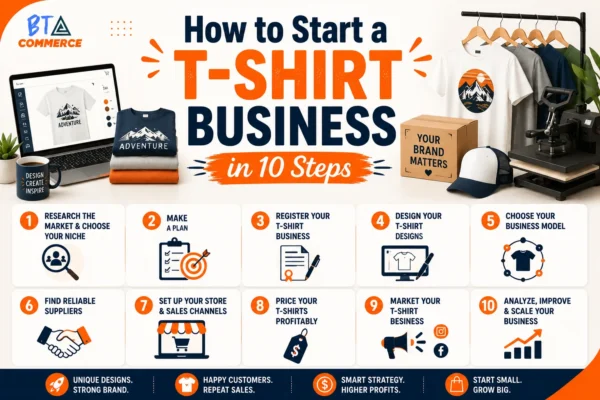
How do I start a print-on-demand T-shirt business?
The process is the same as any POD business: choose a niche, create original t-shirt designs, select a reliable supplier, connect it to your selling platform, and promote your products through SEO and social media.
Can I start a print-on-demand store without my own website?
Yes. You can start on marketplaces like Etsy or Amazon without building a website. As your business grows, launching your own ecommerce store gives you more control over your brand and customer relationships.
How do I sell products with Printify?
Create a free Printify account, upload your designs, connect Printify to your preferred sales channel, and publish your products. When a customer places an order, Printify automatically handles production and shipping through its print partners.
Recommended Reading