
Starting a nail business requires more than just having nail skills and creating beautiful designs. From choosing the right business model and understanding startup costs to building a customer base and managing daily operations, new entrepreneurs need a clear plan before opening their doors.
In this guide, BTA Commerce explains how to start a nail business step by step, covering key areas such as nail technician certification, business registration, setting up a nail salon or home-based service, attracting clients, and growing a successful nail brand.
Is Starting a Nail Business Worth It?
Starting a nail business can be a worthwhile opportunity for entrepreneurs who want creative freedom, flexible work, and a service-based business with recurring customers. Growing interest in self-care, nail art, and beauty trends continues to create strong demand for professional nail services.
Why a nail business can be worth starting:
- Recurring revenue: Customers often return every 2–4 weeks for maintenance services such as manicures, gel nails, acrylic nails, and nail art, allowing businesses to build repeat income over time.
- Strong profit potential: Nail services can offer attractive margins, with some well-managed businesses achieving gross profit margins of around 70%–80% due to relatively low supply costs compared with service prices.
- Low barrier to entry: Entrepreneurs can start with smaller models such as a home-based nail business, private nail studio, booth rental, or mobile service before investing in a full nail salon.
- Growing market demand: Social media platforms like Instagram and TikTok continue to influence nail trends, encouraging customers to try new designs and professional nail services.
Challenges to consider:
- Building a loyal client base takes time and consistent effort before income becomes more predictable.
- Nail technicians may experience physical strain from long hours of detailed hand work.
- Competition is high, so businesses need to stand out through service quality, customer experience, and specialization.
A nail business is best suited for people who enjoy beauty services, working with clients, and combining creative skills with business management.
Read more:
- How to Start a Beauty Business: Step-by-Step Beginner Guide
- How to Start a Waxing Business in 7 Steps
- How to Start a Hair Business in 7 Steps (Beginner’s Guide)
How to Start a Nail Business in 9 Steps

Step 1: Get Certified
Before offering professional nail services, you’ll need proper nail technician certification or a license to meet public health, safety, and operational standards. Requirements vary by country, state, or municipality, so check your local State Board of Cosmetology or regulatory authority to understand the credentials required.
Most approved training programs from a beauty academy or vocational school cover essential skills such as manicures, pedicures, acrylic and gel extensions, electric file (e-file) safety, product chemistry, nail anatomy, and sanitation procedures. Depending on local requirements, training programs may require around 100–600 hours of education before taking a licensing exam.
After completing your training, you may need to pass written and practical exams covering topics such as hygiene, safety protocols, sanitation, and nail techniques. Obtaining professional liability insurance and displaying your certification or license can also help build trust with clients.
Step 2: Research the Market
Market research helps you understand local demand, identify your target customers, analyze competitors, and find opportunities to position your nail business in the market.
Key areas to research include:
- Identify your target customers: Define your ideal clients based on factors such as age, income, lifestyle, location, and nail care preferences. Research popular services, customer spending habits, and how much clients are willing to pay for quality nail services.
- Analyze local competitors: Study nearby nail salons and independent nail technicians to compare their service menus, pricing, locations, customer experience, and reviews on platforms like Google Maps and social media. Identify gaps where your business can provide better value.
- Evaluate market demand: Research local demographics, including population characteristics, income levels, and customer trends, to determine whether there is sufficient demand for your services.
- Find opportunities to differentiate: Identify underserved niches and create a Unique Selling Proposition (USP) through specialized services, unique nail designs, better customer experience, or alternative models such as mobile nail services.
Step 3: Create a Business Plan
A nail business plan serves as a roadmap for defining your concept, planning operations, estimating financial needs, and preparing for long-term growth. It can also help when applying for funding, such as a Small Business Administration (SBA) loan or bank loan.
A comprehensive nail business plan should include:
- Business overview: Define your business concept, goals, target customers, legal structure, and what makes your nail business unique.
- Services and pricing: Outline your service menu, including manicures, pedicures, gel nails, acrylic nails, and nail art, then create a pricing strategy based on market research.
- Market analysis: Summarize your target customers, competitor research, and opportunities to differentiate your business.
- Operations plan: Plan your workspace, equipment, hygiene standards, staffing needs, booking software, and daily business processes.
- Financial plan: Estimate startup costs, monthly expenses, revenue forecasts, and your expected break-even point.
- Marketing plan: Define how you will attract customers through branding, online presence, social media, and local marketing.
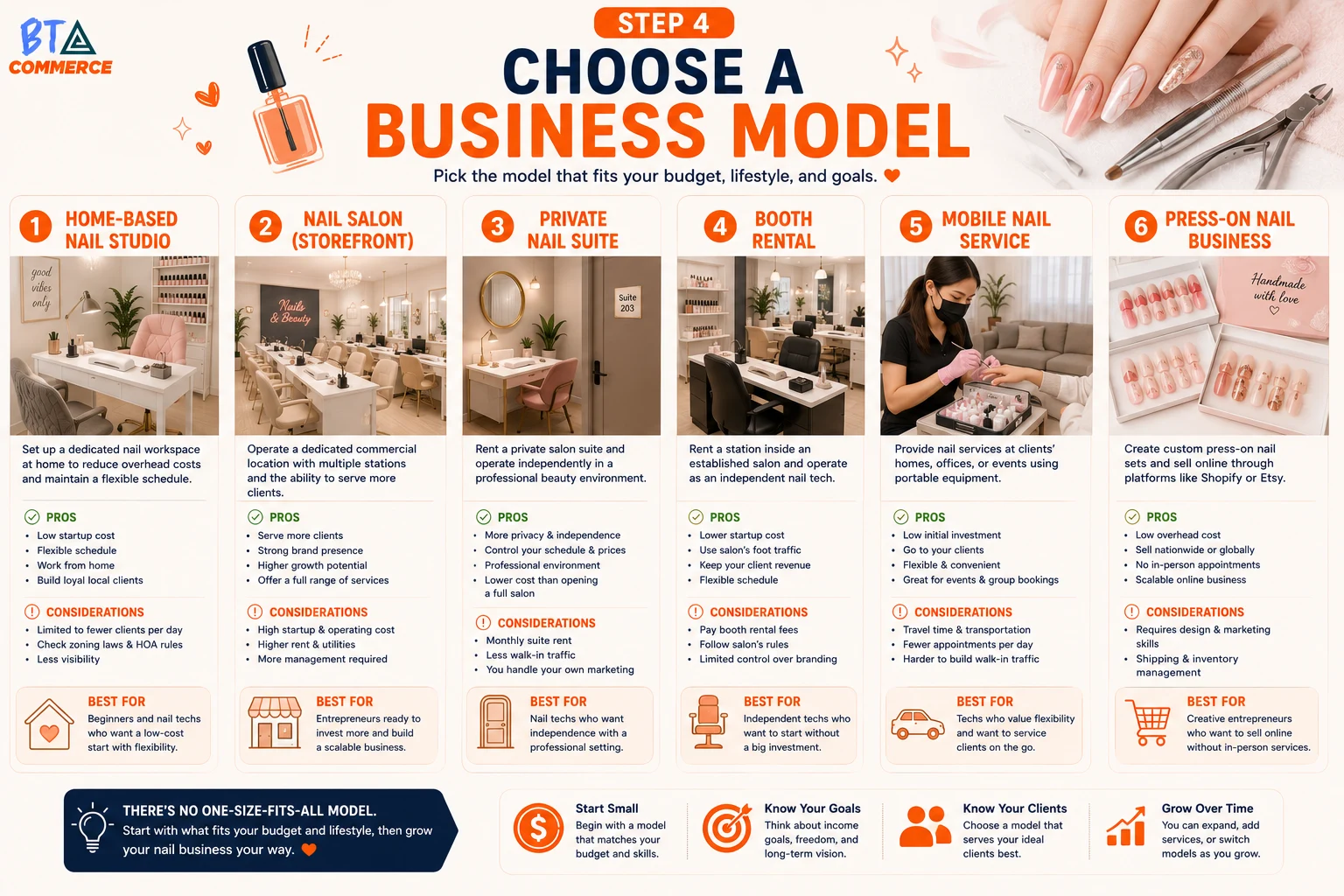
Step 4. Choose a Business Model
Choosing the right business model affects your startup costs, daily flexibility, operating expenses, and growth potential. Consider your budget, experience level, target customers, and long-term goals before deciding how to structure your nail business.
Common nail business models include:
- Home-based nail business: Set up a dedicated nail workspace at home to reduce overhead costs and maintain a flexible schedule. Before starting, check local zoning laws, licensing requirements, and any homeowner association (HOA) restrictions.
- Nail salon: Operate a dedicated commercial location with multiple stations, professional equipment, and the ability to serve more clients. This model offers stronger branding and growth potential but requires higher startup costs and ongoing expenses.
- Nail suite: Rent a private salon suite where you operate independently while benefiting from an existing professional beauty environment. It provides more privacy and control than traditional salon employment without the full cost of opening a standalone salon.
- Mobile nail business: Provide nail services at clients’ homes, offices, or events using portable equipment. This model requires lower initial investment but may limit the number of appointments you can complete due to travel time.
- Booth rental: Rent a station inside an established nail salon and operate as an independent nail technician. You can keep your client revenue, set your schedule, and avoid many costs associated with owning a full salon.
- Press-on nail business: Create custom nail sets and sell them online through platforms such as Shopify or Etsy. This model allows you to reach more customers without managing in-person appointments.
Step 5. Register Your Business
Registering your nail business helps you operate legally, protect your personal assets, and prepare for future growth. The exact requirements vary by location, so check your state and local regulations before opening.
Key steps include:
- Choose a legal structure: Select a structure that fits your goals, such as a sole proprietorship, Limited Liability Company (LLC), partnership, or corporation. An LLC can provide personal liability protection, while a sole proprietorship is typically easier and less expensive to establish.
- Register your business name: Choose a unique nail business name and complete the required registration process with your local or state authority.
- Obtain licenses and permits: Ensure you have the required nail technician license, salon establishment license, general business license, and any other local permits needed to operate legally.
- Get a tax ID: Apply for the required tax identification number in your location, such as an Employer Identification Number (EIN) in the U.S.
- Purchase business insurance: Consider professional liability insurance and other coverage to protect your business from potential claims or unexpected costs.
- Open a business bank account: Separate your personal and business finances to simplify accounting, tax reporting, and financial management.
Step 6. Find a Location
Choosing the right location can significantly affect your nail business’s visibility, customer access, and operating costs. Consider your target customers, budget, and business model before committing to a space.
Key factors to evaluate include:
- Choose the right area: Select a location that matches your target customers, such as areas with suitable demographics, income levels, and lifestyle preferences. Options may include a home-based studio, salon suite, booth rental, or commercial storefront.
- Evaluate visibility and accessibility: High-traffic locations such as shopping centers or busy streets can attract walk-in customers, while destination locations may offer lower rent but require stronger marketing efforts. Consider parking availability and public transportation access.
- Consider rent and operating costs: Keep your monthly rent within a sustainable range. A common guideline is to keep rent around 6% to 10% of projected gross revenue to maintain healthy profit margins.
- Review space requirements and regulations: Ensure the location meets local health and safety requirements, including proper zoning, ventilation systems, plumbing capacity, and enough space for workstations.
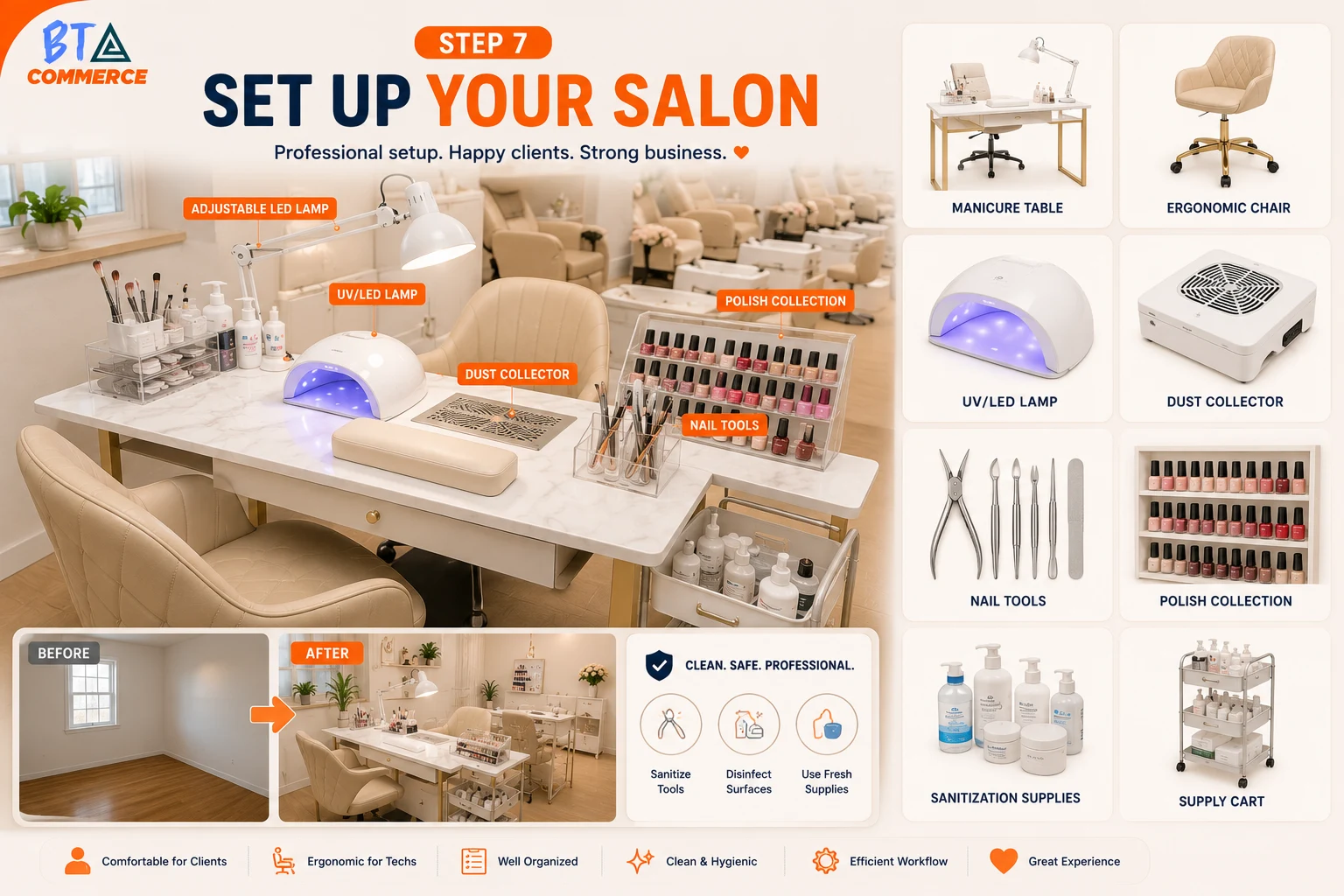
Step 7. Set Up Your Salon
Setting up your nail workspace requires the right equipment, an efficient layout, and a comfortable environment that supports both service quality and customer experience.
Key areas to focus on include:
- Purchase equipment and supplies: Invest in essential equipment such as manicure tables, client chairs, technician stools, LED curing lamps, ventilation systems, and dust collectors. Stock necessary supplies, including gel polish, acrylic products, nail tools, files, buffers, and hygiene disposables.
- Design an efficient workspace: Arrange workstations to create a smooth workflow while ensuring enough space for technicians and clients. Choose ergonomic furniture and a layout that improves comfort during long appointments.
- Create a clean and comfortable environment: Maintain strict hygiene standards with proper sanitation procedures, clean tools, and a welcoming atmosphere that builds client trust.
- Set up booking and payment systems: Use appointment scheduling software to manage bookings, reduce missed appointments, and improve customer convenience. Accept card and digital payments to provide flexible payment options.
Step 8. Build Your Team
Building the right team helps maintain service quality, improve customer experience, and support long-term growth as your nail business expands.
Key steps include:
- Define your staffing model: Choose a structure that fits your business, such as booth rental, commission-based pay, or employee models. Each option affects your costs, management responsibilities, and level of control.
- Hire licensed nail technicians: Recruit qualified professionals who can provide services such as manicures, pedicures, acrylic nails, gel nails, and nail art while meeting local licensing requirements.
- Recruit support staff if needed: Larger nail salons may need front desk staff to handle appointments, customer communication, payments, and retail sales.
- Train employees and set standards: Establish clear guidelines for service quality, sanitation procedures, customer service, and brand expectations. Ongoing training helps technicians improve skills and stay updated on new techniques and products.
Step 9. Market Your Business
Effective marketing helps your nail business attract new clients, build trust, and encourage repeat bookings. Focus on creating a strong brand presence, improving local visibility, and using visual content to showcase your work.
Key marketing strategies include:
- Build your brand: Create a consistent brand identity through your business name, logo, service style, salon atmosphere, and customer experience. A clear brand helps your nail business stand out in a competitive market.
- Create a website: Build a professional website that showcases your services, pricing, nail art portfolio, customer reviews, and online booking options. A website acts as a digital storefront and helps convert visitors into clients.
- Set up Google Business Profile: Create and optimize your Google Business Profile with accurate information, including your business name, address or service area, operating hours, services, and high-quality photos. This helps local customers find your nail business through search and Google Maps.
- Promote your business on social media: Use visual platforms such as Instagram, TikTok, and Facebook to share nail designs, before-and-after transformations, behind-the-scenes content, and client results. Consistent visual content can help attract local customers and showcase your expertise.
- Launch referral and local marketing campaigns: Encourage word-of-mouth referrals through loyalty programs, referral rewards, partnerships with complementary businesses, and customer reviews. A consistent service experience can also help turn first-time visitors into loyal clients.
How Much Does It Cost to Start a Nail Business?
The cost to start a nail business typically ranges from $1,500 to $5,000 for a home-based setup and can exceed $150,000 for a full-service salon. Your total investment depends on your business model, location, equipment quality, and the number of clients you plan to serve.
| Business Model | Estimated Startup Cost | Main Costs |
|---|---|---|
| Home-based nail business | $1,500–$5,000 | Equipment, supplies, licenses, and basic marketing |
| Nail suite or booth rental | $5,000–$15,000 | Workspace rental, equipment, inventory, and setup |
| Mid-range nail salon | $40,000–$100,000 | Lease, build-out, salon furniture, equipment, and staff setup |
| Luxury nail salon | $150,000–$300,000+ | Premium design, high-end equipment, spa services, and larger inventory |
Major startup expenses include:
- Equipment and supplies: $5,000–$25,000+ for manicure tables, pedicure chairs, LED/UV lamps, ventilation systems, nail tools, polish, acrylic products, and hygiene supplies.
- Licenses, permits, and insurance: $500–$4,500 depending on local requirements.
- Rent and utilities: Commercial locations may require deposits, renovations, and ongoing rent of around $1,000–$5,000+ per month depending on the market.
- Marketing and software: $500–$7,500+ for branding, website setup, booking software, advertising, and launch campaigns.
- Working capital: Keep 3–6 months of expenses available to cover rent, supplies, payroll, and other operating costs while building your customer base.
Starting with a home-based service, nail suite, or booth rental can reduce upfront costs, while opening a full salon requires significantly more capital but provides more room for growth.
Starting a Nail Business FAQs
Do I need a license to start a nail business?
Yes. In most locations, you need a state-issued nail technician or cosmetology license to legally provide nail services to clients. You may also need additional business licenses, salon permits, or health department approvals depending on your location and business model.
If you only sell product-based items such as custom press-on nails online, you may not need a nail technician license, but you may still need a standard business registration or retail license.
Do I need certification to open a nail business?
Yes. Certification or formal training is usually the first step toward becoming licensed. Most nail technicians complete an approved beauty school or vocational program that covers manicures, pedicures, nail enhancements, sanitation, safety procedures, and nail anatomy.
Training requirements vary by location, but many programs require around 100–600 hours of education followed by written and practical exams before receiving a professional license.
How much does it cost to open a nail salon?
The cost depends on your business model, location, and salon size. A home-based nail business or salon suite may cost around $1,500–$15,000, while a mid-range nail salon with 4–6 stations may require $40,000–$100,000. A luxury full-service salon can cost $150,000–$300,000+ due to higher expenses for construction, equipment, design, and inventory.
Common startup costs include equipment, supplies, licenses, insurance, rent deposits, marketing, and working capital.
How do I start a small nail business from home?
To start a home-based nail business, first check local zoning laws, licensing requirements, and any homeowner association (HOA) restrictions. Then create a dedicated, clean workspace that meets health and safety standards.
Key steps include:
- Obtain the required nail technician license and business permits.
- Set up a separate and hygienic service area.
- Invest in proper ventilation and sanitation equipment.
- Purchase essential nail tools and supplies.
- Use booking software and digital payments to manage appointments professionally.
What equipment do I need to start a nail business?
The equipment needed depends on your services, but most nail businesses require:
- Furniture: Manicure table, technician chair, client chair, and pedicure station if offering pedicure services.
- Electrical tools: UV/LED curing lamps, electric nail file (e-file), and dust collector.
- Sanitation equipment: Professional disinfectants, sterilization tools, gloves, and disposable supplies.
- Nail products: Gel polish, regular polish, acrylic products, base coats, top coats, nail tips, files, buffers, and cuticle tools.
Investing in reliable equipment and maintaining strict hygiene standards helps improve service quality and build client trust.
How profitable is a nail business?
A nail business can be profitable, but results depend on location, pricing, customer volume, and operating costs. Many nail salons operate with net profit margins of around 10%–25%, while solo nail technicians running home-based businesses or booth rentals may achieve higher margins by reducing rent and staffing costs.
Profitability improves when businesses build repeat customers, manage expenses carefully, and increase revenue through premium services, nail art, and retail product sales.
How much should I charge for nail services?
Pricing should cover your labor, supplies, overhead costs, and desired profit margin while remaining competitive in your local market. Typical price ranges include:
- Basic manicure: $15–$25
- Gel manicure: $25–$65
- Acrylic or gel extensions: $40–$120+
- Detailed nail art: $15–$35+ additional charge
Before setting prices, research local competitors and adjust your rates based on your experience, service quality, location, and target customers.
Recommended Reading