Starting a beauty business is easier than ever, but also more competitive than before. Success today doesn’t come from big budgets—it comes from choosing the right niche, validating demand early, and building a focused brand.
You don’t need a full product line or a large investment to begin. Many successful beauty brands start with one product, a clear audience, and a simple online store. In this guide, you’ll learn how to start a beauty business step by step—from idea to launch and growth.
=> Read more:
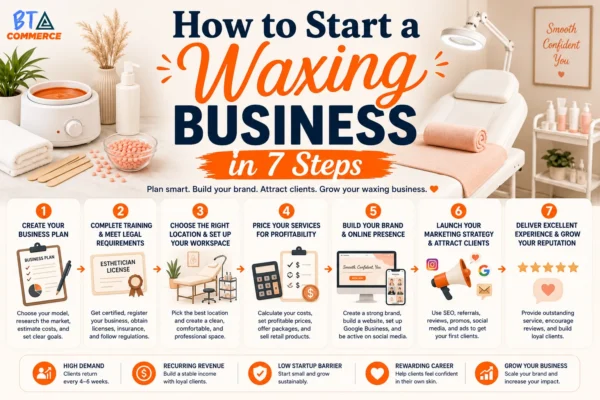
- How to Start a Waxing Business in 7 Steps
- How to Start a Hair Business in 7 Steps (Beginner’s Guide)
- How to Start a Nail Business in 9 Steps
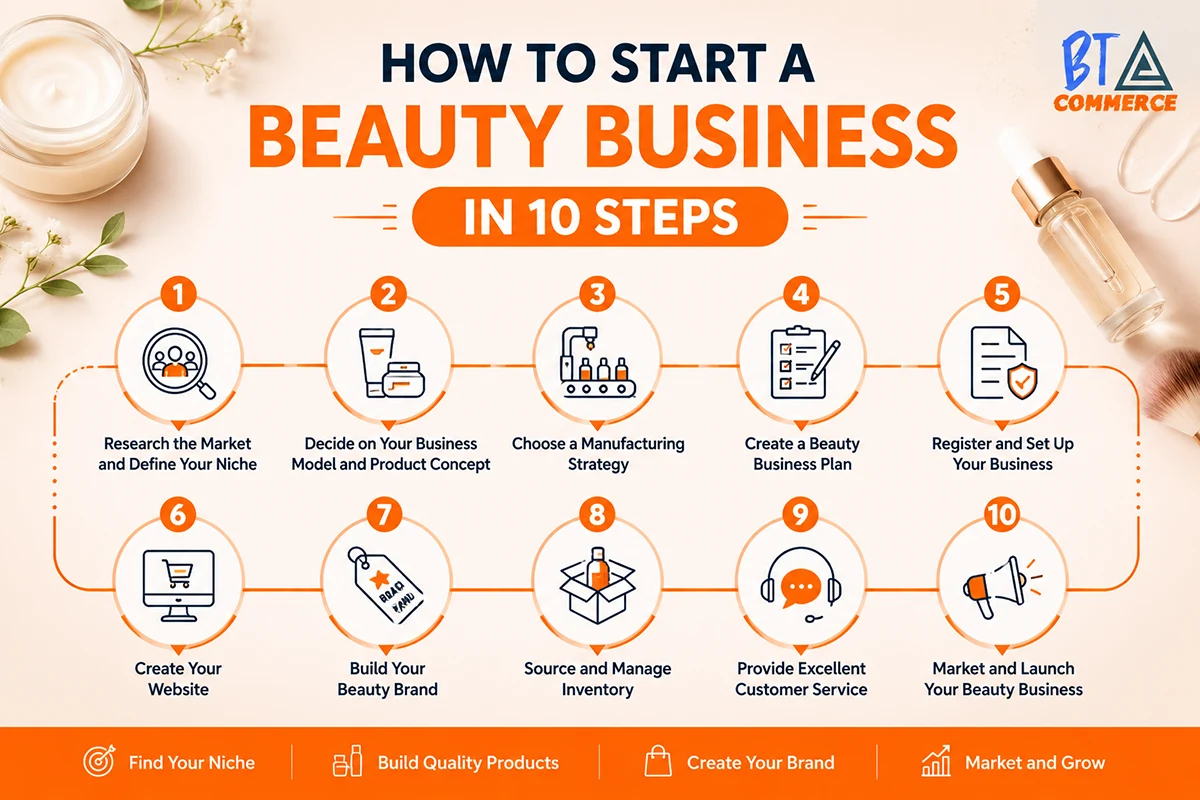
How to Start a Beauty Business in 10 Steps
1. Research the Market and Define Your Niche
Before creating products or building your brand, understand who you want to sell to and why customers would choose your business over others. The beauty industry is highly competitive, so defining a niche early helps you focus your products, marketing efforts, and long-term growth strategy.
Start by understanding your target audience.
Go beyond basic demographics and identify what your ideal customers actually want. Consider:
- Beauty concerns they want to solve
- Age, lifestyle, and purchasing habits
- Preferences such as natural ingredients, vegan products, or affordability
- Where they discover and buy products online
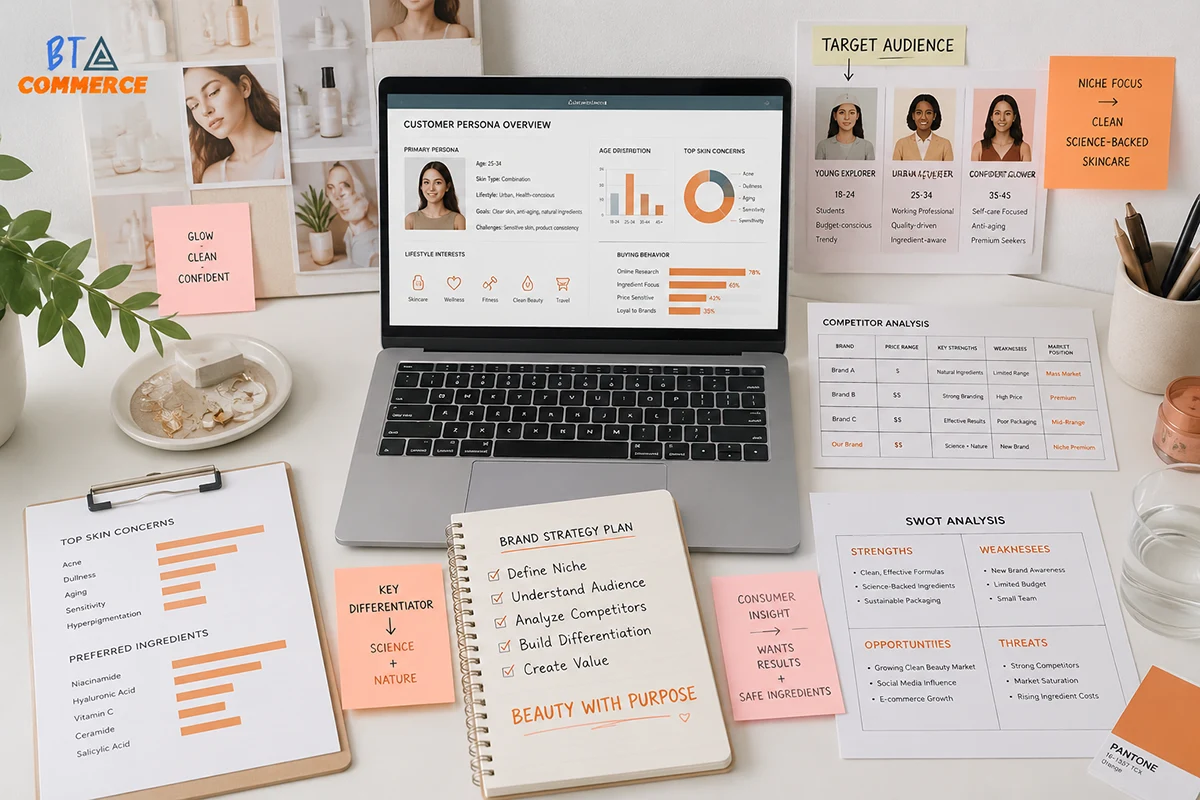
Next, analyze competitors in your market.
Competition is not necessarily a bad sign because it often confirms customer demand already exists. Review:
- Best-selling products
- Pricing strategies
- Brand positioning
- Customer reviews
- Social media engagement
As you study competitors, look for gaps in the market. Instead of building another general beauty brand, identify opportunities where customer needs are not fully addressed. Examples include:
- Fragrance-free products for sensitive skin
- Cruelty-free or vegan cosmetics
- Products designed for specific skin concerns
- Beauty products targeting a specific audience or lifestyle
Finally, define your unique selling proposition (USP).
Your USP is what makes your business different and gives customers a reason to choose you. This could include:
- Personalized beauty solutions
- Unique ingredients or formulas
- Sustainable packaging
- Affordable premium products
- A strong brand story
A clear niche and USP will make future decisions much easier, from product development to branding and marketing.
2. Decide on Your Business Model and Product Concept
Once you understand your market, decide how your beauty business will operate and what you want to sell. Your business model affects everything from startup costs to marketing and long-term growth.
Most beauty businesses start with one of these approaches:
- Product-based business: Sell physical products such as skincare, makeup, or cosmetics through an online store or retail channels.
- Service-based business: Offer beauty services such as salons, makeup artistry, skincare treatments, or consulting.
Next, decide on your product concept. Popular categories include:
- Skincare products
- Makeup lines
- Cosmetic and beauty products
- Natural or niche-focused products
Avoid launching with a large catalog in the beginning. Many successful beauty brands start with one hero product that solves a specific problem and build around it later.
As you make decisions, think beyond launch day and choose a concept that can scale over time. Ask yourself:
- Can you easily add new products later?
- Can production increase as demand grows?
- Does the concept support repeat purchases?
Starting focused often creates a stronger foundation than trying to sell everything at once.
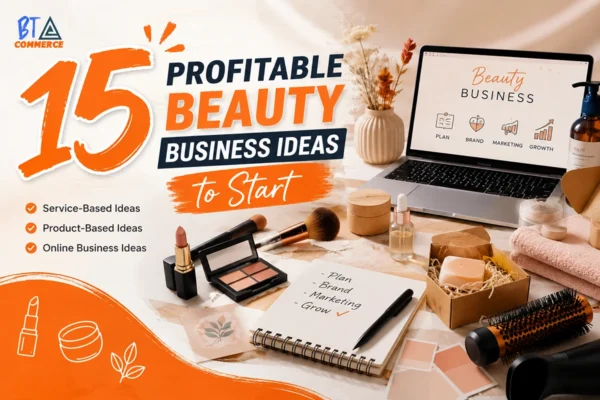
=> Read more: 15 Profitable Beauty Business Ideas to Start
3. Choose a Manufacturing Strategy
Your manufacturing strategy affects product quality, startup costs, and how easily your beauty business can scale. The right option depends on your budget, experience, and production goals.

Common manufacturing options include:
- Private label: Sell ready-made formulas under your own brand. This option is faster to launch and usually requires less investment.
- Manufacturing from scratch: Develop custom formulas and products with a manufacturer. This gives you more control and stronger differentiation but typically costs more.
- Handmade or home-based production: Produce products yourself in small batches. This approach can work well for startups testing ideas or launching with a limited budget.
When looking for suppliers, pay close attention to minimum order quantities (MOQs). Lower MOQs reduce upfront costs and allow you to test products without committing to large inventory purchases.
Starting with smaller production runs can help you validate demand before investing in larger-scale manufacturing.
4. Create a Beauty Business Plan
A beauty business plan acts as a roadmap for your launch and future growth. It helps you organize your ideas, estimate costs, and make decisions based on numbers instead of assumptions. Even if you are not looking for investors, a clear plan can prevent unnecessary spending and keep your business focused.
Include these key areas in your plan:
- Startup budget: Estimate your initial expenses, including product development, packaging, inventory, website setup, branding, licenses, and marketing. Starting with too many products can increase inventory costs and put pressure on your cash flow, so many new beauty brands begin with a smaller product range.
- Pricing strategy: Decide how you want your products to be positioned in the market. Your pricing should cover production costs, packaging, shipping, marketing, and operating expenses while still leaving room for profit. You may choose a budget-friendly, mid-range, or premium positioning strategy.
- Revenue model: Define how your business will generate income. This may include direct product sales through your online store, subscription models, bundles, or repeat purchases from returning customers.
- Short-term and long-term goals: Set measurable goals for different stages of growth. Short-term goals may focus on launching your first products or reaching initial sales targets, while long-term goals can include expanding product lines, entering retail channels, or building recurring revenue.
You should also estimate your break-even point early. Understanding how many products you need to sell to cover costs gives you a more realistic view of your business potential and growth opportunities.
=> Read more: How to Write a Business Plan for Startups & Small Businesses
5. Register and Set Up Your Business
Once you have a product idea and business plan, the next step is setting up the legal foundation of your beauty business. This protects your personal assets, keeps your business compliant, and prevents issues as you grow.
Start by choosing a business structure that aligns with your goals:
- Sole proprietorship: Simple and inexpensive to start, but there is no separation between personal and business liabilities.
- LLC (Limited Liability Company): One of the most common options for beauty startups because it provides liability protection while remaining relatively easy to manage.
- Corporation (C-Corp or S-Corp): Often a better fit if you plan to raise funding, bring in investors, or scale quickly.
After choosing a structure, register your business name and create a dedicated business identity. You should also apply for a tax identification number if required in your region and open a business bank account. Separating personal and business finances makes accounting and tax management much easier.
You should also check licensing and permit requirements before launching. Depending on your business model, common requirements may include:
- General business licenses
- Home-based business permits
- Health and safety permits
- Professional licenses for beauty services
- Sales tax registration
If you sell skincare, makeup, or cosmetic products, understand product regulations and labeling requirements as well. Packaging requirements often include:
- Product name and intended use
- Ingredient list
- Net weight or product quantity
- Manufacturer or business information
- Directions and safety warnings
Avoid making claims you cannot support, such as “cures acne,” “eliminates wrinkles,” or “medical-grade treatment.” Unsupported claims can create legal and compliance risks.
Setting up the legal side of your business early can save time and money later, even if you are starting from home with only a few products.
6. Create Your Website
Your website is your digital storefront and often the first place customers interact with your brand. Even if you start with a small product line, having a professional website helps build trust and gives customers a place to discover, learn about, and purchase your products.
Start by choosing an ecommerce platform that fits your business needs. Look for features such as easy store setup, product management, payment integration, and scalability as your business grows. Platforms designed for ecommerce can also help simplify inventory, marketing, and order management.
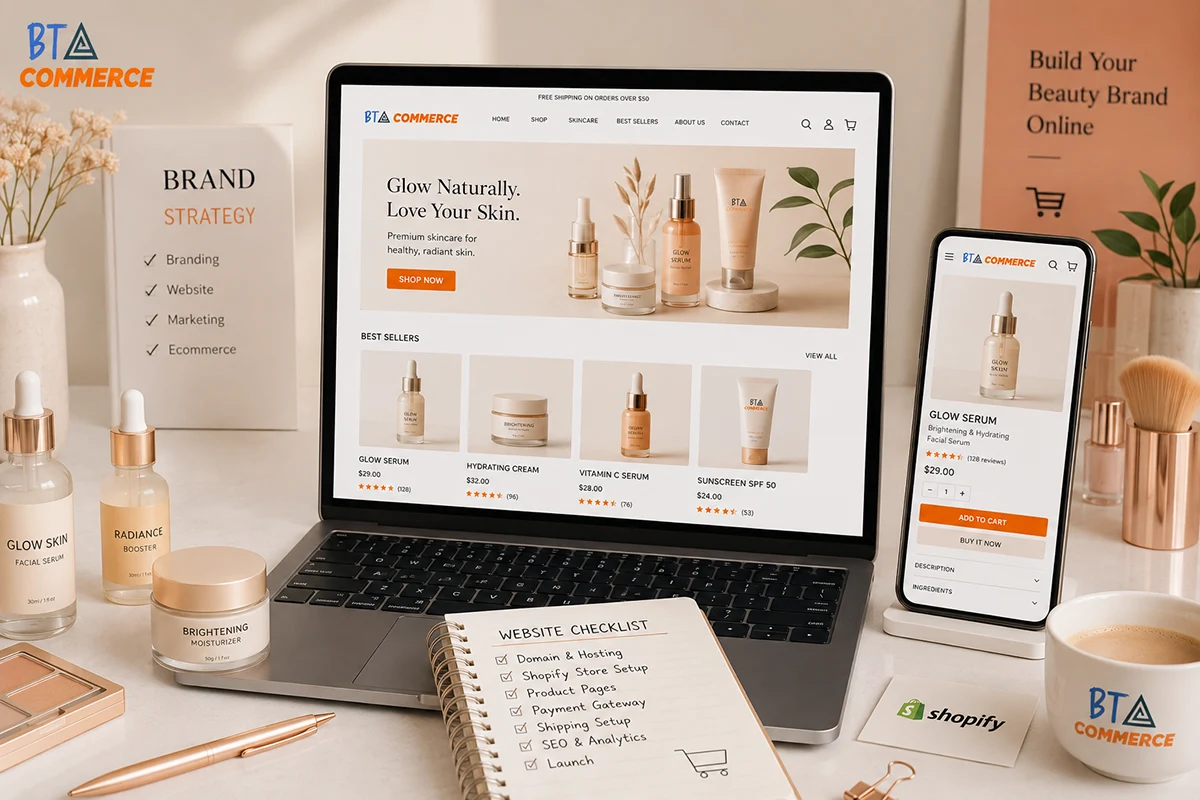
Next, focus on creating product pages that encourage customers to buy. Strong product pages should include:
- High-quality product images
- Clear product descriptions and benefits
- Ingredient or material information
- Pricing and shipping details
- Customer reviews if available
You should also set up payment and shipping options before launch. Offering multiple payment methods and transparent shipping information can reduce friction during checkout and improve conversion rates.
Finally, optimize your website for mobile users. More than 70% of shopping and booking traffic now comes from mobile devices, so your site should load quickly and remain easy to browse on smaller screens. A mobile-friendly experience can directly impact both sales and customer satisfaction.
7. Build Your Beauty Brand
A strong brand helps customers remember your business and creates a reason to choose your products over competitors. In the beauty industry, customers often buy not only based on product quality but also based on brand identity, trust, and emotional connection.
Start by defining your brand positioning and story. Decide who your products are for and what your brand stands for. Your positioning could focus on clean ingredients, affordable luxury, vegan formulas, sustainability, or solving specific beauty concerns. A clear brand story also helps customers connect with your mission.
Next, create a consistent visual identity, including:
- Logo design
- Brand colors and typography
- Product photography style
- Social media visuals
Packaging design is also important because it strongly influences first impressions and perceived value. Your packaging should look attractive while remaining practical and easy to use. Focus on balancing design, functionality, and cost, especially during the early stages of your business.
Finally, consider protecting your brand assets as you grow. Registering trademarks for your business name, logo, or product line can help prevent future legal issues and protect your brand identity as your business expands.
=> Read more: 450+ Beauty Business Name Ideas for Every Brand
8. Source and Manage Inventory
Managing inventory properly can prevent cash flow problems and reduce unnecessary costs. In the early stages, the goal is not to stock as many products as possible but to keep enough inventory to meet demand without overinvesting.
Start by researching suppliers and requesting samples before placing large orders. Test product quality, packaging, consistency, and delivery reliability. You should also discuss important details such as minimum order quantities (MOQs), production timelines, and shipping terms.
When planning your initial inventory, start conservatively. Many new beauty businesses make the mistake of ordering too much stock before validating demand. Launching with a smaller quantity reduces risk and allows you to adjust based on customer feedback and sales performance.
To avoid over-ordering at launch:
- Start with a limited product range
- Focus on best-selling or hero products
- Use pre-orders if possible
- Reorder based on real demand
As your business grows, track inventory efficiently using ecommerce or inventory management tools. Monitoring stock levels, reorder points, and product expiration dates can help prevent stock shortages and reduce dead inventory. Good inventory management improves cash flow and creates a smoother customer experience.
9. Provide Excellent Customer Service
Great customer service can turn first-time buyers into long-term customers. In the beauty industry, positive experiences often lead to repeat purchases, referrals, and stronger brand loyalty.
Start by responding quickly to customer questions. Whether customers contact you through email, social media, or live chat, fast and helpful responses build trust and reduce purchase hesitation.
You should also create a smooth shopping experience by making the buying process simple and convenient:
- Provide clear product descriptions and policies
- Keep checkout steps simple
- Offer order tracking and updates
- Make returns and support easy to understand
Customer feedback is equally valuable. Reviews, surveys, and direct messages can reveal what customers like and where improvements are needed. Use this feedback to improve products, packaging, or the overall buying experience.
Finally, focus on encouraging repeat purchases rather than only attracting new customers. Consider strategies such as:
- Loyalty or rewards programs
- Personalized product recommendations
- Follow-up emails after purchases
- Discounts for returning customers
Acquiring new customers often costs more than keeping existing ones, so building strong customer relationships can create long-term growth for your beauty business.
10. Market and Launch Your Beauty Business
Even great products can struggle if people never discover them. A successful launch is not only about making your products available, but also creating awareness and building trust before customers are ready to buy.
Start by building a social media presence where your audience already spends time. Platforms like Instagram, TikTok, Pinterest, and YouTube are especially important for beauty brands because customers often want to see products in action before making a purchase. Share content such as:
- Behind-the-scenes product development
- Tutorials and beauty tips
- Before-and-after results
- User-generated content and reviews
- Founder stories and brand updates
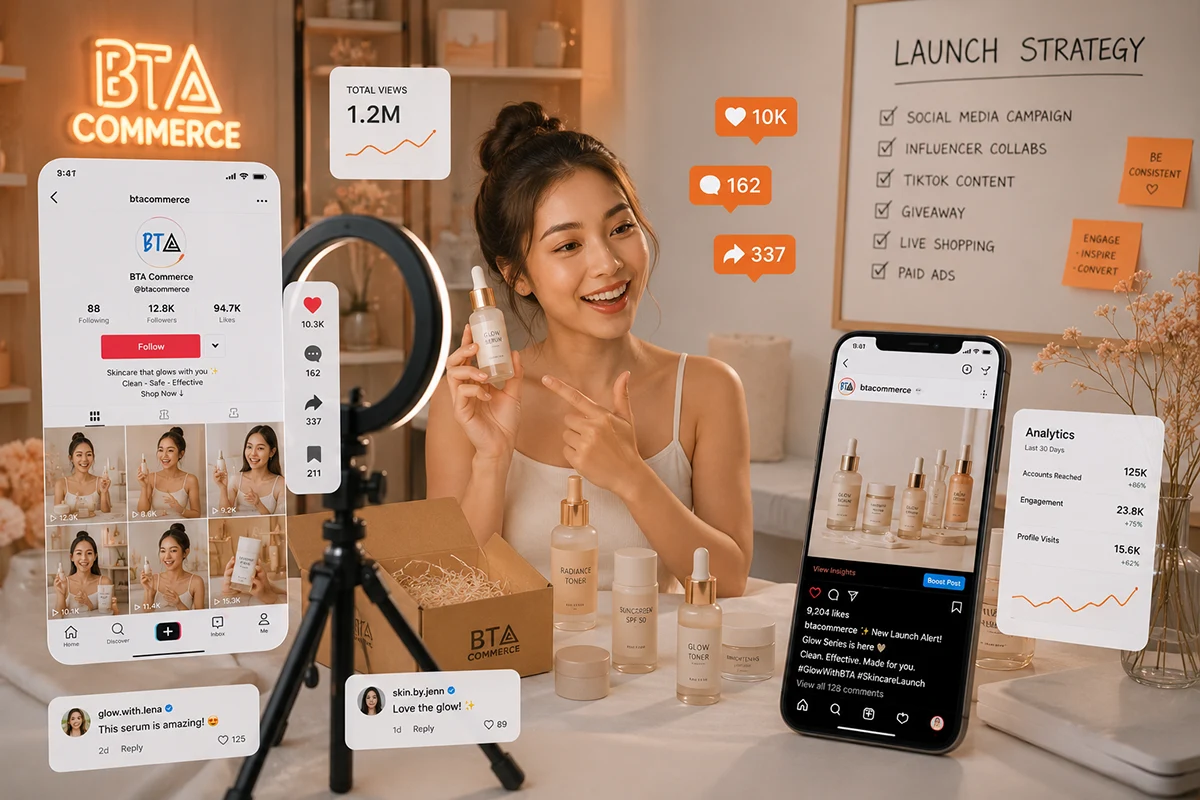
Working with influencers can also help you reach potential customers faster. You do not always need large creators with millions of followers. Many new beauty brands partner with micro-influencers because they often have highly engaged audiences and lower collaboration costs.
Building an email list early is another valuable strategy. Instead of waiting until launch day, start collecting emails through your website by offering incentives such as:
- Early product access
- Exclusive discounts
- Free samples or downloadable beauty guides
Email lists give you a direct communication channel and can generate repeat sales over time without relying entirely on social platforms.
You should also invest in SEO and content marketing to create long-term traffic. Publishing blog posts, tutorials, skincare guides, product comparisons, and beauty tips can help your website appear in search results and attract potential customers who are already looking for solutions.
Consider launching with a small audience first before a larger public release. A soft launch allows you to test your website, checkout process, inventory systems, and customer experience while gathering valuable feedback before scaling further.
=> Read more: How to Start a Business in 10 Practical Steps to Succeed
How Much Does It Cost to Start a Beauty Business?
The cost of starting a beauty business can range from around $2,000 to over $150,000, depending on whether you sell products, provide services, or build a full beauty brand. Your manufacturing approach, inventory size, and business model will have the biggest impact on startup costs.
- Starting with a small budget ($2,000–$5,000): This is common for entrepreneurs launching with white-label or private-label products, a simple ecommerce website, and a small inventory order. Costs typically include basic branding, packaging, website setup, and initial marketing. Starting with a single hero product can keep investment low while helping validate demand.
- Mid-range investment ($10,000–$30,000): This budget allows more control over your brand and customer experience. It often includes customized packaging, larger inventory orders, professional product photography, stronger website design, and marketing campaigns such as influencer partnerships or paid ads.
- Full-scale launch ($30,000–$150,000+): Larger investments are usually required for custom product formulations, lab testing, large manufacturing runs, salon or retail locations, equipment, staffing, and broader marketing efforts.
Your budget will generally be allocated across several major categories:
- Manufacturing and inventory: Product development, suppliers, MOQs, and packaging
- Branding and website: Logo design, packaging design, domain, and ecommerce setup
- Legal and compliance: Business registration, licenses, permits, and product labeling requirements
- Marketing: Social media, influencer campaigns, content creation, and advertising
- Operations: Shipping, storage, software tools, and customer service systems
Many successful beauty brands do not launch with large budgets. Starting with a focused product line, testing demand, and reinvesting profits is often a lower-risk approach than investing heavily upfront.
How to Start a Beauty Business With Little or No Money
Starting a beauty business with little or no money requires a lean approach focused on reducing upfront costs and validating demand early. Instead of investing heavily in inventory, retail space, or a large product catalog, focus on building proof that customers are willing to buy before scaling.
Start with pre-orders
Pre-orders allow you to sell products before committing to large inventory purchases. This reduces financial risk and helps you understand whether customers are actually interested in your offer.
Pre-orders can help you:
- Generate cash flow before manufacturing
- Test demand for a new product idea
- Avoid holding unsold inventory
- Build anticipation before launch
This strategy is especially useful for skincare lines, cosmetic products, and limited-edition launches.
Reinvest early profits
Avoid spending large amounts on branding agencies, premium packaging, or large manufacturing orders in the early stages. Instead, use your initial revenue strategically.
A practical growth path often looks like this:
- First sales → inventory and packaging improvements
- Early growth → better website and product photography
- Scaling stage → paid advertising and influencer campaigns
Many beauty brands grow gradually by funding expansion through profits instead of large upfront investments.
Learn skills yourself before outsourcing
Service costs can consume a startup budget quickly. Before hiring outside help, learn the basic skills needed to operate your business.
In the early stages, many founders handle:
- Creating logos and marketing materials using design tools
- Building an ecommerce store
- Managing social media content
- Writing product descriptions
- Taking product photography
You do not need a perfect brand immediately. The goal is to launch, learn, and improve over time.
Launch small and validate demand first
You do not need a factory, retail store, or dozens of products to get started. Choose a low-cost business model and begin with a focused offer.
Examples include:
- Private label with low MOQs: Work with manufacturers that allow small order quantities and apply your own branding.
- Dropshipping or reselling: Partner with suppliers that handle storage and fulfillment so you avoid inventory costs.
- Home-based or mobile services: Makeup artists, hairstylists, and beauty professionals can provide services directly to clients without renting a commercial space.
- One hero product: Launch a single product designed to solve a specific problem instead of a complete product line.
You can also reduce expenses by using low-cost ecommerce platforms, free design tools, and organic marketing channels. Social platforms such as Instagram and TikTok can help you build an audience through tutorials, behind-the-scenes content, and customer results without relying heavily on paid advertising.
Starting with limited capital does not necessarily put a business at a disadvantage. In many cases, small launches force businesses to focus on customer demand, cash flow, and sustainable growth from the beginning.
How to Start a Beauty Business FAQs
Can I start a beauty business from home?
Yes. Many beauty businesses start from home, especially private-label brands, reselling businesses, handmade products, or freelance beauty services. Just check local regulations, licenses, and health requirements if you manufacture products yourself.
How much money do I need to start a beauty business?
Startup costs vary by business model. Small private-label brands can start with around $1,000–$5,000, while custom product development and larger launches may require $10,000–$50,000+.
Is starting a skincare business profitable?
Yes. Skincare businesses can be highly profitable, with cosmetic products often achieving margins of 60–80%. Profitability depends on factors such as product demand, pricing strategy, marketing effectiveness, and operating costs.
Do I need my own manufacturer?
No. Many new beauty brands work with private-label suppliers that already have tested formulas and production systems. Custom manufacturers are usually only necessary if you want unique formulations or proprietary products.
How long does it take to launch a beauty brand?
The timeline depends on your production approach. Private-label brands can often launch within 3–6 months, while custom formulations may take 6–12+ months because of product development, testing, and compliance requirements.
Recommended Reading