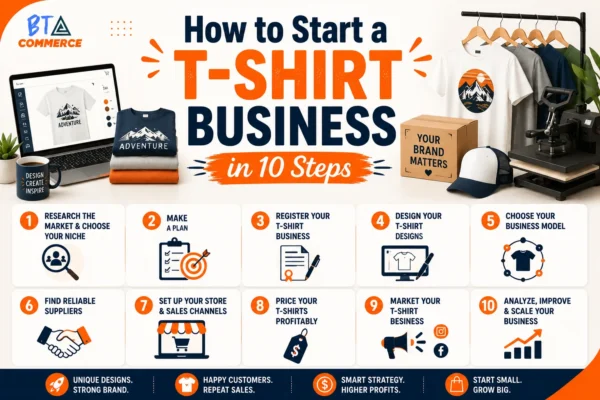
Starting a clothing brand is easier today thanks to ecommerce platforms, print-on-demand services, and global manufacturing networks. You no longer need a physical store or a massive budget to launch an online fashion business.
However, building a successful clothing brand still requires more than good designs. You need a clear niche, strong branding, reliable production, and a strategy for attracting customers.
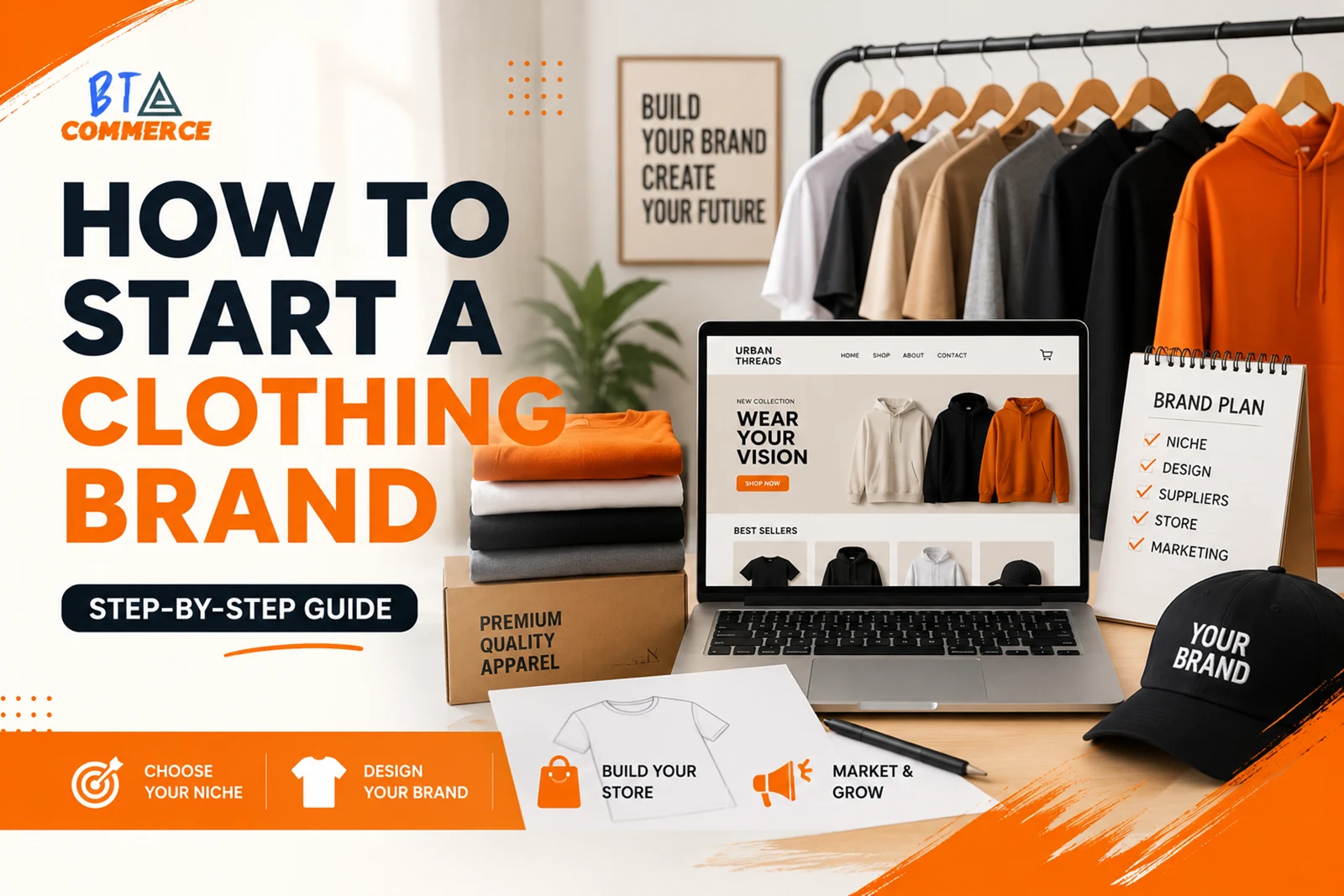
This guide explains how to start a clothing brand step by step, from choosing a niche and business model to launching your store and growing your audience.
Choose your clothing niche and target audience
One of the most common mistakes new clothing brands make is trying to target everyone. In a highly competitive market, a focused niche helps your brand stand out and attract the right customers.
Your niche should combine:
- Market demand
- Your interests or brand vision
- A specific customer lifestyle, problem, or community
For example, instead of launching a general fashion brand, you might focus on sustainable activewear, minimalist streetwear, or premium basics for professionals.
A strong niche can help:
- Differentiate your brand from competitors
- Improve marketing and social media targeting
- Build stronger customer loyalty
- Create more consistent product collections
How to identify your target audience
Before designing products, define who you want to sell to. Understanding your audience helps guide decisions about pricing, branding, fabrics, and marketing.
Consider factors such as:
- Age group and income level
- Lifestyle and interests
- Fashion preferences
- Shopping habits
- Customer problems your products solve
You can validate your niche by researching competitors, reading customer reviews, using keyword research tools, and testing demand through social media or small ad campaigns.
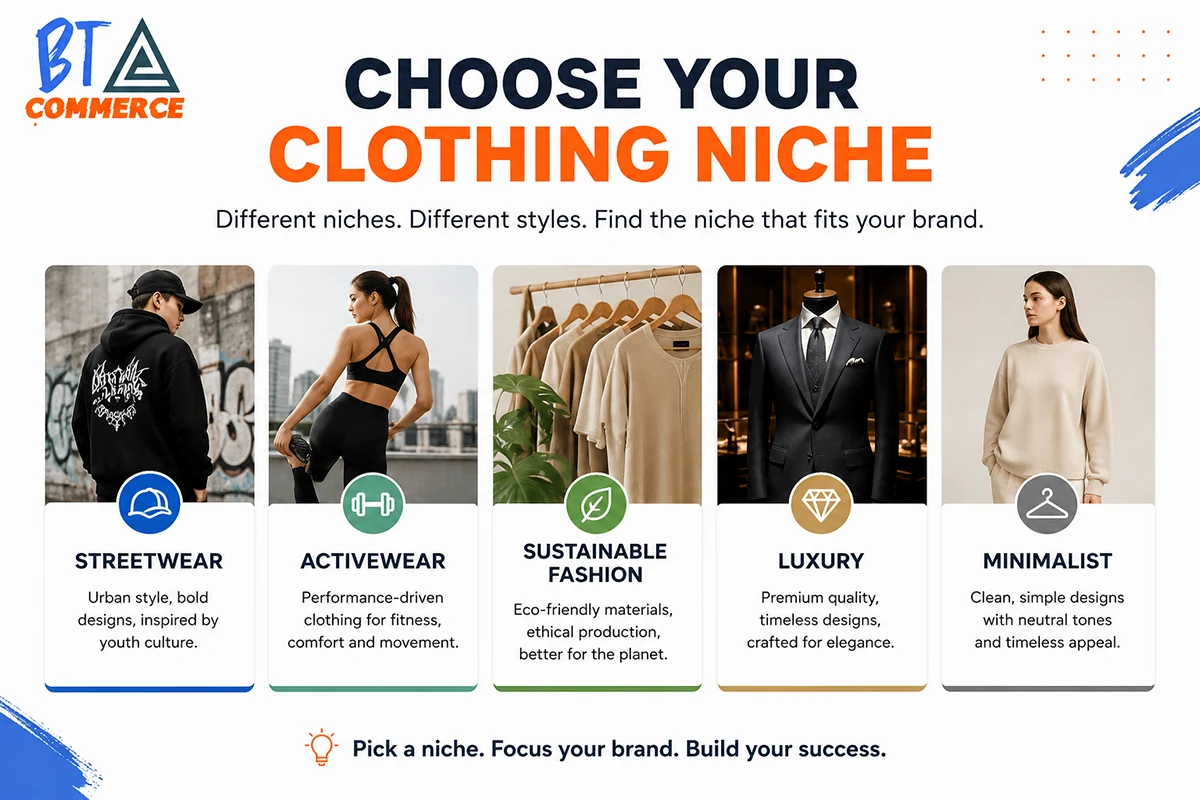
Popular clothing niche ideas
Some of the most popular clothing niches include:
- Streetwear: Trend-driven fashion focused on culture and community.
- Activewear: Fitness and athleisure apparel with growing demand.
- Sustainable fashion: Eco-friendly clothing made with ethical materials and production.
- Minimalist basics: Simple everyday clothing with timeless designs.
- Luxury fashion: Premium apparel focused on quality, exclusivity, and branding.
Instead of following every trend, focus on building a brand that serves a specific audience well.
Read more:
- How to Start a Business in 10 Practical Steps to Succeed
- How to Start an Online Business (8-Step Beginner Guide)
- 20 Clothing Business Ideas That You Can Start Today
Decide on your clothing business model
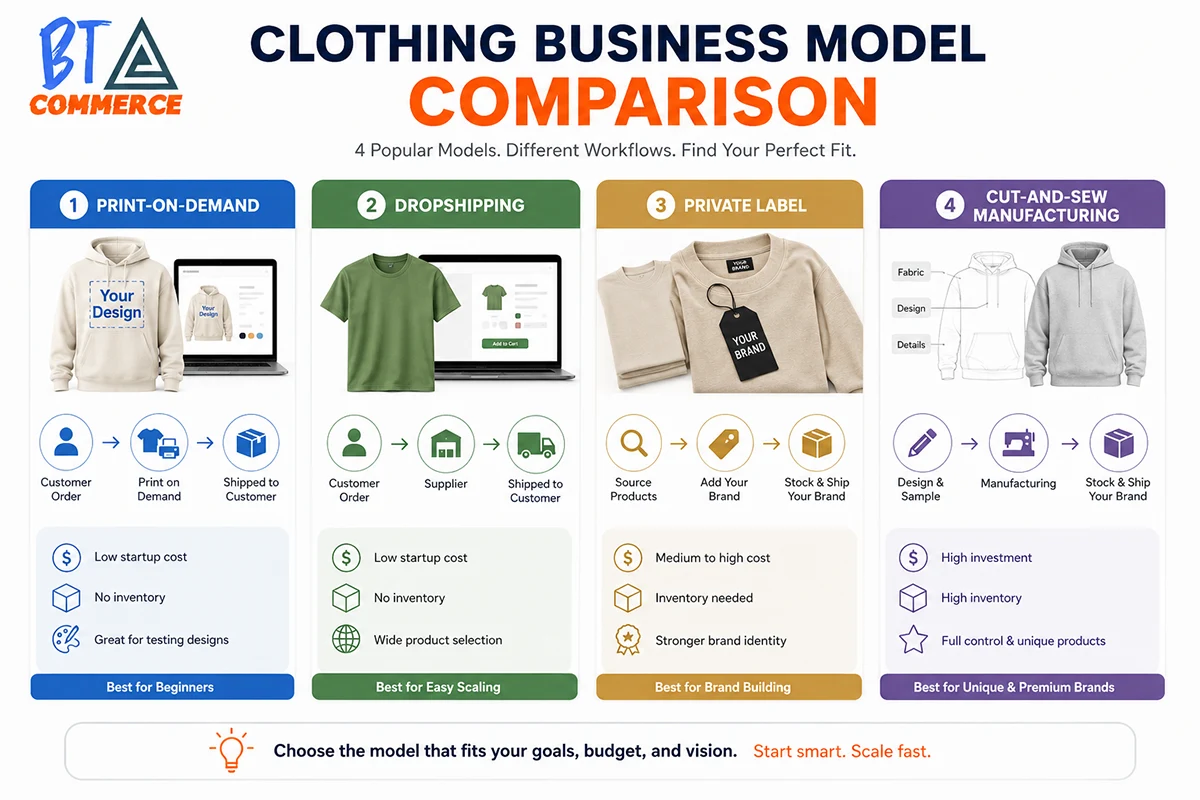
Your business model affects how your clothing products are made, fulfilled, and sold, as well as your startup costs, profit margins, and level of brand control. Some models are better for testing ideas quickly with lower risk, while others are designed for building a more unique and long-term fashion brand.
Print-on-demand (POD)
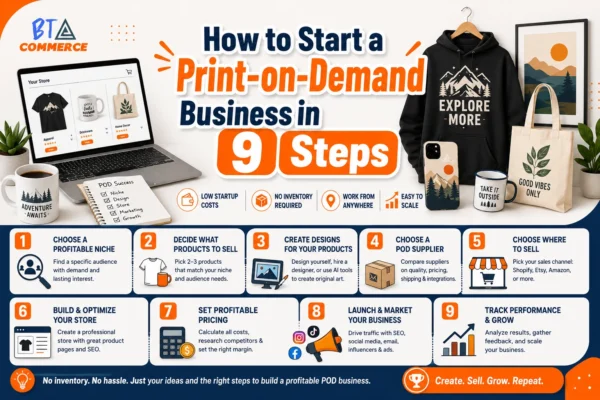
Print-on-demand is one of the most beginner-friendly ways to start a clothing brand. Products are only printed after a customer places an order, so you do not need to buy inventory upfront.
POD is commonly used for:
- T-shirts
- Hoodies
- Sweatshirts
- Basic lifestyle apparel
Most POD providers handle printing, packaging, and shipping automatically through integrations with ecommerce platforms like Shopify.
| Advantages | Limitations |
|
|
POD works best for creators, influencers, or new entrepreneurs who want to validate demand before investing heavily in production.
Dropshipping
Dropshipping allows you to sell clothing products without managing inventory or handling shipping yourself. When a customer places an order, a third-party supplier fulfills it directly.
Unlike POD, most dropshipping products are pre-manufactured items sourced from wholesalers or supplier marketplaces.
| Advantages | Limitations |
|
|
Dropshipping is generally better for testing product demand than building a premium long-term clothing brand.
Private label manufacturing
Private label manufacturing involves purchasing ready-made apparel products and customizing them with your own branding. This may include custom labels, logos, packaging, colors, or printed designs.
Many growing fashion brands use private label production because it balances scalability, branding, and production efficiency.
Private label products often include:
- Custom neck labels and tags
- Branded packaging
- Modified colors or graphics
- Curated product collections
| Advantages | Limitations |
|
|
This model works well for brands that want to move beyond generic products and create a more recognizable market presence.
Custom cut-and-sew production
Cut-and-sew manufacturing is the most advanced and customizable clothing production model. Products are developed entirely from scratch using your own patterns, fabrics, sizing, and garment specifications.
This approach is commonly used by established fashion brands, designer labels, and premium apparel businesses.
| Advantages | Limitations |
|
|
Cut-and-sew production is ideal for brands focused on originality, premium quality, and long-term brand equity rather than fast product testing.
How to choose the right model for your budget and goals
The right business model depends on your financial resources, branding goals, experience level, and how much control you want over production.
- Choose POD if you want the lowest-risk way to launch and validate ideas quickly.
- Choose dropshipping if your priority is testing multiple products with minimal operational involvement.
- Choose private label manufacturing if you want stronger branding and better long-term positioning without fully custom production.
- Choose cut-and-sew production if your goal is to build a premium, highly differentiated fashion brand.
Many successful clothing brands start with lower-risk models such as POD or private label production before investing in custom manufacturing as demand grows.
Create a clothing brand business plan
A clothing brand business plan helps you organize your ideas, estimate costs, define your target market, and create a realistic strategy for growth. It also helps you avoid common startup mistakes such as poor pricing, overspending on inventory, or launching without a clear marketing plan.
Your business plan does not need to be overly complicated. For most new clothing brands, a clear and practical plan is more valuable than a long document filled with unnecessary details.
Define your business goals
Start by defining what you want your clothing brand to achieve in the short and long term. Clear goals make it easier to make decisions about pricing, production, marketing, and growth.
Your goals may include:
- Launching your first product collection
- Reaching a monthly revenue target
- Building a loyal online community
- Expanding into retail or wholesale channels
- Creating a premium fashion brand
Try to keep your goals measurable and realistic. Instead of saying “grow fast,” define specific targets such as launching within six months or reaching a certain number of monthly orders.
Research competitors and market demand
Understanding your market is essential before investing money into production or marketing. Competitor research helps you identify pricing standards, product opportunities, customer expectations, and gaps in the market.
Study brands that target a similar audience and analyze:
- Product categories and styles
- Pricing strategies
- Brand positioning
- Social media engagement
- Customer reviews and complaints
You should also validate demand before launching. Use keyword research tools, social media trends, online marketplaces, and small advertising tests to see whether people are actively searching for products in your niche.
This step helps reduce the risk of creating products with low market demand.
Estimate startup costs and pricing
Startup costs vary depending on your business model, product type, and production method. A small POD clothing brand may launch with a relatively low budget, while private label or cut-and-sew brands often require significantly higher upfront investment.
Common startup expenses include:
- Product sampling and manufacturing
- Website setup and ecommerce tools
- Branding and packaging
- Photography and content creation
- Marketing and advertising
- Shipping and fulfillment
- Business registration and trademarks
When setting prices, make sure your products can cover production costs, operating expenses, transaction fees, marketing costs, and profit margins.
Many clothing brands fail because they price products too low without accounting for long-term business expenses.
Plan your sales and marketing channels
Your business plan should clearly explain how customers will discover and buy your products.
Most modern clothing brands combine multiple sales and marketing channels, including:
- Ecommerce websites
- Social media platforms
- Email marketing
- Influencer collaborations
- Online marketplaces
- Pop-up stores and offline events
For most new brands, an ecommerce website is usually the primary sales channel because it gives you more control over branding, customer experience, and profit margins.
Your marketing plan should focus on building brand awareness consistently instead of relying only on short-term sales campaigns.
Set a realistic launch timeline
Many new clothing brands underestimate how long product development, manufacturing, and store setup can take. A realistic timeline helps you stay organized and reduce delays before launch.
Your launch timeline may include:
- Market research and niche validation
- Brand identity development
- Product design and sampling
- Manufacturer sourcing
- Website development
- Content creation and photography
- Pre-launch marketing campaigns
Giving yourself enough time for revisions, sampling, and testing is important, especially if you are working with manufacturers for the first time.
If you want a more detailed breakdown of financial planning, budgeting, and growth strategies, check out this complete clothing brand business plan guide.
Build your clothing brand identity
A strong brand identity helps your clothing business stand out and become more memorable to customers. From your business name and logo to your visual style and messaging, every element should work together to create a consistent and recognizable brand experience.
Choose a memorable brand name
Your brand name is often the first thing customers notice about your clothing business. A strong name should be easy to remember, simple to spell, and aligned with your target audience and product style.
When brainstorming ideas, think about:
- Your niche or clothing style
- Your target customer
- Your brand personality
- Long-term growth potential
- Domain name and social media availability
Avoid choosing names that are overly complicated, difficult to pronounce, or too similar to existing fashion brands. A simple and distinctive name is usually more effective for building long-term brand recognition.
If you need inspiration, explore these clothing business name ideas to find naming strategies, examples, and tips for creating a unique fashion brand identity.
Create your brand story and positioning
Your brand story explains why your clothing business exists and what makes it different from competitors. Customers often connect more strongly with brands that have a clear purpose, relatable values, or a unique perspective.
Your story should communicate:
- Who you are
- What inspired the brand
- Who your products are designed for
- What your brand stands for
- Why customers should choose your clothing line
At the same time, define your brand positioning by identifying how you want customers to perceive your business in the market.
For example, your clothing brand may focus on:
- Affordable streetwear
- Sustainable fashion
- Premium basics
- Fitness apparel
- Vintage-inspired clothing
- Custom graphic apparel
Clear positioning helps guide your product development, pricing, marketing strategy, and visual branding.
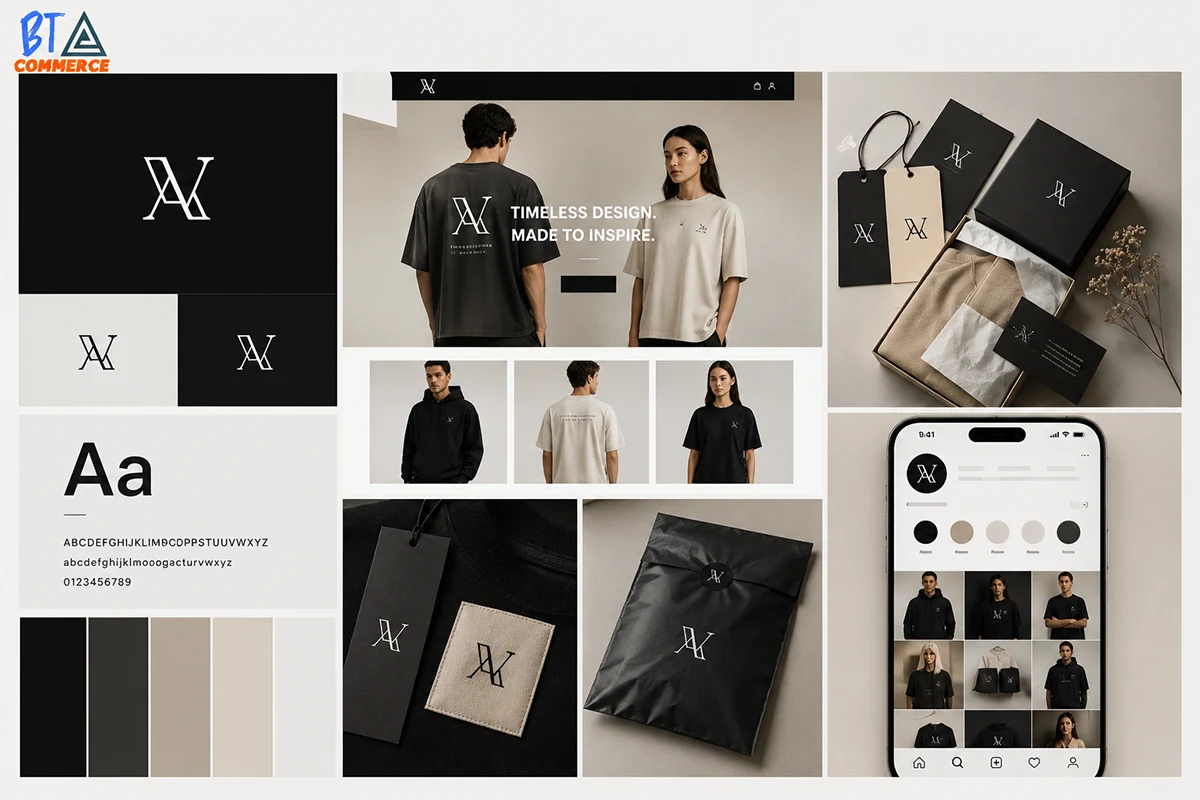
Design your logo and visual identity
Your visual identity helps customers instantly recognize your clothing brand across different platforms. This includes your logo, typography, color palette, packaging, website design, and social media visuals.
A good clothing brand logo should be:
- Simple and recognizable
- Easy to use across different formats
- Suitable for print and embroidery
- Consistent with your brand personality
Beyond the logo itself, your overall visual identity should create a cohesive look and feel. For example:
- Minimalist brands often use neutral colors and clean typography
- Streetwear brands may use bold graphics and strong contrast
- Luxury fashion brands typically use elegant and refined visuals
Consistency across your storefront, product photography, social content, and packaging helps strengthen brand recognition and professionalism.
Develop a consistent brand style
Consistency is what transforms a clothing business into a recognizable brand. Customers should be able to identify your business style whether they visit your website, browse your social media pages, or receive an order package.
Your brand style should remain consistent across:
- Product photography
- Website design
- Social media content
- Packaging
- Fonts and colors
- Tone of voice
- Marketing campaigns
For example, if your brand focuses on modern minimalist fashion, your visuals, messaging, and product presentation should all reflect that same aesthetic.
A consistent brand style helps build trust, improve customer loyalty, and create a stronger connection with your audience over time.
Design your clothing products
Your product designs are the foundation of your clothing brand. The goal is not only to create attractive pieces, but also to develop products that match your target audience, brand identity, and pricing strategy.
Start with a small collection
Many new clothing brands make the mistake of launching too many products at once. Starting with a small collection helps reduce costs, simplify production, and make inventory management easier.
Instead of trying to create dozens of items, focus on a few strong products that represent your brand clearly.
For example, you might begin with:
- T-shirts
- Hoodies
- Sweatshirts
- Tank tops
- Caps or accessories
A smaller launch also allows you to test customer interest, gather feedback, and improve future collections without taking on unnecessary financial risk.
Create sketches, mockups, or tech packs
Before moving into production, you need a clear visual representation of your clothing designs. This helps manufacturers understand exactly what you want to create and reduces the risk of production mistakes.
You can present your ideas using:
- Hand-drawn sketches
- Digital clothing mockups
- Product design software
- Professional tech packs
Tech packs are especially important for custom clothing manufacturing. They typically include:
- Garment measurements
- Fabric details
- Color references
- Logo placement
- Print or embroidery instructions
- Stitching details
- Sizing specifications
The more detailed your design documents are, the easier it becomes for manufacturers to create accurate samples and production runs.
Choose fabrics and materials
The materials you choose directly affect product quality, comfort, durability, pricing, and customer satisfaction. Even a great design can fail if the fabric feels uncomfortable or wears out quickly.
When selecting fabrics, consider factors such as:
- Comfort and softness
- Durability and fabric weight
- Breathability
- Stretch and fit
- Print compatibility
- Target price range
Different clothing categories often require different fabric types. For example, athletic apparel may need moisture-wicking materials, while streetwear brands often prefer heavyweight cotton for a premium feel.
Always request fabric samples before committing to large production orders so you can evaluate quality firsthand.
Balance creativity with wearability
Creative designs can help your clothing brand stand out, but your products also need to be practical and wearable for everyday customers.
Successful clothing products usually combine:
- Strong visual appeal
- Comfortable fit
- Functional design
- Quality construction
- Versatility
Fashion trends may inspire your designs, but avoid creating products that are overly complicated or difficult for your audience to style and wear.
Focus on designing clothing that aligns with your brand identity while still meeting customer expectations for comfort, quality, and usability.
Find clothing manufacturers and suppliers
Choosing the right manufacturer is a major step in building a successful clothing business. A reliable supplier can help you maintain product quality, meet delivery timelines, and scale your brand more efficiently as your business grows.
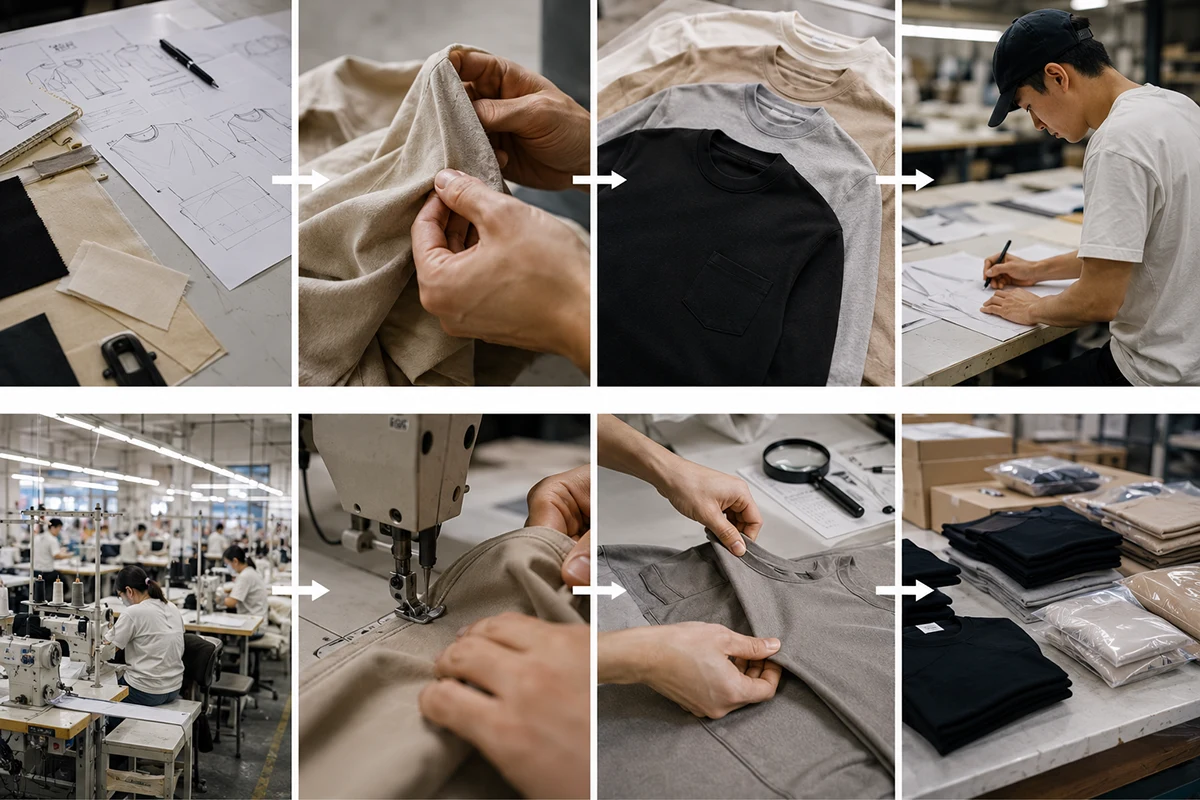
How to source reliable manufacturers
Finding trustworthy clothing manufacturers takes time and research. Instead of choosing the first supplier you find online, compare multiple options and carefully evaluate their experience, communication, and production capabilities.
You can search for manufacturers through:
- Google searches
- B2B platforms like Alibaba or Maker’s Row
- Fashion trade shows
- Industry directories
- Referrals from other clothing brands
Before committing to a supplier, review their:
- Product specialization
- Customer reviews
- Production timelines
- Communication quality
- Sample quality
- Experience with startup brands
Always order samples before placing bulk orders. Product samples allow you to evaluate stitching, fabric quality, sizing consistency, printing, embroidery, and overall construction.
Domestic vs overseas production
Many clothing businesses must decide whether to manufacture products locally or overseas. Both options have advantages and disadvantages depending on your budget, product type, and business goals.
Domestic manufacturing often provides:
- Faster communication
- Shorter shipping times
- Easier quality control
- Smaller production runs
- Higher manufacturing standards
However, local production is usually more expensive and may offer fewer material options.
Overseas manufacturing typically offers:
- Lower production costs
- Access to large-scale factories
- Wider material selection
- Better pricing for large orders
At the same time, overseas production may involve longer shipping times, import duties, communication challenges, and more complicated quality control processes.
The best option depends on your product requirements, target pricing, and production volume.
Questions to ask before working with a supplier
Before partnering with a clothing manufacturer, ask detailed questions to avoid misunderstandings and production issues later.
Important questions include:
- What are your minimum order quantities?
- What products do you specialize in?
- Can you provide samples?
- What are your production lead times?
- What customization options are available?
- Do you offer private labeling or custom packaging?
- What are your payment terms?
- How do you handle defective products?
- What shipping methods do you support?
Clear communication early in the process helps reduce costly mistakes and ensures your supplier understands your expectations.
Minimum order quantities (MOQs) explained
Minimum order quantity (MOQ) refers to the smallest number of units a manufacturer requires for production. Many clothing factories use MOQs to keep manufacturing profitable and efficient.
MOQs vary depending on factors such as:
- Garment complexity
- Fabric type
- Customization requirements
- Printing or embroidery methods
- Production location
For example, some manufacturers may require:
- 50 pieces per design
- 100 pieces per color
- 300+ units for custom production
High MOQs can be difficult for new clothing brands with limited budgets. This is why many startups begin with Print on Demand services or manufacturers that specialize in small-batch production.
Understanding MOQ requirements early helps you plan your inventory, budget, and launch strategy more effectively.
Order samples and test product quality
Before launching your clothing line, it’s important to order product samples and carefully evaluate their quality. Sampling helps you identify production issues early and ensures your products meet customer expectations before investing in larger inventory orders.
Why sampling is essential
Product samples allow you to see how your clothing designs translate from concept to finished product. Even if your tech packs and mockups look perfect, the final garment may still have issues with fit, fabric, printing, or construction.
Sampling is important because it helps you:
- Verify product quality
- Test fabric comfort and durability
- Evaluate print or embroidery accuracy
- Check sizing and fit consistency
- Reduce production mistakes
- Avoid costly inventory problems
Skipping the sampling stage can lead to poor-quality products, customer complaints, and expensive rework after production has already started.
What to check before production
When reviewing clothing samples, inspect every detail carefully instead of focusing only on the overall appearance.
Important areas to evaluate include:
- Fabric quality and weight
- Garment fit and sizing accuracy
- Stitching consistency
- Print placement and color accuracy
- Embroidery quality
- Labels and tags
- Shrinkage after washing
- Comfort and wearability
It’s also helpful to test the garments in real-world conditions. Wear the products, wash them multiple times, and check how well they maintain their shape, color, and overall quality.
If possible, ask friends, team members, or potential customers for feedback before approving production.
How to improve products before launch
Most clothing products go through multiple revisions before they are ready for launch. Small adjustments during the sampling phase can significantly improve product quality and customer satisfaction later.
Common improvements include:
- Adjusting garment fit or sizing
- Upgrading fabric quality
- Improving stitching or finishing
- Refining print placement
- Changing packaging or labels
- Enhancing comfort and functionality
Work closely with your manufacturer to communicate revisions clearly and document all changes before final production begins.
Taking extra time to perfect your products before launch can help reduce returns, improve reviews, and strengthen your brand reputation from the beginning.
Set up your online clothing store
Your online store is the foundation of your clothing business. A professional ecommerce website helps customers discover your products, trust your brand, and complete purchases more confidently.
What pages every clothing website needs
A successful clothing website should make it easy for visitors to browse products, learn about your brand, and complete purchases without confusion.
Important pages to include are:
- Homepage
- Shop or collection pages
- Individual product pages
- About page
- Contact page
- Shipping and returns policy
- FAQ page
- Privacy policy and terms
Your homepage should clearly communicate your brand identity and guide visitors toward your products. Collection pages should be organized logically so customers can easily browse categories, styles, or featured items.
Trust-building pages such as shipping policies, returns information, and FAQs can also help reduce hesitation during checkout.
How to create high-converting product pages
Product pages play a major role in converting visitors into customers. Since online shoppers cannot physically touch or try on clothing items, your product pages need to provide as much information and visual detail as possible.
Strong clothing product pages usually include:
- High-quality product photography
- Multiple product angles
- Zoom functionality
- Detailed product descriptions
- Fabric and sizing information
- Care instructions
- Clear pricing
- Customer reviews
Product descriptions should focus on both features and benefits. Instead of only describing the garment, explain how it fits, feels, and suits the customer’s lifestyle.
Clear sizing charts and fit information can also help reduce returns and improve customer satisfaction.
Why Shopify is popular for clothing brands
Many fashion businesses use Shopify because it simplifies the process of building and managing an online clothing store. The platform is beginner-friendly while still offering advanced ecommerce features for growing brands.
Shopify is especially popular among clothing brands because it offers:
- Fashion-focused website themes
- Mobile-friendly storefronts
- Secure payment processing
- Inventory management tools
- App integrations for marketing and fulfillment
- Support for Print on Demand and dropshipping
Many Shopify themes are also designed specifically for visual product categories like fashion, making it easier to showcase product photography and brand aesthetics effectively.
As your business grows, Shopify can support additional features such as international selling, email marketing, subscriptions, and advanced analytics.
Tips for choosing the right ecommerce setup
The best ecommerce setup depends on your budget, technical skills, business model, and long-term goals.
When choosing an ecommerce platform, consider factors such as:
- Ease of use
- Customization options
- Mobile responsiveness
- Payment gateway support
- SEO capabilities
- Scalability
- Integration with suppliers or POD services
New clothing brands often benefit from simple and flexible platforms that allow them to launch quickly without requiring advanced coding skills.
It’s also important to choose a setup that supports your future growth, especially if you plan to expand product collections, increase traffic, or sell across multiple sales channels later.
Prepare your clothing brand launch
Launching a clothing brand successfully requires more than simply publishing products online. A strong launch strategy helps you attract attention, generate early sales, and build momentum for long-term growth.
Before your launch date, focus on building awareness, growing your audience, and creating excitement around your products. Even small clothing brands can compete effectively when they launch with a clear marketing plan and consistent messaging.
Build anticipation before launch
Creating anticipation before your launch helps generate interest and gives potential customers a reason to follow your brand before products become available. Instead of waiting until launch day to start marketing, begin building visibility several weeks in advance.
Share behind-the-scenes content showing your design process, packaging, sample development, or product photography. Teaser campaigns, countdowns, and sneak peeks can help create curiosity around your collection.
You can also build an email waiting list before launch. Offering early access, limited discounts, or exclusive products encourages visitors to subscribe and gives you an audience ready to purchase when your store goes live.
Pre-launch strategies often include:
- Countdown posts on social media
- Behind-the-scenes content
- Email signup landing pages
- Early-access promotions
- Limited launch collections
- Giveaways or contests
Use social media to grow awareness
Social media is one of the most effective ways for new clothing brands to build visibility without needing a large marketing budget. Platforms like Instagram, TikTok, Pinterest, and Facebook allow fashion businesses to showcase products visually and connect directly with potential customers.
Focus on creating content that reflects your brand identity consistently. This includes your photography style, color palette, tone of voice, and the type of lifestyle your brand represents.
Popular clothing brand content ideas include:
- Product styling videos
- Outfit inspiration posts
- Behind-the-scenes content
- Packaging and shipping videos
- Customer photos and reviews
- Short-form TikTok or Reels content
Consistency matters more than posting volume. A smaller number of high-quality, on-brand posts is usually more effective than posting random content daily.
Work with influencers and creators
Influencer marketing can help new clothing brands reach targeted audiences quickly. Partnering with creators whose audience matches your niche allows you to build credibility and expose your products to potential customers who already trust the influencer.
You do not need celebrity influencers to see results. In many cases, micro-influencers with smaller but highly engaged audiences generate better engagement and conversions for fashion brands.
When choosing influencers or creators, consider:
- Audience demographics and interests
- Engagement rate instead of follower count
- Content quality and brand fit
- Previous partnership performance
- Authenticity and audience trust
Many clothing startups begin by sending free samples to creators in exchange for product photos, reviews, or social media posts. User-generated content from creators can also be reused later in ads and product pages.
Run paid ads strategically
Paid advertising can help accelerate brand awareness and sales, but it works best when used strategically. New clothing brands should avoid spending large budgets immediately without testing what content and audiences perform best.
Start with smaller campaigns focused on specific goals, such as:
- Driving traffic to your website
- Growing your email list
- Promoting launch announcements
- Retargeting website visitors
- Boosting best-performing social media posts
Facebook Ads, Instagram Ads, TikTok Ads, and Google Shopping campaigns are commonly used for fashion ecommerce brands. Strong product photography and short-form video content usually perform best in clothing advertising campaigns.
Track important metrics like click-through rate, conversion rate, cost per purchase, and return on ad spend so you can improve campaigns over time.
Collect customer feedback early
Early customer feedback is valuable because it helps you improve products, website experience, pricing, sizing, and marketing before scaling your business further.
Encourage customers to leave reviews and share honest opinions about your clothing products. Feedback collected during the early stages can help identify problems quickly and improve customer satisfaction.
You can gather feedback through:
- Product reviews
- Post-purchase surveys
- Email follow-ups
- Social media comments and messages
- Customer support conversations
Listening to customer feedback also helps strengthen customer relationships and shows buyers that your clothing brand values their experience.
How to grow a successful clothing brand
Building a clothing brand is only the beginning. Long-term success comes from improving your products, strengthening customer relationships, and creating systems that allow your business to scale sustainably over time.
Many successful fashion brands grow gradually by focusing on customer experience, operational efficiency, and consistent branding rather than chasing rapid expansion too early.
Focus on customer retention
Acquiring new customers is important, but retaining existing customers is often far more profitable. Repeat buyers already trust your brand, making them more likely to purchase again and recommend your products to others.
Customer retention strategies can include:
- Email marketing campaigns
- Loyalty or rewards programs
- Personalized offers and recommendations
- Fast customer support responses
- Consistent product quality
- Exclusive launches for existing customers
Building strong customer relationships also improves brand loyalty and helps create long-term growth through repeat purchases and word-of-mouth marketing.
Expand collections carefully
Expanding your clothing collection too quickly can create inventory issues, increase production costs, and make your brand feel unfocused. Instead of launching many new products at once, test new categories gradually and analyze customer demand before scaling.
Start by identifying which products perform best and look for related items that fit naturally within your brand identity. For example, a successful streetwear brand may expand from t-shirts into hoodies, hats, or accessories rather than completely unrelated products.
Careful product expansion helps maintain brand consistency while reducing unnecessary financial risk.
Improve operations and fulfillment
As your clothing business grows, improving operations becomes increasingly important. Delayed shipping, inventory mistakes, and poor communication can damage customer trust and reduce repeat purchases.
Focus on building systems that improve efficiency, including:
- Inventory management tools
- Reliable shipping workflows
- Clear return policies
- Automated order tracking
- Customer support processes
- Supplier communication systems
Efficient fulfillment operations help create a better customer experience and make scaling your clothing brand much easier over time.
Track sales and marketing performance
Successful clothing brands make decisions based on data instead of assumptions. Tracking performance metrics helps you understand what products, marketing channels, and campaigns generate the best results.
Important metrics to monitor include:
- Conversion rate
- Average order value
- Customer acquisition cost
- Return on ad spend (ROAS)
- Repeat customer rate
- Email marketing performance
- Best-selling products
Analytics tools built into ecommerce platforms can help you identify growth opportunities and improve your overall business strategy.
Common mistakes to avoid when starting a clothing brand
Starting a clothing business involves a steep learning curve, and many new brands make avoidable mistakes during the early stages. Understanding these common problems can help you reduce costs, avoid delays, and build a stronger foundation for long-term growth.
- Launching too many products too early: Many new clothing brands launch large collections immediately, believing more products will attract more customers. In reality, too many products can increase manufacturing costs, complicate inventory management, and weaken your brand identity. Starting with a smaller collection allows you to focus on quality, gather customer feedback, and identify your best-performing products before scaling.
- Ignoring branding and positioning: Strong branding is what separates memorable clothing brands from generic online stores. Without clear positioning, customers may struggle to understand who your products are for, what makes your brand unique, and why they should choose you over competitors. Consistent branding across your website, social media, packaging, and marketing helps build trust and recognition over time.
- Choosing manufacturers based only on price: Low production costs may seem attractive, but cheaper suppliers can lead to poor product quality, delayed shipments, and communication problems. Instead of focusing only on pricing, evaluate manufacturers based on product quality, reliability, sampling standards, lead times, and long-term scalability. A reliable supplier relationship is often more valuable than the lowest possible cost.
- Underestimating marketing costs: Many entrepreneurs assume that launching a website will automatically generate sales. In reality, marketing is one of the largest ongoing investments for most clothing brands. Expenses may include paid ads, influencer partnerships, photography, content creation, email marketing tools, and social media management. Planning a realistic marketing budget early helps avoid cash flow problems and improves your chances of sustainable growth.
Frequently asked questions
How much does it cost to start a clothing brand?
You can start a clothing brand with a few hundred dollars using print-on-demand, or several thousand dollars if you invest in custom manufacturing, inventory, branding, and marketing.
Can you start a clothing brand without inventory?
Yes. Print-on-demand and dropshipping allow you to sell clothing online without buying inventory upfront.
Is print-on-demand profitable for beginners?
Yes, print-on-demand can be profitable for beginners because startup costs are low and there is no inventory risk. Success depends on branding, product selection, and marketing.
Do you need a business license to sell clothing online?
In many countries, yes. Requirements depend on your location, business structure, and local regulations.
What platform is best for a clothing brand website?
Shopify is one of the most popular platforms for clothing brands because it is easy to use, scalable, and built for ecommerce.
Recommended Reading