How to name a business is one of the most important decisions when starting a company. Your business name is not just a label — it directly affects how customers perceive, remember, and trust your brand.
A strong name impacts branding, builds trust, improves SEO visibility, increases memorability, and supports long-term ecommerce growth. It also needs to be practical, meaning it should be available as a domain name, work across social media handles, and remain strong as your business scales in the future.
That’s why choosing the right name is both a creative and strategic process.

What Makes a Good Business Name?
A good business name is not just about creativity — it’s about how well it helps customers remember, understand, and trust your brand in the long run.
- Easy to remember: A strong business name should be simple enough for customers to recall after hearing it once or twice. Short, clear, and natural-sounding names tend to stick better in people’s minds and spread more easily through word of mouth.
- Simple to spell and pronounce: If people struggle to spell or say your name, it creates friction when they try to search for you or recommend your business. The best names are intuitive and don’t require explanation.
- Relevant to your audience: Your business name should connect with your target customers and reflect your brand’s personality or industry. It doesn’t need to describe everything you do, but it should feel meaningful and aligned with what you offer.
- Unique and distinctive: A strong name should stand out clearly from competitors. If it sounds too similar to other brands, it becomes harder to build a memorable identity and may reduce trust or recognition.
- Flexible for future growth: Choose a name that won’t limit your business later. A flexible name allows you to expand into new products, services, or markets without needing to rebrand.
- Available as a domain and social handle: Before finalizing, make sure your name is available as a domain and on major social platforms. Consistency across channels helps your brand look professional and easier to find online.
How to Name a Business (Step-by-Step)
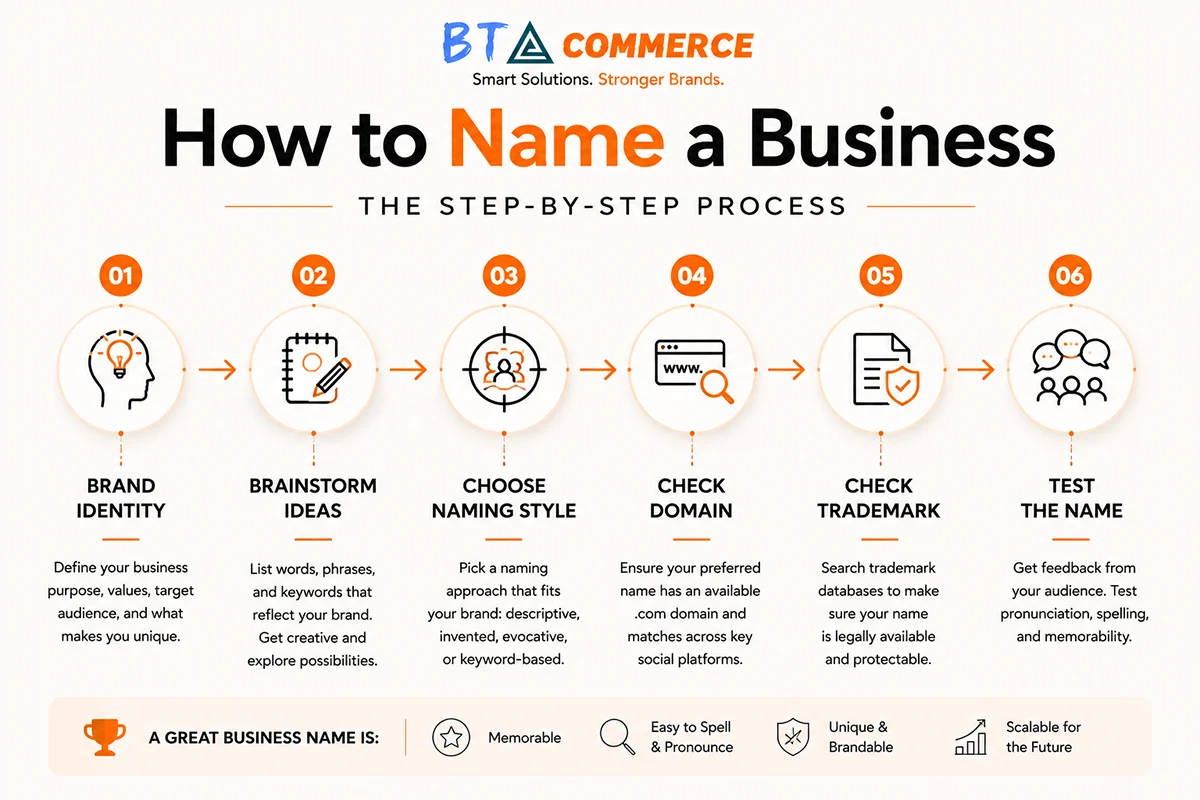
Naming a business is more than just being creative — the right name helps customers remember, trust, and recognize your brand. Below is a practical step-by-step process to help you choose a strong business name.
1. Start With Your Brand Identity
Before you think about names, you need clarity on what your business actually stands for. A name without direction often leads to confusion or rebranding later.
- What are you selling? Be specific. For example, instead of “clothing,” define it as “sustainable streetwear for young adults.”
- Who is your target customer? Example: busy professionals, first-time entrepreneurs, or budget-conscious students.
- What is your brand personality? Is your brand modern and minimal like Apple, playful like Shopify apps, or premium like luxury fashion brands?
- How do you want people to remember you? Example: “fast and reliable,” “creative and bold,” or “simple and trustworthy.”
2. Brainstorm Business Name Ideas
At this stage, focus on quantity, not perfection. The goal is to generate as many relevant ideas as possible.
- Keywords: Example: If you sell coffee, words like “brew,” “bean,” “roast,” “daily,” “cup” can be starting points.
- Emotions: Think about feelings like “calm,” “energy,” “freedom,” or “confidence.” Example: “FreshFlow” suggests energy and movement.
- Customer problems: Example: If you help small businesses grow online, words like “growth,” “boost,” or “launch” work well.
- Transformations: Think “before vs after.” Example: “ZeroSkill → ProLaunch” or “Chaos → Clarity.”
- Industry terms: Example: “studio,” “lab,” “works,” “hub,” “co.” These add professionalism and context.
Need inspiration? Browse these industry-specific business name ideas:
- Online store names
- Clothing brand name ideas
- Restaurant name ideas
- Coffee shop name ideas
- Tech business name ideas
- Consulting business names
3. Try Different Naming Styles
Strong brands often explore multiple naming directions before choosing the final one.
- Descriptive names: Clearly explain what you do. Example: “Speed Logistics,” “Green Clean Services.”
- Brandable names: Unique, invented names often used by ecommerce and tech businesses. Example: “Spotify,” “Shopify,” “Zenvia.”
- Founder names: Common in personal brands, consulting, and coaching businesses. Example: “Ford,” “Tesla,” “McDonald’s.”
- Compound names: Two words combined. Example: “Facebook,” “Dropbox,” “Mailchimp.”
- Acronyms: Shortened forms. Example: “IBM,” “HP,” “BMW.”
- Creative or made-up names: Example: “Google,” “Kodak” — invented but highly brandable.
4. Use Naming Techniques to Generate More Ideas
If you feel stuck, these techniques help unlock more creative and brandable options.
- Word combinations: Example: “Bright + Path = BrightPath”
- Mashups: Example: “Instagram = Instant + Telegram concept” style blending
- Alliteration: Example: “PayPal,” “Coca-Cola” — repetition makes names easier to remember
- Foreign/local words: Example: “Nara” (Japan-inspired elegance), “Hola” (friendly greeting vibe)
- Metaphors: Example: “Amazon” suggests vast scale and variety, not just a river
- Wordplay: Example: “Grubhub,” “Snapchat” — playful and memorable
5. Keep the Name Scalable
A common mistake is choosing a name that works today but limits you tomorrow.
- Avoid location-based names unless you plan to stay local. Example: “Hanoi Coffee Shop” may not work globally.
- Avoid product-specific names if you plan to expand. Example: “T-Shirt Store” limits you if you later sell hoodies or accessories.
- Avoid trend-based names that may become outdated. What sounds modern today may feel irrelevant in 3–5 years.
Think long-term: “Can this name still work if my business becomes 10x bigger?”
6. Check Domain & Username Availability
Even a great name loses value if customers can’t find you online consistently.
- Domain: Check availability for .com or relevant extensions. Example: brandname.com is ideal for global businesses.
- Social handles: Ensure consistency across Instagram, TikTok, Facebook, and X (Twitter).
- Marketplace/store usernames: Especially important for Shopify or ecommerce brands.
Example: If your name is “BrightPath,” try to secure @brightpath everywhere to avoid confusion.
7. Check Trademark Availability
This step protects your business from legal and branding risks later.
- Search if the name is already registered in your industry or country
- Avoid names that sound too similar to existing brands
- Reduce the risk of rebranding after you’ve already built traction
8. Test Your Business Name
Before making a final decision, test your name in real-world situations — not just on paper.
- Say it out loud: Example: “Does ‘BrightPath Studio’ sound natural in conversation?”
- Ask real people: “What do you think this business does just from the name?”
- Check spelling: Example: If people often type it wrong, you may lose traffic.
- First impression test: Show the name for 3 seconds and ask what feeling it gives (trust, premium, cheap, creative, etc.).
If your name passes these tests, it is likely strong enough to support a real brand — not just a temporary idea.
Common Mistakes to Avoid When Naming a Business
Many businesses choose a name too quickly and regret it later. Avoid these common mistakes to create a name that is easier to build and grow.
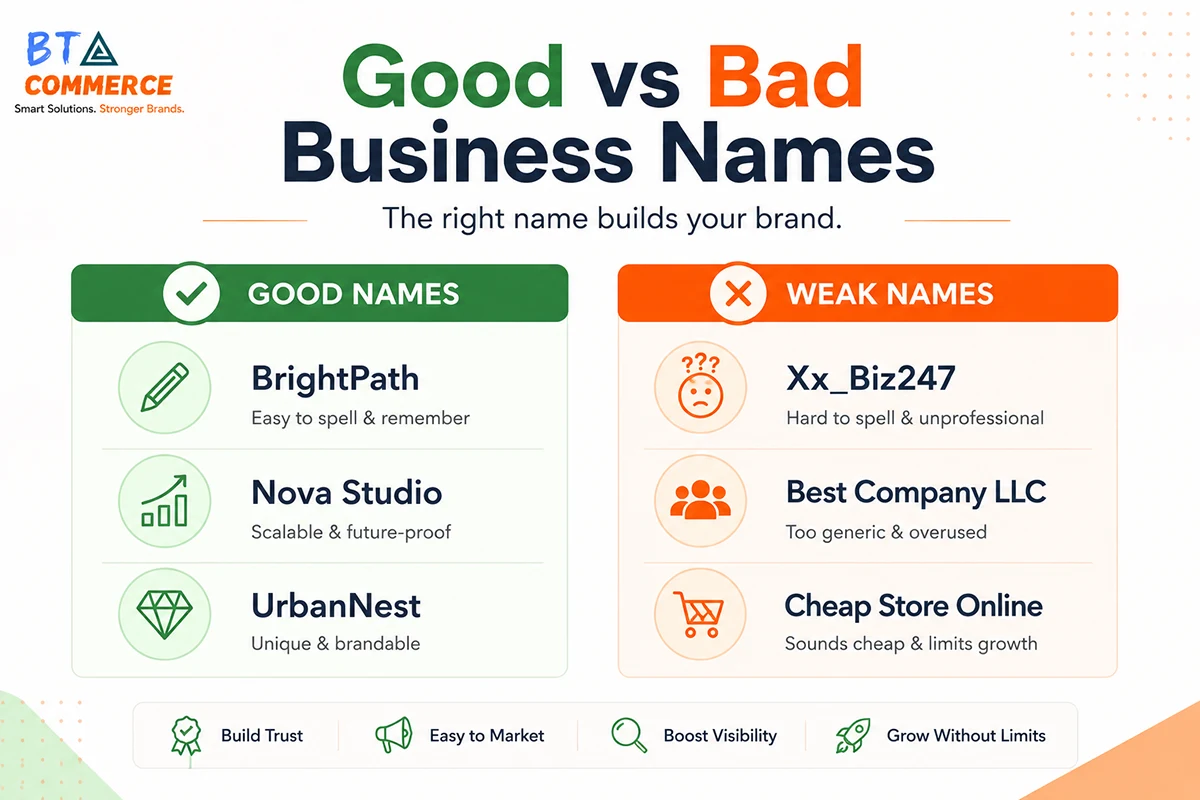
- Choosing hard-to-spell names: If customers cannot spell or pronounce your name easily, they may struggle to search for or remember your business.
- Following short-term trends: Trendy names may feel modern today but can quickly become outdated and less relevant over time.
- Copying competitors: Similar names make your brand less memorable and can create confusion or legal issues.
- Using names that are too generic: Generic names are harder to stand out and often feel less trustworthy or professional.
- Picking a name that limits growth: Avoid names tied to one product, service, or location if you plan to expand later.
- Ignoring trademark and domain checks: Always check domain availability and trademarks before finalizing your business name.
Should You Use Your Own Name for Your Business?
Using your own name can be a powerful branding strategy — but it is not always the right choice. The best option depends on your business goals, industry, and how closely you want your personal identity connected to the brand.
- When personal branding works: Using your own name works well for freelancers, consultants, coaches, designers, creators, or anyone building trust around personal expertise. Examples include brands like “Tom Ford” or “Marie Forleo,” where the person is part of the value customers buy into.
- When a brand name is better: A separate brand name is usually better if you want to scale, sell the business later, build a team-focused company, or avoid tying the business completely to yourself. Names like “Nike” or “Shopify” are easier to grow beyond one individual.
- Pros of using your own name: Feels personal and trustworthy, easier to build authority, and often simpler to start without overthinking branding.
- Cons of using your own name: Harder to sell the business later, limits brand flexibility, and can make the business feel too dependent on one person.
- Pros of using a brand name: Easier to scale, more flexible for future growth, and usually stronger for long-term brand building.
- Cons of using a brand name: Takes more effort to build trust and recognition in the beginning compared to a personal brand.
FAQ – How to Name a Business
Quick answers to the most common questions about how to name a business and choosing the right brand name.
How do I come up with a business name from scratch?
Start by defining your audience, brand personality, and key keywords, then brainstorm combinations, metaphors, and emotional words. Narrow down ideas based on clarity, relevance, and long-term usability.
What makes a strong business name?
A strong name is simple, memorable, easy to pronounce, and relevant to your brand. It should also be scalable, legally available, and suitable for online use.
Should I use my own name for my business?
Only if you are building a personal brand or service-based business. Otherwise, it may limit scalability and make future expansion harder.
How do I know if a name is taken?
Check domain availability, social media handles, trademark databases, and local business registration records to ensure the name is not already in use.
How important is a domain name?
Very important. A matching domain builds trust, improves branding consistency, and makes it easier for customers to find your business online.
What makes a bad business name?
A bad name is hard to spell, too generic, difficult to pronounce, or too limited for future growth. It may also cause confusion or legal issues if it overlaps with existing brands.
You can also explore real-world examples from these business name ideas to understand what works in different industries.
Learning how to name a business is a balance between creativity and strategy. Focus on choosing a name that is memorable, scalable, and easy for customers to recognize, trust, and grow with over time.
Recommended Reading