Many clothing businesses fail because they start without a clear plan. From boutique stores to online fashion brands, common mistakes like choosing the wrong niche, underestimating costs, and poor inventory planning can quickly slow growth.
A strong clothing business plan helps you validate your ideas, organize operations, estimate startup costs, and build a sustainable strategy for long-term growth. In this guide, you’ll learn how to create a business plan step by step for your fashion business.
What Is a Clothing Business Plan?
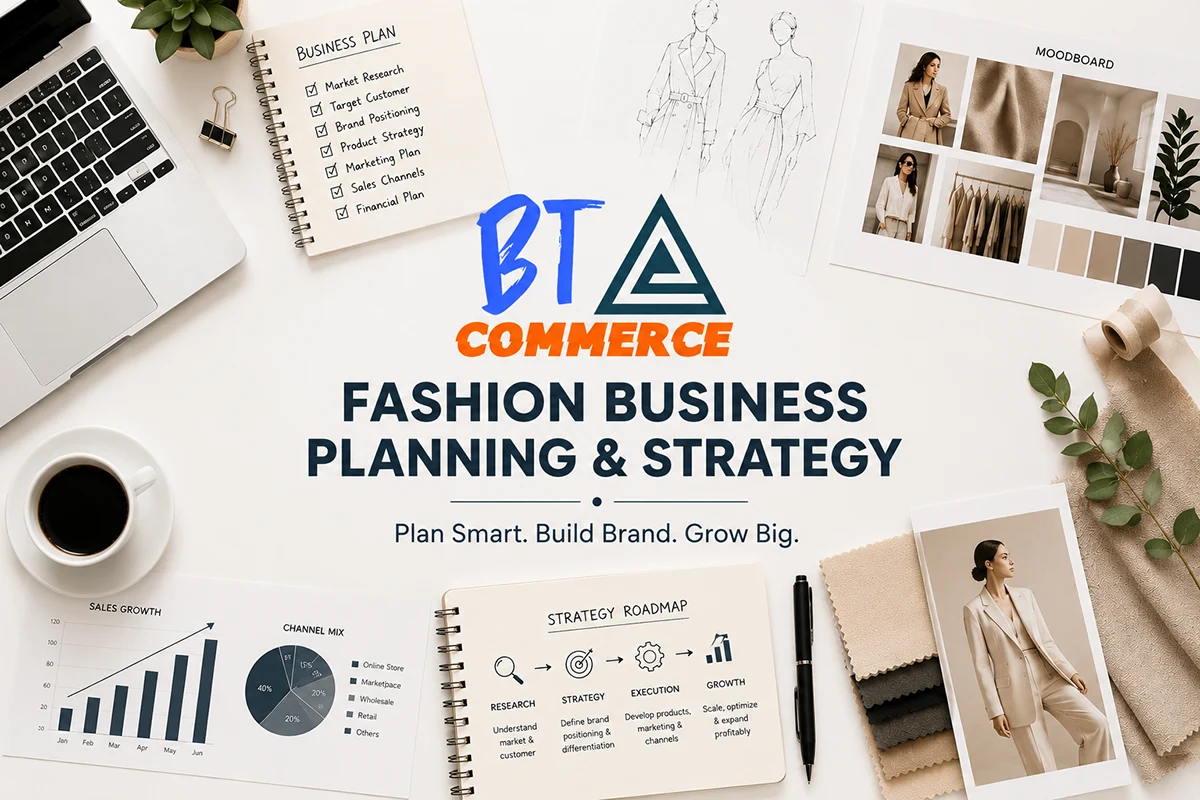
A clothing business plan is a document that outlines how your fashion business will operate, grow, and make money. It helps you organize your ideas, understand your target customers, estimate costs, and plan your marketing and daily operations before launching your business.
The focus of your business plan may vary depending on the type of fashion business you want to build:
- Boutique business plan: Focuses more on retail operations, curated collections, and customer experience.
- Clothing line business plan: Centers on product development, manufacturing, branding, and inventory planning.
- Online clothing store business plan: Prioritizes ecommerce operations, digital marketing, fulfillment, and online sales growth.
No matter which model you choose, a clear business plan can help you make smarter decisions and build a more sustainable fashion business.
Explore more:
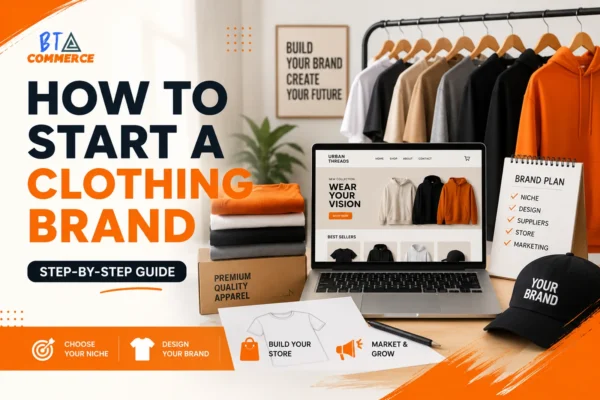
- How to Start a Clothing Brand: Step-by-Step Guide for Beginners
- 20 Clothing Business Ideas That You Can Start Today
- 500+ Clothing Brand Name Ideas for a Memorable Fashion Brand
Why You Need a Business Plan Before Starting a Clothing Business
The fashion industry moves fast, and trends can change quickly. Without a clear plan, many clothing businesses struggle with poor inventory decisions, weak branding, inconsistent marketing, or cash flow problems. A well-structured business plan helps you make smarter decisions before investing time and money into your brand.
Here are some of the biggest benefits of creating a clothing business plan:
- Validate your niche and target market: Researching your audience and competitors helps you understand what customers actually want and where your brand can stand out.
- Estimate startup and operating costs: A business plan helps you calculate expenses like inventory, manufacturing, packaging, marketing, shipping, and ecommerce tools before launching.
- Build a clear marketing strategy: Planning your marketing early makes it easier to define your brand positioning, sales channels, and customer acquisition strategy.
- Prepare for funding or investors: If you plan to apply for funding or pitch investors, a professional business plan shows that your clothing business has a realistic growth strategy and financial direction.
- Create a roadmap for long-term growth: A business plan keeps your fashion business focused as you grow, helping you make better decisions about product expansion, operations, and scaling.
Whether you’re starting a boutique, clothing line, or online fashion store, having a business plan can reduce risk and give your business a stronger foundation for long-term success.
How to Write a Clothing Business Plan
A successful clothing business plan should explain how your fashion business will operate, attract customers, and grow over time. Instead of treating each section separately, every part of your plan should work together to support the same business goals, target audience, and brand positioning.
1. Write an Executive Summary
Your executive summary is a short overview of your clothing business plan. It gives readers a quick understanding of your business concept, products, goals, and target market before they explore the rest of the plan in detail.
This section should briefly explain:
- What type of clothing business you’re starting
- The products you plan to sell
- Your target audience
- Your business goals
- What makes your brand different
Keep your executive summary concise and easy to understand. If you plan to seek funding or partnerships, this may be the first section investors read.
Example Executive Summary
“Luna Streetwear is an online clothing brand focused on minimalist oversized apparel for Gen Z and young millennials. The company will sell graphic T-shirts, hoodies, and seasonal collections through its ecommerce store and social media channels. Our goal is to build a recognizable fashion brand with strong customer loyalty and sustainable long-term growth through content marketing and influencer partnerships.”
2. Describe Your Business and Brand Identity
Once you summarize your business idea, the next step is defining your brand identity. This section explains what your clothing business stands for and how you want customers to perceive your brand.
Your business description should include:
- Brand positioning: Explain where your brand fits in the market, such as luxury fashion, affordable basics, boutique fashion, sustainable apparel, or streetwear.
- Mission statement: A short statement that describes your brand’s purpose, values, and long-term vision.
- Unique value proposition: Define what makes your clothing business different from competitors, whether it’s product quality, pricing, design style, sustainability, or customer experience.
- Clothing niche: Identify the specific audience or category you want to focus on, such as activewear, vintage fashion, modest clothing, or eco-friendly apparel.
A strong brand identity creates consistency across your products, website, packaging, and marketing strategy. It also makes it easier for customers to recognize and remember your brand.
3. Conduct Market and Competitor Research
After defining your brand, the next step is understanding the market you’re entering. Market research helps you evaluate demand, identify competitors, and discover opportunities before investing heavily in inventory or marketing.
Focus your research on:
- Industry trends: Analyze current fashion trends, customer shopping behavior, ecommerce growth, and popular product categories in your niche.
- Competitor analysis: Study clothing brands or boutiques targeting a similar audience. Look at their pricing, product quality, branding, website experience, and marketing channels.
- Gap identification: Identify opportunities your competitors may be missing, such as underserved audiences, better sizing options, faster shipping, or more affordable pricing.
Strong market research can help you make smarter decisions about pricing, branding, inventory, and marketing before launching your business.
Questions to Answer During Market Research
- Who are your biggest competitors?
- What products are currently trending in your niche?
- What price range does your audience expect?
- What problems do customers have with existing brands?
- How can your clothing business stand out from competitors?
4. Define Your Target Audience
Once you understand the market, you can define the audience your clothing business wants to serve. Knowing your ideal customers helps you create products, messaging, and marketing campaigns that connect with the right buyers.
Your target audience profile should include:
- Demographics: Age, gender, income level, location, occupation, and lifestyle.
- Buying behavior: Where customers shop, how often they buy clothing, and what influences their purchasing decisions.
- Style preferences: Preferred fashion styles, colors, aesthetics, brands, and shopping habits.
- Customer pain points: Common frustrations customers experience, such as poor sizing, low-quality materials, limited style options, or expensive pricing.
The better you understand your target audience, the easier it becomes to build products and marketing strategies that attract loyal customers and increase long-term sales.
5. Outline Your Products and Pricing Strategy
After identifying your target audience, the next step is deciding what products you’ll sell and how you’ll price them. Your product and pricing strategy should align with your brand positioning, customer expectations, and profit goals.
Start by defining your main product categories, such as:
- T-shirts and hoodies
- Activewear
- Formalwear
- Accessories
- Seasonal collections
Next, choose a pricing model that fits your audience and market position. For example, boutique fashion brands may use premium pricing, while fast-fashion or basics-focused brands often compete with more affordable pricing.
When setting prices, calculate:
- Production costs
- Packaging and shipping expenses
- Marketing costs
- Platform or transaction fees
- Desired profit margins
You should also plan for seasonal collections and product launches throughout the year. Many clothing businesses increase sales by releasing limited collections tied to holidays, trends, or seasonal demand.
A strong pricing strategy helps protect your profit margins while keeping your products competitive in the market.
6. Choose Your Business Model and Sales Channels
Once you define your products, the next step is deciding how your clothing business will operate and sell to customers. Your business model affects inventory management, startup costs, operations, and long-term scalability.
Some of the most common clothing business models include:
- Online clothing store: Sell directly through your ecommerce website using platforms like Shopify.
- Boutique retail store: Operate a physical clothing store focused on local customers and in-person shopping experiences.
- Dropshipping: Sell products without holding inventory. Suppliers ship orders directly to customers.
- Print-on-demand: Products are printed only after customers place orders, reducing upfront inventory costs.
- Private label: Work with manufacturers to create custom-branded clothing products.
Many modern fashion businesses combine multiple sales channels, such as selling through an online store, social media platforms, marketplaces, and pop-up shops.
Which Business Model Is Best for Beginners?
For many first-time entrepreneurs, print-on-demand and dropshipping are the easiest ways to start because they require lower upfront investment and reduce inventory risk. However, private label and boutique models often provide stronger branding opportunities and higher long-term profit margins.
The best model depends on your budget, branding goals, operational experience, and growth strategy.
Read more:
- 500+ Boutique Business Name Ideas: Unique, Cute & Trendy Names
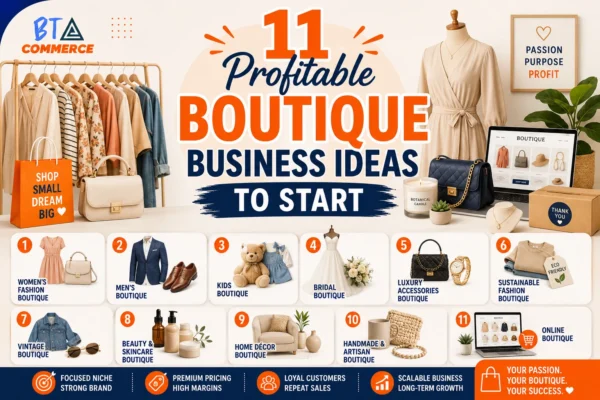
- 11 Profitable Boutique Business Ideas to Start
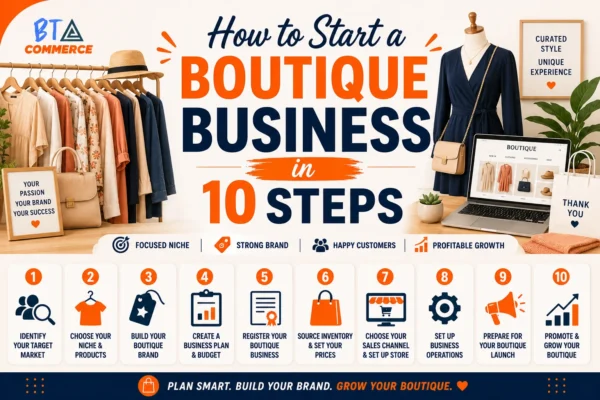
- How to Start a Boutique Business in 10 Steps
7. Create an Operations Plan
An operations plan explains how your clothing business will function on a daily basis. This section helps you organize inventory, suppliers, fulfillment, and ecommerce systems before launching.
Your operations plan should cover:
- Inventory management: How you will track stock levels, prevent overselling, and manage seasonal inventory.
- Suppliers and manufacturing: Where your products will be sourced or manufactured and how you will maintain product quality.
- Fulfillment and shipping: Packaging, shipping methods, delivery timelines, and return handling.
- Ecommerce platform setup: Your online store infrastructure, payment gateways, product pages, and customer experience.
A clear operations strategy can help reduce delays, improve customer satisfaction, and make your business easier to scale.
Essential Tools for Running a Clothing Business Online
Some commonly used tools for online clothing businesses include:
- Ecommerce platforms like Shopify
- Inventory management software
- Email marketing tools
- Analytics and reporting platforms
- Shipping and fulfillment integrations
Choosing the right tools early can improve efficiency and help automate daily operations as your business grows.
8. Develop a Clothing Marketing Strategy
Even strong products can struggle without effective marketing. A clothing marketing strategy should explain how you plan to attract customers, increase brand awareness, and generate repeat sales.
Most fashion brands use a combination of marketing channels, including:
- SEO: Optimize your website and product pages to attract organic traffic from search engines.
- Social media marketing: Use platforms like Instagram, TikTok, and Pinterest to showcase products and build a fashion community.
- Influencer partnerships: Collaborate with creators who already have trust and influence within your target audience.
- Email marketing: Promote new collections, seasonal campaigns, and abandoned cart reminders.
- Paid advertising: Use Facebook Ads, Instagram Ads, Google Ads, or TikTok Ads to drive targeted traffic and sales.
Your marketing strategy should align with your target audience, pricing strategy, and overall brand identity.
Customer Retention Strategies for Fashion Brands
Acquiring customers is important, but retaining them is often more profitable over time. Clothing brands can improve customer retention by:
- Launching loyalty or rewards programs
- Offering personalized recommendations
- Creating limited-edition product drops
- Providing fast shipping and responsive customer support
- Building a strong brand community through social media and email marketing
9. Build Your Organizational Structure
As your clothing business grows, having a clear organizational structure can improve communication, accountability, and operational efficiency.
Start by identifying key roles and responsibilities, such as:
- Product design
- Marketing and content creation
- Customer support
- Inventory and operations management
- Finance and administration
You should also decide whether to hire employees, work with freelancers, or outsource certain tasks like graphic design, fulfillment, or advertising management.
For many small clothing brands, outsourcing can reduce costs during the early stages of growth. As the business scales, building an in-house team may provide more control and consistency.
10. Create a Financial Plan
Your financial plan explains how your clothing business will generate revenue, manage expenses, and achieve profitability. This is one of the most important sections of a business plan, especially if you plan to seek investors or business funding.
Your financial plan should include:
- Startup costs: Inventory, manufacturing, branding, website setup, marketing, packaging, and legal expenses.
- Revenue projections: Estimated monthly or yearly sales based on pricing, traffic, and conversion rates.
- Break-even analysis: How long it may take for your business to cover expenses and become profitable.
- Funding sources: Personal savings, business loans, investors, crowdfunding, or ecommerce financing options.
Realistic financial projections help you make better budgeting decisions and reduce unnecessary financial risk.
Example Startup Costs for a Clothing Business
Startup costs vary depending on your business model, but common expenses may include:
- Product samples and inventory
- Website development
- Branding and logo design
- Packaging materials
- Marketing campaigns
- Photography and content creation
- Business registration and legal fees
Online clothing businesses using print-on-demand or dropshipping often have lower startup costs compared to traditional retail stores.
11. Plan Your Business Growth Strategy
A clothing business plan should not only focus on launching your brand but also explain how you plan to grow over time.
Your growth strategy may include:
- Expanding product lines: Adding new categories, seasonal collections, or accessories.
- Scaling ecommerce operations: Improving fulfillment systems, automation, and customer experience as order volume increases.
- Wholesale opportunities: Selling products through boutiques, retail stores, or online marketplaces.
- International selling: Expanding into global markets through international shipping or localized storefronts.
Planning for long-term growth helps your clothing business stay competitive and adapt to changes in customer demand and market trends.
Common Mistakes to Avoid When Writing a Clothing Business Plan
Based on established fashion startup planning practices, ecommerce business frameworks, and common errors identified in industry financial and operational planning guides, these are the most frequent mistakes clothing entrepreneurs make when building a business plan.
Overestimating revenue
A common mistake is assuming that sales will grow quickly without supporting data. Many new clothing brands base revenue forecasts on expectations rather than real inputs like traffic, conversion rate, or customer acquisition cost.
In reality, fashion demand is highly variable due to trends, seasonality, and competition. If revenue projections are too optimistic, it can lead to:
- poor inventory planning
- overspending on marketing or production
- cash flow shortages
A strong business plan should use conservative, data-driven assumptions and scenario planning instead of a single “best-case” forecast.
Ignoring operational costs
Many business plans focus only on product costs and overlook the full cost of running a clothing business. This often leads to misleading profit expectations.
Key operational costs that are often missed include:
- shipping and fulfillment
- returns and refunds
- packaging and branding
- advertising and customer acquisition
- ecommerce platform fees
- storage and logistics
In fashion ecommerce, these “hidden” costs can significantly reduce margins if not properly included in planning.
Weak market differentiation
Another major issue is failing to clearly define what makes the brand different. Many clothing business plans rely on generic positioning like “high quality” or “stylish designs,” which are not strong competitive advantages.
Without clear differentiation, a brand may struggle with:
- unclear positioning in the market
- weak customer loyalty
- pricing pressure from competitors
A strong business plan should clearly define brand identity, value proposition, and why customers should choose your brand over others.
Unclear target audience
A frequent mistake is trying to target too broad an audience. When a business does not clearly define who it is selling to, marketing becomes inefficient and product decisions become inconsistent.
A well-defined target audience should include:
- demographics (age, lifestyle, income)
- fashion preferences and buying behavior
- shopping channels they use
- pain points or unmet needs
Clear audience definition helps align product design, branding, and marketing strategy into one focused direction.
No long-term growth strategy
Many clothing business plans stop at the launch phase and fail to explain how the business will scale over time.
Without a growth strategy, brands often struggle to move beyond initial sales momentum. A strong plan should include long-term direction such as:
- expanding product categories
- scaling ecommerce operations
- adding new sales channels (wholesale, marketplaces)
- entering new markets or regions
A business plan is not just about starting the brand—it should clearly explain how the brand will grow sustainably over time.
Simple Clothing Business Plan Template
This template is designed to help you quickly structure a complete clothing business plan. Instead of theory, each section is a practical framework you can fill in based on your own fashion brand, boutique, or online store.
Executive Summary Template
Use this section to summarize your entire clothing business in a clear and concise way. It should give a quick overview of your brand and direction.
- Business name: ______
- Business model (boutique / online store / clothing brand): ______
- Products you sell: ______
- Target customers: ______
- Brand positioning (budget / mid-range / premium / niche): ______
- Unique value proposition: ______
- Short-term goals (6–12 months): ______
- Long-term goals (1–3 years): ______
Market Analysis Template
This section helps you understand your industry, competitors, and customer demand before launching.
- Target market: ______
- Customer demographics (age, gender, lifestyle, income): ______
- Customer needs and pain points: ______
- Industry trends relevant to your niche: ______
- Main competitors: ______
- Competitor strengths: ______
- Competitor weaknesses: ______
- Market opportunity or gap: ______
Financial Planning Template
Use this section to estimate startup costs, revenue potential, and overall financial feasibility.
- Startup costs:
- Product/inventory: ______
- Branding & design: ______
- Website/platform setup: ______
- Marketing & ads: ______
- Packaging & logistics: ______
- Other expenses: ______
- Monthly operating costs:
- Advertising: ______
- Shipping & fulfillment: ______
- Tools/software: ______
- Other: ______
- Estimated selling price per product: ______
- Expected profit margin: ______
- Monthly revenue projection: ______
- Break-even point estimate: ______
Marketing Plan Template
This section defines how you will attract customers and grow your clothing brand.
- Brand positioning message: ______
- Primary marketing channels:
- SEO: ______
- Social media (Instagram / TikTok / Pinterest): ______
- Influencer marketing: ______
- Email marketing: ______
- Paid ads: ______
- Content strategy: ______
- Customer acquisition strategy: ______
- Customer retention strategy: ______
- Product launch strategy: ______
- Marketing budget allocation: ______
Summary
This template provides a structured foundation to build a complete clothing business plan. Once filled in, it becomes a practical roadmap for launching, managing, and scaling your fashion business in a sustainable way.
=> Read more: How to Write a Business Plan for Startups & Small Businesses
Final Tips for Launching a Successful Clothing Business
Before you launch your clothing brand, focus on the fundamentals that directly impact whether your business can survive and grow in a competitive fashion market. These are the key principles that experienced founders consistently prioritize.
- Start lean but focused: Don’t try to launch everything at once. Begin with a small product range so you can test demand and refine your direction based on real customer response.
- Get your positioning right early: Clearly define what your clothing brand stands for and who it serves. Strong positioning makes it easier to attract the right customers and build loyalty.
- Think like an operator, not just a seller: Beyond products, make sure your basic operations (inventory, fulfillment, customer service) are stable and reliable from the beginning.
- Invest in the right systems: Use tools and platforms that can grow with your business instead of rebuilding everything later when you scale.
- Let data guide your decisions: Pay attention to customer behavior, sales patterns, and feedback instead of relying only on assumptions or trends.
Building a successful clothing business is less about having a perfect idea and more about executing consistently, learning quickly, and improving based on real market feedback.
Recommended Reading