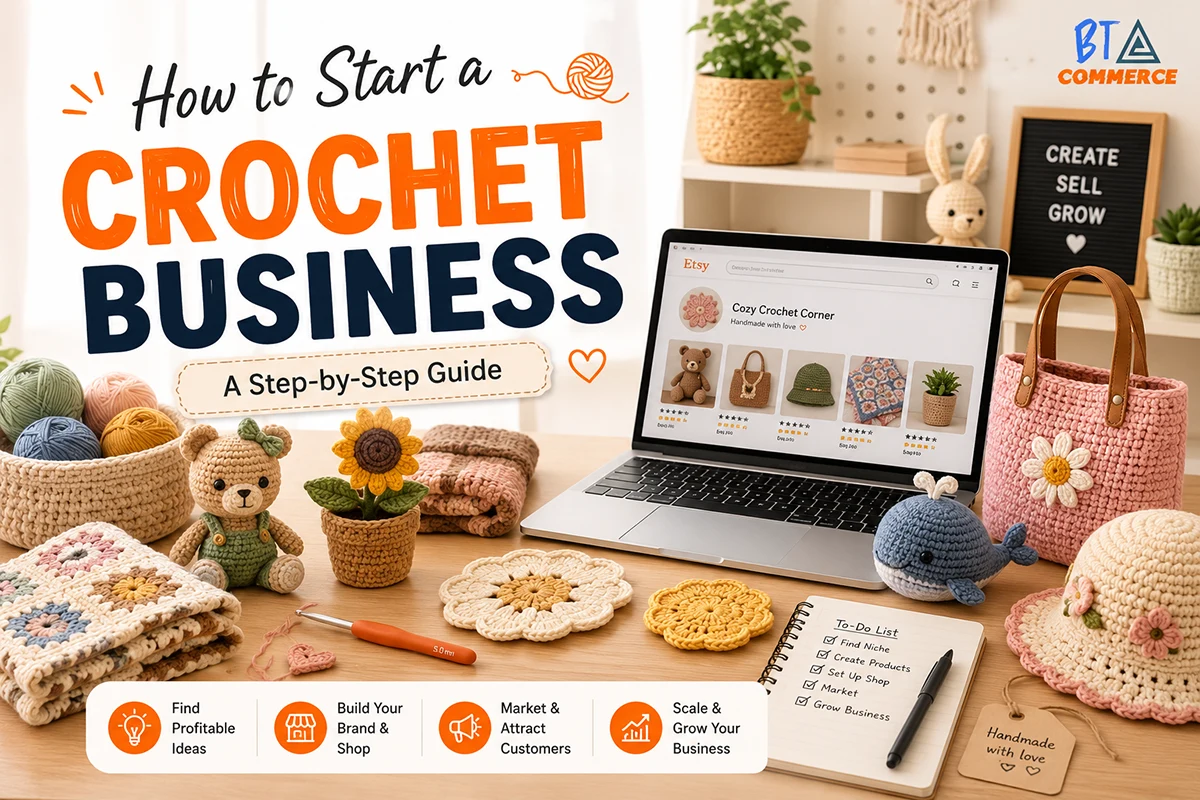
If you’re thinking about starting a crochet business, you might be wondering if it’s possible to turn your handmade creations into a steady source of income. It is—but success depends on more than crochet skills. Understanding your market, choosing products people want, pricing them correctly, and selling through the right channels all play an important role.
This guide from BTA Commerce walks you through the entire process, from validating your business idea and choosing what to sell to pricing, marketing, and growing your business. Whether you’re starting as a side hustle or aiming for a full-time income, you’ll find practical steps to help you move forward with confidence.
Step 1. Decide Whether a Crochet Business Is Right for You
Before investing time and money, make sure you’re ready to turn your crochet hobby into a business. Selling handmade products isn’t just about creating beautiful pieces—it’s also about understanding customers, managing costs, and consistently delivering a great buying experience.
Ask yourself these questions before getting started:
- Do you enjoy crocheting on a schedule? Customer orders often come with deadlines, especially during holidays and gift-giving seasons.
- Can you price your work for profit? Your prices need to cover materials, labor, packaging, platform fees, and still leave room for profit.
- Are you willing to handle the business side? Marketing, customer service, inventory management, and shipping will become part of your daily routine.
- Can you produce consistently? Customers expect the same quality and reasonable turnaround times, whether you’re making one item or twenty.
If you can confidently answer “yes” to most of these questions, you’re already in a good position to start. You don’t need dozens of products or a large budget—what matters most is having a clear plan and building your business one step at a time.
Read more:
- How to Start a Business in 10 Practical Steps to Succeed
- How to Start a Craft Business: A Step-by-Step Guide for Beginners
Step 2. Research the Market Before You Start
Many new business owners make the mistake of creating products first and looking for customers later. Instead, research the market before investing time, money, and materials. Knowing what people already buy—and why they buy it—will help you build products with real demand.
Focus on these five areas:
- Find products with proven demand: Browse Etsy, social media, and local craft fairs to identify crochet products that consistently sell. Pay attention to bestseller badges, customer reviews, and seasonal trends.
- Identify your ideal customer: Define who you’re selling to, such as parents, pet owners, home décor enthusiasts, or gift shoppers. Understanding your audience makes it easier to create products they’ll actually buy.
- Study your competitors: Analyze successful crochet businesses to learn how they price products, present their listings, build their brand, and attract customers. Use these insights to differentiate your business rather than copy their approach.
- Validate product demand: Use tools like Google Trends, SEMrush, SpyFu, and AnswerThePublic to discover what people are actively searching for. Combining keyword research with marketplace trends helps confirm demand before you invest in inventory.
- Look for gaps in the market: Instead of competing on the same products, look for opportunities to stand out through customization, premium materials, unique designs, or faster turnaround times.
By the end of this step, you should know what to sell, who to sell to, and how to position your crochet business in a competitive market.
Step 3. Choose What Crochet Products to Sell
The products you choose will have a direct impact on your sales, profit margins, and how easily you can grow your business. Instead of trying to sell everything, focus on products that match your skills, have proven demand, and can be produced efficiently.
When choosing your product line, consider these factors:
- Pick a profitable niche: Specializing in a specific niche makes it easier to stand out and attract the right customers. You might focus on amigurumi plushies, baby gifts, home décor, pet accessories, eco-friendly products, or digital crochet patterns instead of offering a little bit of everything.
- Start with a small product collection: Launch with a handful of products rather than a large catalog. A focused collection is easier to manage, helps strengthen your brand, and lets you learn which items customers prefer before expanding. You should also decide whether to sell made-to-order products or keep ready-to-ship inventory, as each approach affects production and delivery times.
- Validate your ideas before making inventory: Test demand before investing too much time and money. Share product ideas on social media, accept pre-orders, sell at local craft fairs, or list a few products online to see what attracts the most interest.
- Plan your materials and supply needs: Estimate the yarn, hooks, packaging, and other supplies required for each product. Choosing reliable suppliers and understanding your material costs early will make pricing more accurate and help avoid production delays.
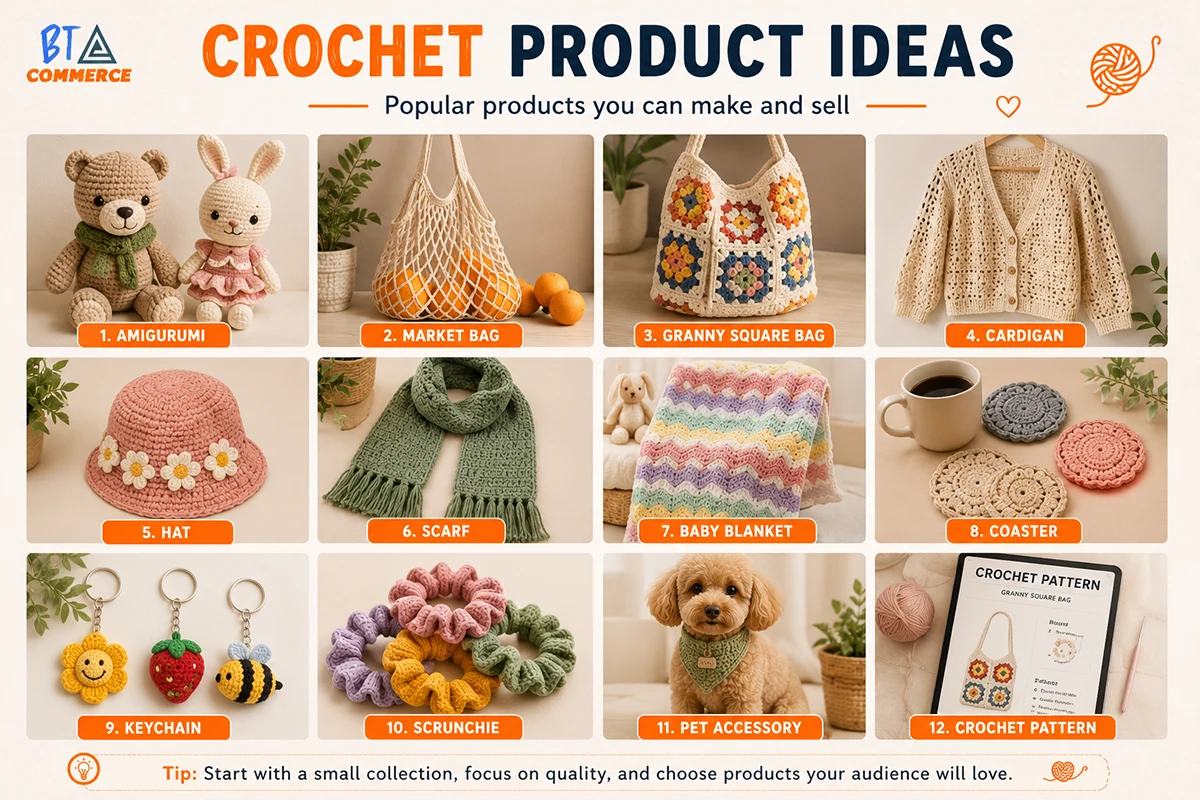
As your business grows, you can expand into new product categories, premium collections, or even digital products like crochet patterns and DIY kits. Starting with a focused product line gives you a stronger foundation than trying to serve every type of customer from day one.
=> Read more: 35 DIY Small Business Ideas That Actually Make Money
Step 4. Price Your Crochet Products for Profit
Pricing your crochet products correctly is essential for building a sustainable business. One of the biggest mistakes beginners make is charging only for materials while overlooking labor and business expenses. A simple pricing formula can help you recover your costs and generate enough profit to grow.
A practical pricing formula is:
Materials + Labor + Overhead + Profit Margin = Selling Price
When calculating your prices, consider these four elements:
- Material costs: Include everything used to make a product, such as yarn, stuffing, safety eyes, buttons, packaging, tags, and shipping supplies. For example, if a skein of yarn costs $5 and you use half of it, your yarn cost is $2.50.
- Labor costs: Track the time it takes to complete each item, including assembly and finishing. Many handmade sellers use an hourly rate between $15 and $30, depending on their experience, product complexity, and target market.
- Overhead costs: Add business expenses that aren’t tied to a single product, such as Etsy listing fees, payment processing fees, website costs, internet, tools, or craft fair booth fees. Dividing these costs across your products gives you a more accurate base price.
- Profit margin: After calculating your total costs, add a profit margin—typically 25% to 50%—to create room for reinvestment, unexpected expenses, and business growth.
Finally, compare your prices with similar products on Etsy and local craft markets. If your products are significantly more expensive, look for ways to improve efficiency or reduce material costs rather than underpricing your work.
Avoid these common pricing mistakes:
- Charging only for materials while ignoring labor.
- Copying competitors’ prices without calculating your own costs.
- Competing solely on price instead of quality and craftsmanship.
- Failing to update prices as material costs or platform fees increase.
A profitable pricing strategy doesn’t just cover today’s expenses—it gives your business the resources to improve products, invest in better tools, and grow over time.
Step 5. Set Up Your Crochet Business
Once you’ve decided what to sell, it’s time to set up your business properly. A solid foundation helps you stay organized, separate your finances, and makes it easier to grow in the future.
Start with these essentials:
- Choose a memorable crochet business name: Pick a name that’s easy to remember, reflects your brand, and is available as a domain name and social media handle.
- Register your business if required: Many crochet businesses start as a sole proprietorship, while others choose an LLC (Limited Liability Company) for additional legal protection. If you operate under a business name that’s different from your legal name, you may also need to register a DBA (Doing Business As), depending on local regulations.
- Apply for an EIN (if applicable): If you’re in the United States, you can apply for a free Employer Identification Number (EIN) through the IRS. An EIN allows you to open a business bank account without using your Social Security number.
- Open a business bank account: Keeping business and personal finances separate makes it easier to track income, expenses, and profits while preparing for tax season.
- Set up a bookkeeping system: Track your material costs, packaging, sales, and other expenses using a spreadsheet or accounting software like QuickBooks. Good records make pricing and tax reporting much easier.
- Build a consistent brand: Use the same business name, logo, colors, and visual style across your website, packaging, and social media to create a professional and recognizable brand.
Setting up these essentials from the beginning will save you time, simplify day-to-day operations, and give your crochet business a stronger foundation for long-term growth.
Step 6. Choose Where to Sell Your Crochet Products
The best place to sell your crochet products depends on what you’re offering and how you want to grow your business. Many successful sellers use multiple sales channels, combining an online marketplace with social media or local events to reach more customers and reduce their reliance on a single platform.
Consider these options:
- Online marketplaces: Platforms like Etsy are ideal for beginners because they already attract millions of shoppers looking for handmade products. If you’re selling digital crochet patterns instead of finished items, niche marketplaces like Ravelry and Ribblr are also worth considering. Amazon Handmade is another option if you’re ready to reach a larger audience.
- Your own online store: Building a website with platforms like Shopify or Wix gives you full control over your brand, customer experience, and pricing. While you’ll need to generate your own traffic, you won’t be limited by marketplace rules or recurring listing fees.
- Social media platforms: Instagram, TikTok, Pinterest, and Facebook are excellent for showcasing your work, building a community, and driving sales. Many small crochet businesses accept orders directly through messages and payments via services like PayPal or Venmo.
- Local craft fairs and markets: Selling in person lets customers see and feel your products before buying. It’s also a great way to test new products, gather feedback, and build a loyal local customer base.
- Make ordering simple: No matter where you sell, customers should always know how to place an order. Provide clear contact information, respond quickly to inquiries, and make your ordering and payment process as simple as possible.
You don’t have to choose just one sales channel. Many successful crochet businesses start on Etsy, promote their products through social media, and eventually expand to their own website as their brand grows.
Step 7. Create Product Listings That Convert
A well-made crochet product won’t sell on its own if the listing doesn’t inspire confidence. Whether you’re selling on Etsy or your own website, your listing should quickly answer three questions: What is it? Why should I buy it? How do I order it?
Create listings that convert with these best practices:
- Take high-quality product photos: Use a clear hero image, lifestyle photos that show the product in use, and close-up shots that highlight stitch quality, materials, and craftsmanship.
- Write compelling titles and descriptions: Start your title with the primary keyword, then include details like style, color, size, or recipient. In the description, focus on customer benefits first, then explain the product’s features using short paragraphs and bullet points.
- Include essential product details: List the materials, dimensions or sizing, available colors, processing time, shipping information, care instructions, and whether the item is made to order or ready to ship. Clear information reduces buyer hesitation.
- Optimize for search and future marketing: Use relevant keywords, tags, and product attributes to improve visibility on platforms like Etsy. Save reusable assets—such as product photos, descriptions, and promotional graphics—to make future product launches and marketing campaigns faster and more consistent.
A well-optimized listing doesn’t just describe your crochet product—it improves visibility, builds trust, and increases conversions.
Step 8. Launch and Grow Your Crochet Business
Once everything is in place, it’s time to launch your crochet business. You don’t need dozens of products or a large audience to get started. A small, well-presented collection backed by consistent marketing and excellent customer service is often enough to attract your first sales.
Focus on these growth strategies:
- Launch with a small product collection: Start with a few of your strongest products rather than a large catalog. Make sure each listing includes high-quality photos, SEO-friendly titles, clear descriptions, and accurate pricing before your shop goes live.
- Promote your products consistently: Share product photos, behind-the-scenes videos, customer stories, and new releases on platforms like Instagram, TikTok, and Pinterest. Consistent posting keeps your brand visible and helps attract new customers over time.
- Encourage reviews and repeat customers: Ask satisfied customers to leave reviews and share photos of their purchases. Include thank-you cards, care instructions, or small discounts for future orders to encourage repeat business and build customer loyalty.
- Improve based on customer feedback: Pay attention to reviews, common questions, and sales performance to identify what’s working and what isn’t. As your business grows, consider expanding into new product lines, digital crochet patterns, or workshops to diversify your income.
Launching your shop is just the beginning. Consistently improving your products, customer experience, and marketing efforts will help your crochet business grow steadily over time.
Common Mistakes to Avoid When Starting a Crochet Business
Starting a crochet business is a learning process, and mistakes are inevitable. However, avoiding a few common pitfalls can save you time, protect your profits, and help you build a stronger brand from the beginning.
Here are the mistakes new crochet business owners make most often:
- Underpricing handmade products: Pricing based on what “feels affordable” instead of your actual costs is one of the fastest ways to lose money. Use a pricing formula that includes materials, labor, overhead, and profit so every sale contributes to your business.
- Selling too many products at once: Offering dozens of different items can make inventory, marketing, and production difficult to manage. Start with a focused product line, learn what customers respond to, and expand based on real sales data.
- Skipping market research: Creating products without validating demand often leads to slow sales and excess inventory. Before investing in materials or launching new products, research trends, keywords, competitors, and customer preferences to confirm there’s a market.
- Ignoring branding and customer experience: Great products alone aren’t enough. Consistent branding, professional product photos, responsive communication, attractive packaging, and a smooth buying experience all influence whether customers trust your business and return for future purchases.
Every successful crochet business improves over time. Treat each sale, review, and customer interaction as an opportunity to refine your products, strengthen your brand, and grow with confidence.
FAQs About Starting a Crochet Business
Is a crochet business profitable?
Yes. A crochet business can be profitable if you choose products with strong demand, price your work correctly, and market your business consistently. Because crochet is time-intensive, long-term success depends on working efficiently, charging fairly for your labor, and focusing on profitable niches rather than competing on price.
What crochet items sell the most?
Small, affordable, and giftable products tend to sell best. Popular items include amigurumi plushies, hats, scarves, scrunchies, market bags, granny square bags, baby blankets, baby booties, and pet accessories. Seasonal and personalized products also perform well because they’re popular gift choices.
How much should I charge for crochet items?
Your pricing should cover materials, labor, overhead costs, and profit. Many crochet sellers also use formulas like (Material Cost × 3) + Labor Cost as a starting point, then compare their prices with similar products on Etsy or at local craft fairs to stay competitive.
Where is the best place to sell crochet products?
The best strategy is to sell through multiple channels. Start with an online marketplace like Etsy to reach handmade shoppers, promote your products on Instagram or TikTok, and sell at local craft fairs or farmers markets to build a loyal customer base. As your business grows, consider launching your own website with Shopify.
Do I need a business license to sell crochet items?
It depends on your local laws. Many crochet businesses start as a sole proprietorship, but you may need a business license, sales tax permit, or other registrations depending on where you operate. If you use a business name that’s different from your legal name, you may also need to register a DBA (Doing Business As) before accepting business payments.
Recommended Reading