If you love making handmade products, you may have wondered whether you could turn your hobby into a real source of income. Whether you want to earn extra money from home or build a full-time business, this guide explains how to start a craft business step by step. You’ll learn how to validate your idea, choose where to sell, price your products, and grow with confidence.
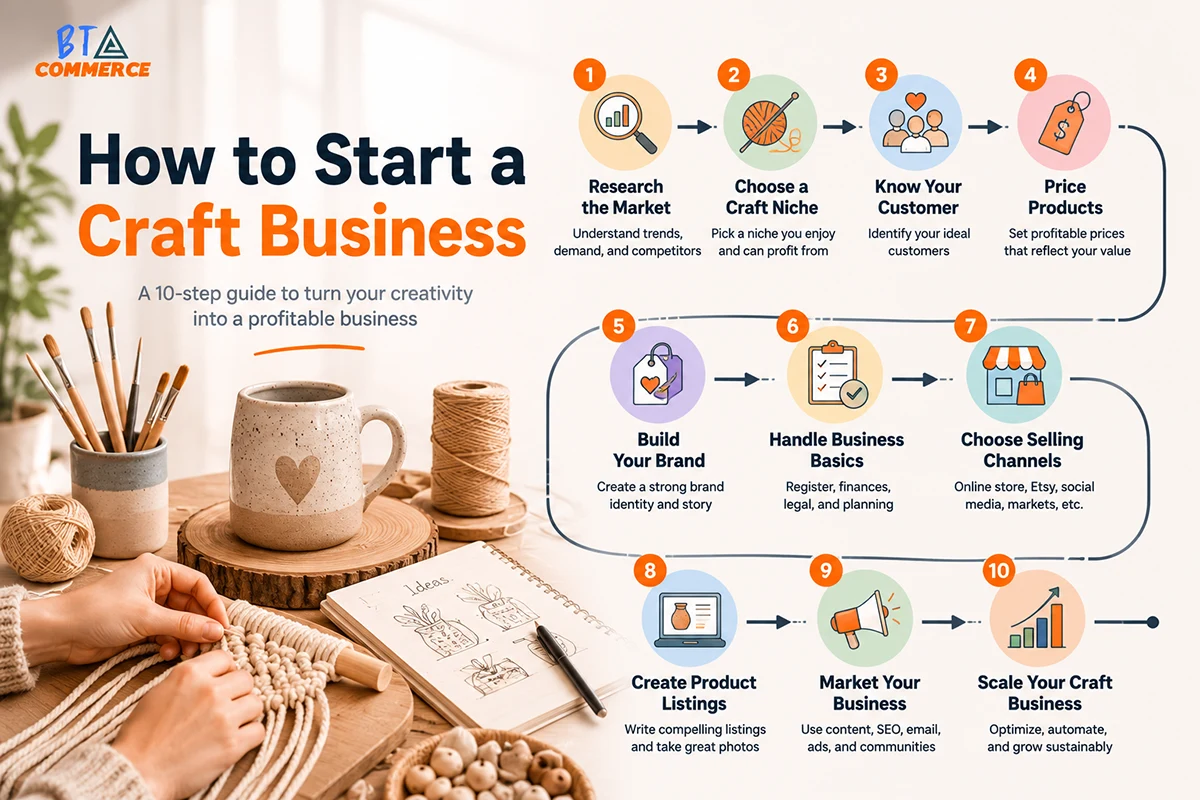
Step 1. Research the Market Before You Start
Before you invest in materials, branding, or a website, make sure people actually want to buy what you plan to sell. Great craftsmanship alone doesn’t guarantee sales. Understanding your market helps you avoid creating products with little demand and gives your craft business a clearer direction from the start.
Compare similar products on Etsy, Amazon Handmade, local craft fairs, and handmade gift shops, then use Google Trends and Pinterest Trends to gauge demand for your craft niche. Instead of copying successful products, pay attention to why customers buy them. Product reviews, ratings, and recurring feedback often reveal what buyers value most—and what they still wish they could find.
As you research, look for patterns such as:
- Products with consistently strong sales or customer reviews.
- Materials, styles, or personalization options that buyers value most.
- Common complaints or feature requests that competitors haven’t addressed.
- Price ranges customers are comfortable paying.
Once you understand what’s already selling, look for opportunities to stand out instead of creating another version of the same product. Ask yourself:
- Can you offer better quality?
- Can you serve a more specific niche?
- Can you provide unique designs or better customization?
- Can you solve a common problem customers mention in reviews?
Finally, define exactly who you’re creating for. Whether your ideal customers are gift shoppers, parents, pet owners, or home décor enthusiasts, understanding their needs will help you make better decisions about product design, pricing, branding, and where to sell.
Tip: Don’t try to create products for everyone. The most successful craft businesses often begin by solving a specific problem for a specific group of customers.
Explore more:
- How to Start a Business in 10 Practical Steps to Succeed
- How to Start a Jewelry Business (Step-by-Step Guide)
Step 2. Choose a Profitable Craft Niche
Now that you’ve confirmed there’s demand, it’s time to decide what kind of craft products you’ll sell. One of the most common mistakes beginners make when starting a handmade business is offering too many different products. While it may seem like a good way to attract more customers, it often makes your brand less memorable and harder to market.
A profitable niche sits at the intersection of three things:
- Your skills: What can you make consistently without sacrificing quality?
- Customer demand: What are people already willing to buy?
- Your unique value: What can you offer that competitors don’t?
For example, instead of selling handmade candles, you could specialize in eco-friendly soy candles for book lovers. Rather than offering jewelry for everyone, you might focus on personalized birthstone gifts for new mothers. A clear niche helps customers immediately understand who your products are for and why they should choose your brand.
Before investing in materials or inventory, test your idea with a few sample products. Sell them on Etsy, your own website, or at a local craft fair, and promote them on Instagram and TikTok. Real customer feedback will help you refine your products before scaling.
Tip: A smaller, well-defined craft niche is often easier to grow than a broad one. It’s better to become known for one type of product than to compete with thousands of sellers offering everything.
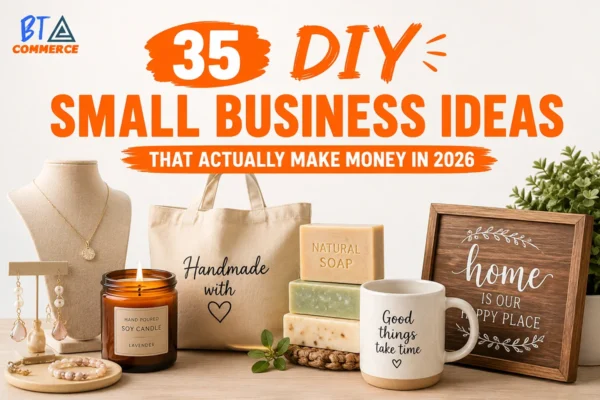
=> Read more: 35 DIY Small Business Ideas That Actually Make Money
Step 3. Know Who You’re Selling To
Once you’ve chosen your craft niche, the next step is understanding who you’re creating it for. Your ideal customer influences almost every business decision—from the products you make and the prices you set to the marketing channels you use.
Instead of focusing only on demographics like age or gender, think about why someone would buy your handmade products. Are they looking for a meaningful gift? A unique home décor item? Or something personalized that can’t be found in a big-box store? Understanding the motivation behind a purchase helps you create products that customers genuinely value.
A simple way to learn about your audience is to study customer reviews for similar products on Etsy or Amazon Handmade. Reviews often reveal what buyers appreciate most, what frustrates them, and what they’re still looking for—insights you can use to improve your own products.
The better you understand your target customers, the easier it becomes to design products they’ll love, price them appropriately, and market them to the right audience.
Step 4. Price Your Handmade Products for Profit
Many handmade businesses struggle not because they can’t make great products, but because they don’t charge enough. Pricing too low may help you get your first few sales, but it can quickly become unsustainable if every order leaves little or no profit.
Your selling price should cover:
- Materials: Raw materials, packaging, and shipping supplies.
- Labor: Every hour spent making, packaging, and preparing an order. Many handmade businesses use $15–25 per hour as a starting point, then adjust as their experience grows.
- Overhead: Business expenses such as tools, software, utilities, workspace, and marketing.
- Selling fees: Marketplace and payment processing fees if you sell through platforms like Etsy.
Once you’ve calculated your total cost, add a profit margin rather than matching the lowest-priced competitor. As a general guideline, many craft businesses calculate a wholesale price first, then apply a 2.0–2.5× markup to reach a retail price. This leaves room for discounts, wholesale orders, and rising costs without sacrificing profitability.
If your final price is higher than similar products, don’t assume it’s wrong. Look for ways to improve efficiency or communicate the value of your craftsmanship before lowering your price. Customers are often willing to pay more for products that are well-made, unique, and clearly worth the investment.
Step 5. Build a Brand People Remember
In a craft business, customers aren’t just buying a product—they’re buying the story, personality, and experience behind it. A memorable brand helps your handmade products stand out, even in a crowded market.
Focus on four essentials:
- Choose a memorable business name: Pick a name that’s easy to remember, reflects your niche, and can grow with your business.
- Create a consistent visual identity: Use a simple logo, 3–4 brand colors, and 1–2 fonts across your website, social media, packaging, and marketing materials.
- Tell your brand story: Share why you started making your products and what makes your craftsmanship unique. An authentic story creates a stronger emotional connection than competing on price.
- Stay consistent everywhere: Your product photos, packaging, writing style, and customer service should all reflect the same brand personality. Consistency builds recognition, and recognition builds trust.
A strong brand doesn’t have to be complicated. It simply makes customers remember who you are—and gives them a reason to come back.
=> Read more: 300+ Craft Business Name Ideas (Creative & Unique)
Step 6. Take Care of the Business Basics
Before accepting your first customer order, make sure your business is set up properly. The exact legal requirements vary by country, state, or local authority, but taking care of the basics early can help you avoid unnecessary problems as your business grows.
A few essentials to check include:
- Register your business if required in your location. Many craft businesses start as a sole proprietorship, while others choose an LLC (Limited Liability Company) for added legal protection. If you use a business name different from your legal name, you may also need a DBA (Doing Business As), depending on local regulations.
- Check local licenses and permits. Depending on what you sell, you may need a business license, sales tax registration, or additional permits for products such as food, candles, cosmetics, or children’s items.
- Apply for a tax identification number if your country requires one. For example, businesses in the U.S. often use an Employer Identification Number (EIN) for banking, taxes, and working with suppliers.
- Open a separate business bank account to keep business income and expenses separate from your personal finances. This makes bookkeeping, tax filing, and cash flow management much easier.
You don’t need to complete every legal step on day one, but understanding the requirements where you operate will help you build a craft business on a solid foundation and avoid costly mistakes later.
Step 7. Decide Where to Sell Your Crafts
There’s no single “best” place to sell handmade products. The right sales channel depends on your target customers, your budget, and how much control you want over your business. Many successful craft businesses start with one channel, then expand as they grow.
Sell Through Online Marketplaces
Online marketplaces are the easiest way to start because they already have customers searching for handmade products.
Some popular options include:
- Etsy – The largest marketplace dedicated to handmade, vintage, and creative goods, making it a great starting point for most beginners.
- Amazon Handmade – Gives you access to Amazon’s global customer base while focusing on handcrafted products.
- eBay – A good option for unique crafts, collectibles, and specialty handmade items.
The biggest advantage is built-in traffic. The trade-off is higher competition, marketplace fees, and less control over your brand.
Launch Your Own Online Store
If you want to build a long-term brand, having your own website gives you complete control over your products, pricing, and customer experience.
Popular platforms include:
- Shopify – Ideal for building a dedicated online store without technical experience.
- WooCommerce – A flexible option for businesses using WordPress.
- Wix – Suitable for creators who want a simple website with built-in eCommerce features.
Unlike marketplaces, you’ll need to generate your own traffic through SEO, social media, email marketing, or paid advertising. However, you also keep full control over your brand and customer relationships.
Sell Locally
Selling in person is one of the fastest ways to validate new products and learn what customers actually want.
Consider selling through:
- Local craft fairs and artisan markets.
- Pop-up events and seasonal markets.
- Gift shops or boutiques through consignment partnerships.
- Farmers markets if your products fit the local audience.
Face-to-face conversations provide immediate feedback on pricing, product quality, and customer preferences—insights that are difficult to gain from online sales alone.
Tip: You don’t have to choose just one sales channel. Many successful craft businesses start on a marketplace like Etsy, build their own website as the brand grows, and continue selling at local events to reach new customers.
Step 8. Create Listings That Convert
When selling handmade crafts online, customers can’t pick up your products or examine the quality in person. Your product listing has to do that job for you. High-quality photos and clear descriptions help shoppers understand what makes your craft unique and give them the confidence to buy.
A high-converting listing should include:
- Clear, high-quality photos: Use natural lighting, a clean background, and multiple angles. Include lifestyle photos and close-up shots that highlight craftsmanship and important details.
- A descriptive product title: Start with the product name, then naturally include details such as the material, size, style, or intended recipient.
- An easy-to-scan description: Put the most important information first so customers can quickly find what they need.
Every listing should answer a few essential questions:
- What materials is the product made from?
- What are the dimensions or size?
- Who is it designed for?
- How should it be used or cared for?
- What’s included with the purchase?
Finally, explain what makes your handmade product worth buying. Whether it’s handcrafted using traditional techniques, made from premium materials, or personalized for each customer, highlighting these details helps shoppers understand the value beyond the price.
Tip: Before publishing a listing, ask yourself: Would I have enough information to buy this product without contacting the seller? If the answer is yes, your listing is ready.
Step 9. Start Marketing Your Craft Business
Even the best craft products won’t sell if people don’t know they exist. When you’re just getting started, focus on building trust and visibility instead of trying every marketing strategy at once.
A simple way to begin is by selling to people who already know you. Friends, family, and local communities can provide your first sales, honest feedback, and valuable word-of-mouth referrals.
As your business grows, build a marketing system that helps customers discover—and remember—your brand:
- Create a website: A website makes your business look more professional and gives customers a place to learn about your products beyond online marketplaces.
- Stay active on social media: Instead of only posting finished products, share behind-the-scenes videos, your creative process, packaging, and the story behind each piece. Handmade products often sell because customers connect with the maker as much as the product itself.
- Build an email list: Encourage visitors and customers to subscribe so you can share new product launches, seasonal collections, and exclusive offers. Platforms such as Mailchimp make it easy to automate newsletters and stay connected with repeat customers.
- Ask for reviews and referrals: Positive reviews build credibility, while recommendations from satisfied customers are often one of the most effective ways to attract new buyers.
Tip: You don’t need to be on every platform. Choose one or two channels where your ideal customers are most active, stay consistent, and focus on building genuine relationships rather than simply promoting your products.
Step 10. Grow Your Craft Business Over Time
Growing a craft business takes more than increasing sales. As your business becomes more established, focus on expanding in ways that create steady, long-term growth instead of simply working longer hours.
A sustainable growth strategy includes:
- Reinvest your profits: Upgrade equipment, improve packaging, buy materials in bulk, or invest in marketing before increasing your personal income.
- Expand your best-selling product lines: Use your sales data to identify which products perform best, then introduce complementary items, seasonal variations, or new designs that appeal to the same audience.
- Diversify your sales channels: If you started on marketplaces like Etsy or Amazon Handmade, consider launching your own online store with Shopify or WordPress. You can also explore wholesale partnerships with local boutiques or gift shops.
- Build systems that support growth: Standardize your production workflow and automate or outsource repetitive tasks as order volume increases, allowing you to spend more time on product development and customer relationships.
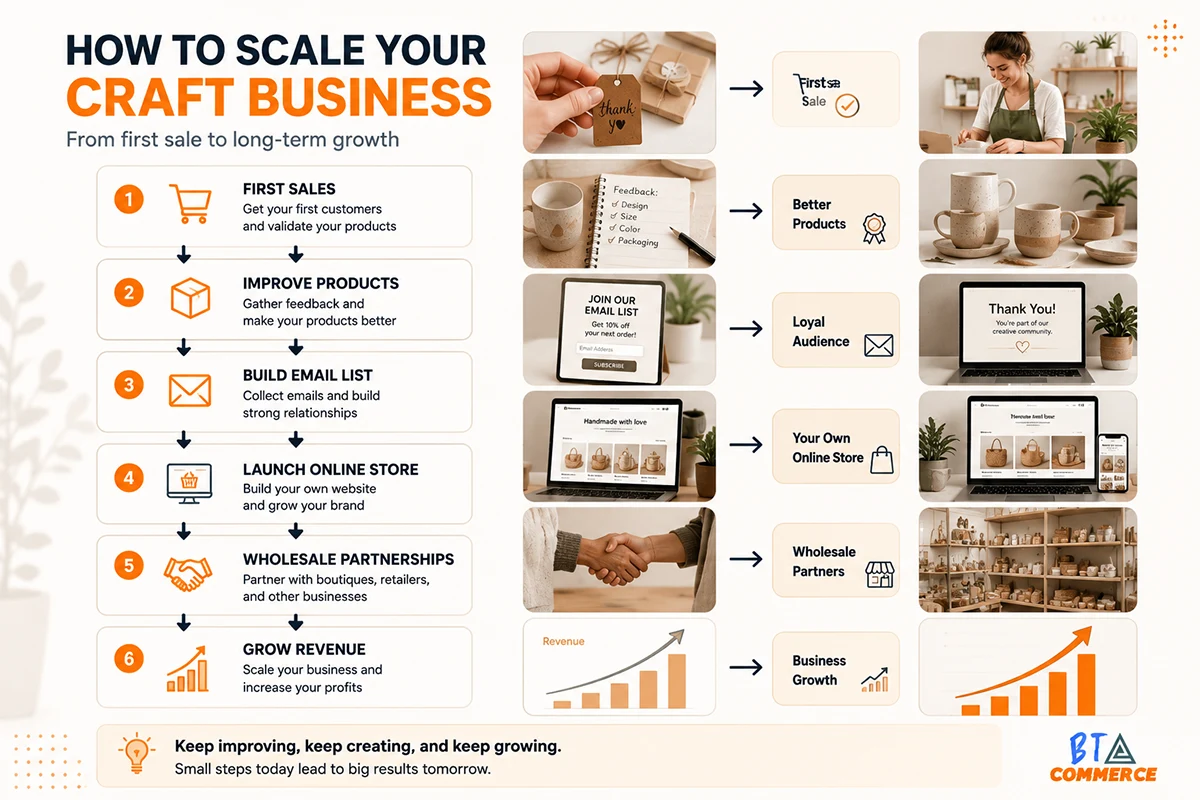
As your business grows, continue building a direct relationship with your customers through email marketing. Unlike social media or third-party marketplaces, your email list is an asset you own, making it one of the most reliable ways to announce new products, encourage repeat purchases, and generate long-term revenue.
Tip: The most successful craft businesses don’t grow by constantly finding new customers—they grow by expanding what already works and building lasting relationships with existing ones.
Can You Start a Craft Business With No Money?
Yes. If you’re wondering how to start a craft business from home with little or no budget, the good news is that many successful handmade businesses begin exactly that way. Instead of investing heavily upfront, focus on making your first sales, learning what customers want, and reinvesting your profits as you grow.
Here’s a practical way to get started:
- Use what you already have: Start with the tools and materials you already own instead of buying new equipment. Leftover fabric, yarn, wood, beads, or other craft supplies are often enough to create your first products.
- Make products only after you receive an order: A made-to-order approach helps you avoid tying up money in inventory while reducing the risk of unsold stock.
- Sell through free channels first: Share your products on social media, local community groups, or Facebook Marketplace to reach your first customers without paying listing fees. Friends, family, and local communities can also help you gain early sales and valuable feedback.
- Price for profit from the beginning: Even if your materials come from supplies you already own, your time still has value. Make sure every sale covers your material costs, labor, and other business expenses.
- Reinvest your earnings: Instead of taking profits immediately, use your first sales to buy better materials, improve your tools, or expand your product range. Reinvesting early profits is often a more sustainable way to grow than borrowing money.
As your business gains momentum, you can gradually expand to marketplaces like Etsy or launch your own online store when your budget allows. Starting small doesn’t limit your potential—it simply gives you the opportunity to build your craft business with less financial risk and a better understanding of what customers are willing to buy.
How to Start a Craft Business FAQs
Can I start a craft business from home?
Yes. Many successful craft businesses start from home using existing tools and materials. As demand grows, you can gradually invest in better equipment, expand your workspace, and increase production.
Do I need a business license to sell handmade products?
It depends on where you live and what you sell. Some locations require a business license, sales tax registration, or product-specific permits, while others have fewer requirements for small home-based businesses. Always check your local regulations before selling.
Where is the best place to sell handmade crafts online?
There isn’t a single best platform. Etsy is often the easiest place for beginners because it has an established audience, while your own website gives you more control over your brand and customer relationships. Many sellers use both as their business grows.
How much does it cost to start a craft business?
You can start with very little if you already have basic tools and materials. Many makers begin with less than a few hundred dollars by producing items to order and reinvesting their profits instead of buying large amounts of inventory.
How long does it take to make a profit?
It depends on your pricing, product demand, and marketing efforts. Some makers become profitable after their first few sales, while others take several months to build a steady customer base. Consistent product quality, effective marketing, and pricing for profit are the biggest factors in reaching profitability.
Recommended Reading