An online business is a way to make money using the internet to reach customers and deliver products or services. It allows you to start with lower costs, work from anywhere, and choose from many flexible business models.
This guide helps you understand how online businesses work and whether starting one makes sense for you.
What Is an Online Business?
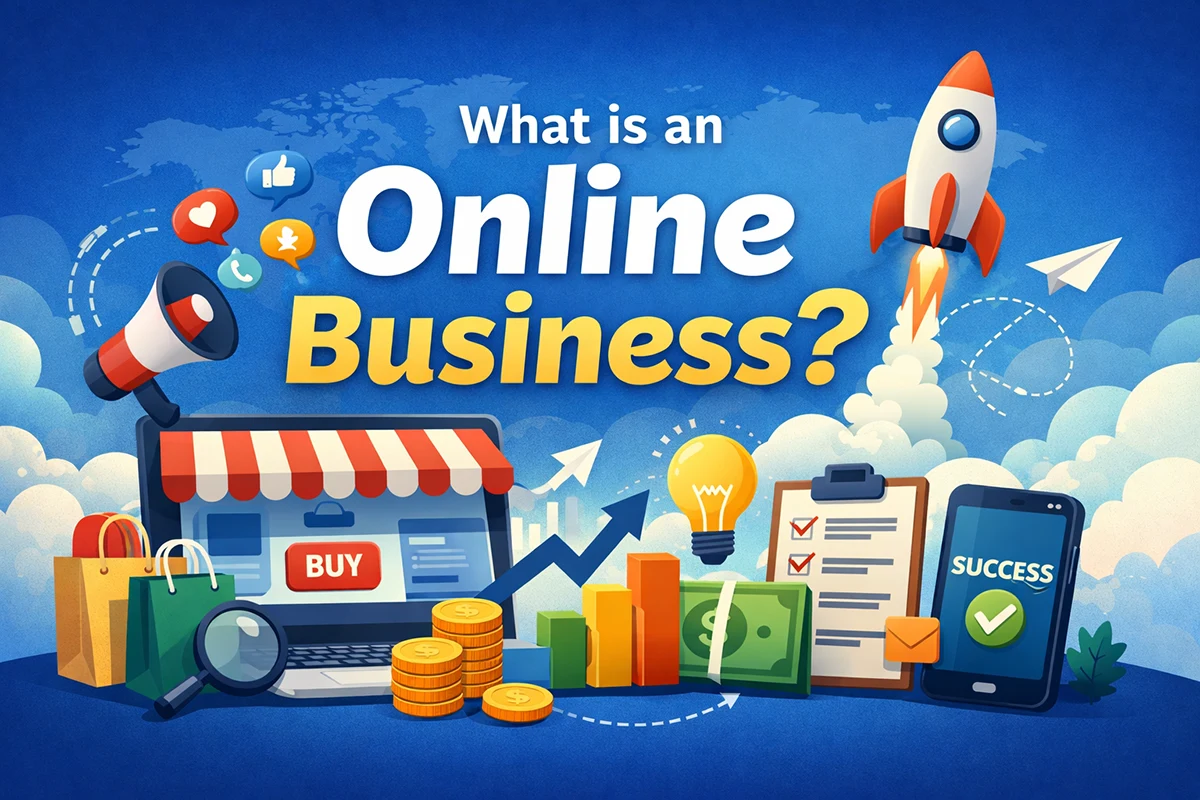
An online business is a business that generates revenue by selling products, services, or digital content primarily through the internet. Instead of relying on a physical storefront, online businesses operate through digital channels such as websites, social media platforms, or online marketplaces.
Compared to offline (traditional) businesses, an online business does not need a fixed physical location to reach customers. This usually results in lower startup costs, fewer operational barriers, and the ability to serve customers beyond local markets.
The key defining factor is that the internet is the main channel for both operations and revenue generation—from marketing and sales to payments and delivery.
How Does an Online Business Work?
An online business works by using the internet to attract customers, present an offer, process payments, and deliver products or services—often with a high level of automation and lower operating costs than traditional businesses.
The basic process of an online business follows a simple flow:
- Traffic – Potential customers find your business through search engines, social media, content, or paid ads.
- Offer – You present a product or service that solves a specific problem or meets a clear need.
- Conversion – Visitors take action, such as making a purchase or signing up.
- Payment – Payments are processed online through secure payment systems.
- Delivery – The product or service is delivered digitally, shipped physically, or fulfilled through a service.
Behind this flow, most online businesses rely on a digital platform—typically a website—to manage products, payments, and customer interactions. Traffic is generated through digital marketing channels such as SEO, social media, content marketing, or paid advertising, while operations like order fulfillment and customer support are often automated to run 24/7.
Common Types of Online Businesses
This is a high-level overview of the most common online business models. Each type works differently in terms of setup, skills required, and how revenue is generated.
- Ecommerce – Selling physical products online through your own store or marketplaces. Common models include dropshipping, print-on-demand, and niche product stores.
- Affiliate marketing – Promoting other companies’ products and earning a commission for each sale or lead generated through your referral links.
- Digital products – Creating and selling downloadable products such as online courses, e-books, templates, or tools, often with high profit margins.
- Online services – Offering skills or expertise remotely, including freelancing, consulting, virtual assistance, marketing, or web development.
- Subscription / SaaS – Charging recurring fees for access to software, tools, content, or membership-based services delivered online.
👉 To explore practical options, examples, and beginner-friendly models, see our guide on online business ideas.
Pros and Cons of Online Business
Running an online business comes with clear advantages, but it also has challenges that require the right skills, tools, and expectations.
| Pros | Cons |
|
|
Is Online Business Right for You?
An online business can be a great fit if you value flexibility, low startup costs, and the ability to reach customers globally—but it is not for everyone.
Who an Online Business Is Right For
- You want to start with low upfront costs and reduce financial risk.
- You value location independence and flexible working hours.
- You are comfortable learning digital skills such as marketing, tools, or analytics.
- You are patient and willing to build long-term results rather than expecting quick wins.
- You want the potential to scale beyond local markets.
Who an Online Business May Not Be Right For
- You need a stable, guaranteed income immediately.
- You dislike working with technology or digital platforms.
- You prefer face-to-face interaction over online communication.
- You are not ready to compete in crowded, fast-moving markets.
Quick Self-Assessment Checklist
- Can you commit time consistently, even without early results?
- Are you willing to learn or outsource digital marketing and tech tasks?
- Can you handle uncertainty and adapt when strategies change?
- Do you see this as a long-term project, not a get-rich-quick plan?
Online Business vs Traditional Business
Online and traditional businesses differ mainly in how they operate, reach customers, and scale over time. The table below highlights the key differences.
| Factor | Online Business | Traditional Business |
|---|---|---|
| Startup costs | Lower upfront costs with minimal physical infrastructure | Higher investment for rent, utilities, staff, and inventory |
| Reach & accessibility | Global reach and operates 24/7 | Limited to local customers and fixed business hours |
| Customer interaction | Digital communication via websites, reviews, email, or chat | Face-to-face interaction with immediate product experience |
| Scalability | Easy to scale without additional physical space | Growth often requires more locations, staff, or inventory |
| Delivery & logistics | Relies on shipping or digital delivery | Immediate, in-person product access |
In practice, many businesses adopt a hybrid approach, combining the scalability of online channels with the trust and experience of a physical presence.
Next Steps to Start an Online Business
Now that you understand what an online business is and how it works, the next step is to move from learning to action. Start by exploring practical models, choosing the right setup, and building a clear path to launch.
- Online business ideas – Explore proven and beginner-friendly ideas to find a model that fits your skills, budget, and goals.
- How to start an online business – Follow a step-by-step guide covering validation, setup, legal basics, and launch.
- Ecommerce platforms – Compare popular platforms to choose the right tools for building and managing your online business.
An online business offers flexibility, scalability, and lower barriers to entry—but success depends on choosing the right model and executing consistently. With a clear understanding of how it works, you’re now better equipped to decide if this path fits your goals. The next step is simple: learn deeper, start small, and take action.
Recommended Reading