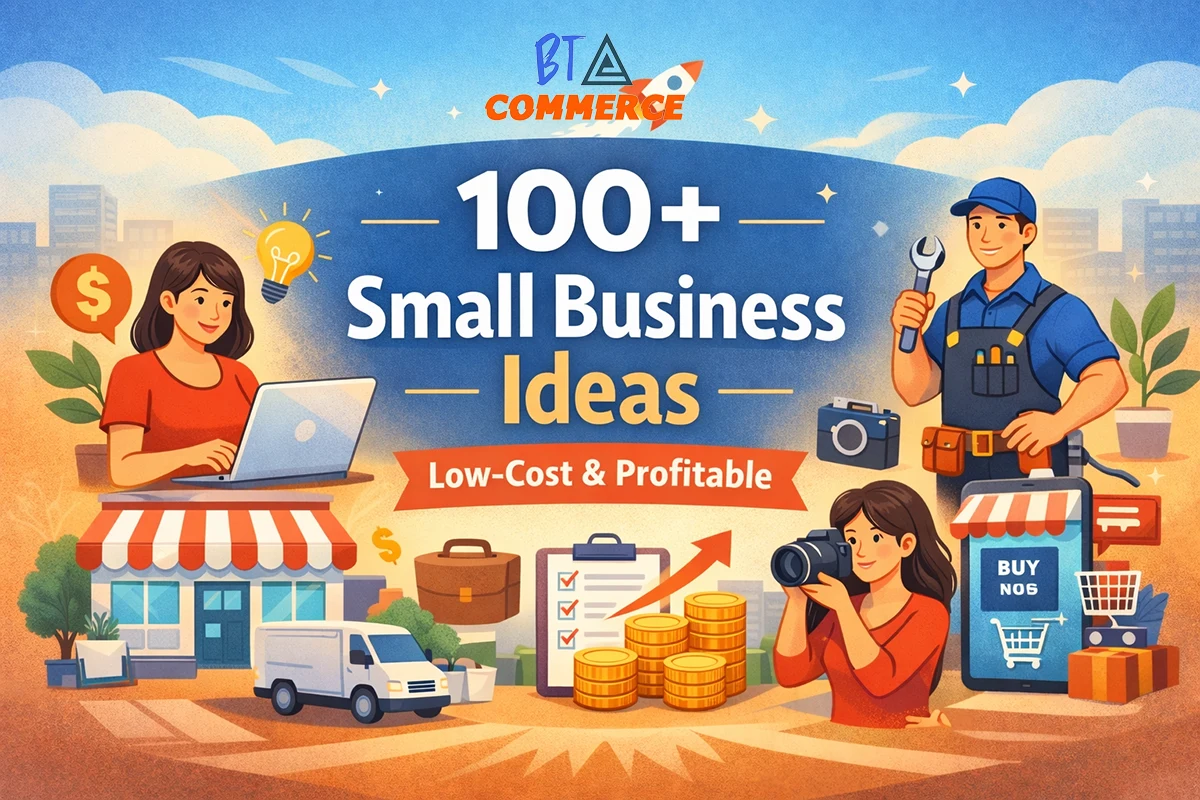
Starting a small business is about taking control of your income, time, and future. The hardest part isn’t motivation—it’s choosing the right business model to start with. This guide by BTA Commerce curates 100+ proven small business ideas with real demand in 2026, spanning online, local, service, and creative opportunities.
How to Choose the Right Small Business Idea (Before You Start)
Choosing the right small business idea before you start can save you months of wasted time and unnecessary costs. Use the checklist below to evaluate any idea objectively—before committing money, effort, or resources.
- Evaluate your skills, experience, and credentials: Start with what you already know. Businesses built on existing skills—such as accounting, writing, IT, design, or food services—are faster and cheaper to launch. Also consider whether the idea requires licenses or certifications (for example, CPA, electrician, or hairstylist), as these affect both setup time and legal compliance.
- Define your income and lifestyle goals: Decide whether you’re building a full-time business or a side hustle. Clarify your target monthly income, how many hours you can work each week, and how many clients or customers you’ll need to be profitable. A good idea must fit your lifestyle—not just your financial goals.
- Consider startup costs and scalability: Some businesses are low-cost and service-based, while others require equipment, inventory, or upfront capital. Ask whether you’ll need to hire employees, invest in tools, or expand locations over time. Scalable models allow you to grow revenue without equally growing expenses.
- Analyze location and market demand: Certain businesses depend heavily on geography—like landscaping, boat cleaning, or local services—while online businesses are far less location-dependent. Research local competition, unmet demand, and pricing to determine whether your idea is viable where you plan to operate.
- Decide between online and in-person business models: Online businesses offer flexibility and reach, but require comfort with digital tools and remote operations. In-person businesses benefit from community presence, trust, and repeat local customers. Choose the model that best matches how you prefer to work and interact with customers.
Financial & Professional Business Services
Financial and professional service businesses remain among the most profitable small business ideas, driven by steady demand from startups, SMEs, and established companies. As regulations and financial complexity continue to rise, many organizations prefer working with specialized experts rather than building in-house teams.
Popular business ideas in this category include:
- Accounting & tax services: Consistent demand for bookkeeping, tax filing, and compliance support.
- Financial planning / financial consulting: Advising individuals and businesses on cash flow, investments, and long-term financial strategy.
- Business consulting: Helping companies improve growth, operations, and management efficiency.
- Tax consulting: Specialized support for complex tax planning and regulatory requirements.
- HR consulting: Outsourced solutions for hiring, payroll, and people management.
- Notary public services: Legal document verification with stable, location-based demand.
- Franchise ownership: Running a proven business model with established systems and brand recognition.
- Bookkeeping: Ongoing financial record management for small and growing businesses.
- Environmental consulting: Compliance and sustainability guidance driven by stricter environmental regulations.
These businesses often benefit from high margins, recurring revenue, and long-term demand—especially for founders with relevant credentials or industry experience.
Skilled Trade, Manual Labor & Physical Service Businesses
Skilled trade businesses are often overlooked in favor of digital ideas, yet they remain some of the most stable and profitable local service businesses. These models are rooted in real-world needs—homes need fixing, systems break down, and people still move, renovate, and maintain physical spaces regardless of economic cycles.
Because most of these services require hands-on expertise and local presence, competition is usually limited to a specific area, making them especially attractive skilled trade business ideas for small operators.
- General construction / contractor: Residential and light commercial projects driven by housing demand and renovations.
- Handyman services: A flexible, high-demand option covering everyday home repairs and maintenance.
- Landscaping services: Recurring outdoor maintenance for homes, offices, and commercial properties.
- Sustainable landscaping: Eco-conscious landscaping solutions focused on water efficiency and long-term cost savings.
- House painting / painting contractor: Consistent work tied to property upgrades, rentals, and resale preparation.
- Carpentry: Skilled craftsmanship for custom furniture, fittings, and structural woodwork.
- Electrical services: Essential installation, repair, and safety upgrades that require certified professionals.
- Plumbing: Emergency-driven and maintenance-based services with year-round local demand.
- Moving company: Residential and small business relocations supported by urban growth and mobility.
- Delivery company: Local delivery and last-mile logistics serving retail, eCommerce, and service businesses.
While these businesses may not follow digital trends, they benefit from strong word-of-mouth, repeat customers, and demand that rarely disappears—making them a dependable foundation for long-term local growth.
Creative & Digital Service Businesses
If you’re skilled in writing, design, marketing, or media, creative digital services remain some of the most accessible and scalable small business ideas today. Many of these businesses can be launched solo, operated remotely, and expanded into agencies or personal brands over time.
- Content writing & editorial services: SEO-driven blogs, long-form guides, and brand storytelling for websites and publications.
- Copywriting: Persuasive writing focused on sales pages, ads, email marketing, and conversions.
- Blogging: Building niche content sites or authority blogs monetized through ads, affiliates, or digital products.
- Graphic design: Brand identity, social media creatives, and visual assets for online businesses.
- Web design: User-friendly, conversion-focused websites for startups and small businesses.
- Web & software development: Custom websites, apps, and internal tools that solve real business problems.
- Video production / videography: Promotional and brand video content for websites and social platforms.
- Freelance video editing: Short-form and long-form editing for creators, YouTubers, and marketing teams.
- Audio editing: Podcast editing, sound cleanup, and post-production services.
- Photography: Product, lifestyle, and commercial photography optimized for digital use.
- Social media management: Managing content calendars, posting, and engagement across platforms.
- Social video marketing: Creating and optimizing short videos for TikTok, Instagram Reels, and YouTube Shorts.
- Digital marketing consulting: Strategy-level support across SEO, paid ads, funnels, and analytics.
- Influencer / digital creator: Monetizing attention through content, sponsorships, and partnerships.
- Bridal stylist: Creative styling services combining fashion expertise with high-touch client work.
Creator & Content-Based Business Models
Creator-led businesses are no longer side hustles. With the right niche and distribution channel, content can become a long-term asset that generates income through ads, products, subscriptions, or brand partnerships. The key advantage of these models is leverage: you create once and monetize repeatedly.
- YouTube channel: Long-form video content monetized through ads, sponsorships, and owned products.
- TikTok creator: Short-form content focused on reach, brand deals, affiliate marketing, and traffic generation.
- Podcasting: Building authority and audience through audio content, often monetized via sponsorships or memberships.
- Online courses: Turning expertise into structured, scalable digital products.
- E-book publishing: Low-cost digital publishing for niche audiences and evergreen topics.
- UGC creation for brands: Producing authentic content that brands use in ads and social campaigns.
- Paid membership business: Recurring revenue from exclusive content, communities, or tools.
- Newsletter / blogging as a business: Owning your audience and monetizing through subscriptions, ads, or affiliates.
- Domain investing: Acquiring and reselling digital real estate with long-term value potential.
Freelancing & Remote Service Businesses
Freelancing and remote services are some of the easiest business ideas to start with little upfront cost. For many people, this is the most practical way to test what business to start, build cash flow quickly, and transition into full-time self-employment.
These models rely more on skills and reliability than capital, making them especially attractive for professionals who want flexibility or prefer working from home.
- Virtual assistant: Administrative, scheduling, and operational support for founders and online businesses.
- Customer service freelancing: Remote support via email, chat, or phone for eCommerce and SaaS companies.
- Transcription services: Converting audio or video content into written formats for media, legal, or education use.
- Freelance programming / software development: High-demand technical services for startups and growing companies.
- Freelance graphic design: Visual branding, marketing assets, and UI design for digital businesses.
- Freelance web development: Building and maintaining websites for small businesses and entrepreneurs.
- Freelance social media manager: Managing content, engagement, and growth strategies across social platforms.
For many entrepreneurs, freelancing becomes the first step toward owning a small business enterprise—either by niching down, productizing services, or building a team over time.
Repair, Maintenance & Restoration Businesses
Repair and maintenance services are classic small business ideas that stay relevant regardless of economic cycles or trends. When things break, people don’t wait—they fix them. That creates consistent demand and dependable cash flow for owners who value stability over hype.
Many of these businesses also benefit from repeat customers, local trust, and word-of-mouth referrals, making them some of the most successful small business ideas in the long run.
- Auto repair / mechanic shop: Essential vehicle maintenance and repairs with steady year-round demand.
- Appliance repair: Fixing household appliances as consumers look to repair rather than replace.
- Bicycle repair: Growing demand driven by urban commuting and eco-friendly lifestyles.
- Boat cleaning: A niche local service in coastal or marina-based markets.
- Car wash & detailing: Recurring services with upsell potential and subscription models.
- Electronics repair: Smartphones, laptops, and devices that people rely on daily.
- Furniture restoration: Repairing and refinishing items with sentimental or resale value.
- Rug & carpet cleaning: A high-repeat service for homes, offices, and rental properties.
- Jewelry making & repair: Specialized craftsmanship with strong margins and trust-based clients.
- Laundromat: A low-labor, asset-based model with consistent local usage.
If you’re looking for profitable business ideas that don’t rely heavily on online trends or constant marketing, repair and maintenance businesses offer reliability, local demand, and long-term viability.
Property, Home & Real Estate Businesses
Businesses tied to property and housing tend to operate on a different scale than many other small business ideas. Fewer transactions, higher order value, and clients who care deeply about trust, quality, and long-term results. Once credibility is established, these models often generate repeat work and referrals without heavy advertising.
This category also benefits from broad market demand—from homeowners and renters to investors and short-term rental operators—making it one of the best small business paths for those comfortable working with physical assets and clients face-to-face.
- Real estate agent: Helping buyers and sellers navigate high-value transactions in competitive local markets.
- Property management: Ongoing management for landlords and investors seeking passive income.
- Cleaning service: A reliable, scalable business serving homes, offices, and rental properties.
- Eco-friendly dry cleaning: A modern take on a traditional service, appealing to sustainability-focused customers.
- Professional organizing: High-demand support for decluttering homes, offices, and moving transitions.
- Home inspection: Essential pre-purchase services that protect buyers and reduce risk.
- Home energy auditing: Assessing efficiency and helping homeowners lower long-term energy costs.
- Interior design & decorating: Value-driven services that improve both livability and property resale appeal.
- Home automation services: Installing smart systems for security, lighting, and energy control.
- Short-term rental / Airbnb hosting: Managing or operating vacation rentals for higher nightly returns.
For founders looking for profitable business ideas with strong pricing power and long-term relevance, property-based businesses offer stability, trust-driven growth, and clear opportunities to expand into premium services.
Education, Coaching & Tutoring Businesses
Education and coaching businesses are built on authority, trust, and transformation. If you have experience, results, or specialized knowledge, this category offers some of the most flexible and scalable small business opportunities—often with low startup costs and the ability to operate both online and offline.
What makes these ideas especially attractive is leverage. Your time can be packaged into programs, sessions, or frameworks, allowing income to grow without needing a proportional increase in hours worked.
- Private coaching: One-on-one guidance tailored to personal or professional goals.
- Life coaching: Helping clients improve clarity, habits, and decision-making.
- Career coaching: Resume strategy, interview prep, and career transition support.
- Health coaching: Lifestyle-based guidance focused on sustainable well-being.
- Personal training: Fitness coaching delivered in person or remotely.
- Nutrition consulting: Customized dietary planning and education.
- Sleep consulting: Helping families and individuals build healthier sleep routines.
- Tutoring services: Skill-based instruction across academics, languages, and practical subjects.
- Singing / vocal coaching: Technique, performance, and confidence training.
- Music instruction: Teaching instruments or theory to students of all ages.
For those asking what is a good business to start based on personal expertise, education-focused businesses offer long-term relevance, strong word-of-mouth growth, and multiple paths to expansion.
Wellness & Lifestyle Businesses
Wellness is no longer a niche—it’s becoming part of everyday life. From stress management to healthy aging, consumers are actively spending on services that help them feel better, live longer, and maintain balance. This makes wellness one of the most resilient and profitable small business ideas going into 2026.
What sets wellness and lifestyle businesses apart is recurring demand. Clients don’t just come once—they return weekly, monthly, or as part of long-term routines.
- Massage therapy: Consistent demand driven by stress relief, recovery, and preventive care.
- Yoga & meditation classes: Group or private sessions focused on flexibility, mindfulness, and mental health.
- Clean beauty products: Growing interest in non-toxic, transparent, and ethically sourced skincare.
- Medical supply business: Serving essential needs tied to healthcare, mobility, and aging populations.
- Senior concierge services: Lifestyle assistance for older adults, from errands to care coordination.
If you’re exploring small business ideas with low investment that prioritize long-term relationships over one-time transactions, wellness and lifestyle services offer strong potential for sustainable growth.
Food & Hospitality Businesses
Food and hospitality businesses work best when they give people a reason to gather, stay longer, and come back again. If you’re looking for a small business idea built around experience and community rather than pure transactions, this category offers many proven options.
- Bakery: Everyday demand, easy to localize, and highly dependent on quality and consistency.
- Catering business: Flexible model that can scale through events, corporate clients, or niche menus.
- Food truck: Mobile, lower upfront risk, and ideal for testing new food concepts.
- Private chef services: Premium, relationship-driven work for clients who value personalization.
- Supper club: Small, curated dining experiences focused on atmosphere and storytelling.
- Brewery: A social destination as much as a product business.
- Coffee & concept café: Hybrid spaces that blend coffee with culture, books, music, or art.
- NoLo (no & low alcohol) bar or liquor store: A fast-growing niche aligned with modern lifestyle trends.
Personal, Pet & Community-Based Services
Personal and community-based services succeed because they’re built on trust, proximity, and repeat demand. These small business ideas are especially well-suited for people who want to start locally, grow by referrals, and scale area by area instead of all at once.
- Dog walking: Simple setup with recurring clients and predictable schedules.
- Pet sitting & boarding: Strong demand in urban areas and during holidays.
- Mobile pet grooming: Convenience-driven service with higher pricing potential.
- At-home daycare: High local demand where childcare options are limited.
- Childcare services: Long-term clients and consistent monthly income.
- Hair salon / barber shop: Time-tested service built on repeat visits and loyalty.
- Nail technician: Skill-based business with low startup costs and strong margins.
- Gift basket business: Seasonal spikes with opportunities for corporate orders.
- House sitting: Trust-based service that pairs well with travel-heavy neighborhoods.
Commerce, eCommerce & Reselling Businesses
Commerce-based businesses focus on buying, selling, and distribution rather than delivering services by the hour. These models are popular business ideas because they can start small, test demand quickly, and scale through systems, platforms, and logistics.
- eCommerce store: Selling your own products or curated collections through an independent online shop.
- Amazon seller: Leveraging an existing marketplace to reach high-intent buyers faster.
- Etsy seller: Best suited for handmade, vintage, or design-driven products.
- Online reselling business: Buying undervalued goods and reselling for profit across platforms.
- Dropshipping: Testing product demand without holding inventory.
- Print-on-demand: Custom products produced only after a sale is made.
- Affiliate marketing: Monetizing content by recommending products and earning commissions.
- Vending machine business: A physical, location-based model with semi-passive income potential.
Digital, Tech & Future-Focused Businesses
As companies invest more in automation, security, and digital infrastructure, demand for specialized tech expertise continues to grow. These business ideas are especially attractive for founders who prefer high-value clients, recurring contracts, and long-term retainers over one-off projects.
- AI consulting: Helping businesses adopt AI tools to improve efficiency, decision-making, and workflows.
- Cybersecurity consulting / managed IT services: Ongoing protection and system management as digital risks increase.
- Cloud modernization services: Upgrading legacy systems to scalable, cloud-based infrastructure.
- SEO consulting: Driving sustainable organic traffic and long-term growth for online businesses.
- Software consulting: Advising on system architecture, integrations, and custom solutions.
- IT consulting: Providing strategic guidance and technical support for growing organizations.
Passive Income & Asset-Based Businesses
These businesses focus less on daily operations and more on owning or controlling assets that generate cash flow over time. While they often require higher upfront capital, they can offer more predictable income once systems are in place.
- Self-storage business: Low maintenance, stable demand, and resilient even during economic downturns.
- Short-term rental (Airbnb as an investment): Higher returns than traditional rentals if location and management are done right.
- Vending machines: Simple operations with scalable potential across multiple locations.
Time-Tested & Evergreen Small Businesses
Not every business needs to chase trends. These models have survived multiple economic cycles because they solve essential, ongoing needs. They may not sound flashy, but they consistently attract customers year after year.
- Franchise business: A proven system with built-in brand recognition and operational support.
- Auto repair: Cars age, break, and always need maintenance—regardless of the economy.
- Property management: Serving landlords who prefer hands-off ownership.
- Real estate: Long-term value creation through appreciation and rental income.
- Trucking business: The backbone of physical commerce and supply chains.
How to Get Started With Your Small Business (Step-by-Step)
Starting a small business doesn’t require perfection, but it does require clarity. The steps below focus on building a solid foundation so you can grow without constant rework or legal risk.
Create a Business Plan
You don’t need a 50-page document. Start with answers to a few core questions:
- Who are you serving?
- What problem are you solving?
- How will you make money?
A simple, realistic plan helps you avoid guesswork and make better decisions as challenges appear.
Choose a Legal Structure
Your legal setup affects taxes, liability, and how professional your business looks to partners and clients. Many small businesses start as sole proprietorships or LLCs, then adjust later as revenue grows. Choosing correctly from the start can save time and money.
Separate Business & Personal Finances
This is one of the most common beginner mistakes. Open a dedicated business bank account, track expenses properly, and keep clean records. It not only simplifies accounting but also builds credibility with banks, investors, and tax authorities.
Plan Operations & Tools
Think about how work actually gets done day to day. What tools will you use for invoicing, scheduling, communication, or inventory? Clear systems reduce stress, improve consistency, and make it easier to scale when demand increases.
Build a Brand & Marketing Strategy
Branding is more than a logo. It’s how customers perceive and remember you. Define your message, tone, and value clearly, then choose marketing channels that fit your audience—whether that’s local search, social media, referrals, or content.
Stay Compliant With Laws
Licenses, permits, taxes, and industry regulations vary by location and business type. Staying compliant protects you from fines and disruptions. When in doubt, consult official government resources or a professional advisor.
Build a Support Network
No successful business is built alone. Connect with mentors, industry peers, accountants, or legal advisors. A strong support network helps you avoid costly mistakes and make smarter decisions faster.
FAQs – Small Business Ideas
What is the best small business to start in 2026?
There’s no single “best” business for everyone in 2026. The strongest opportunities tend to sit at the intersection of rising demand, recurring revenue, and skills you already have. Service-based businesses, digital consulting, education, wellness, and niche eCommerce models continue to perform well because they adapt quickly to market changes.
What business can I start with little money?
Businesses that sell skills or time usually require the lowest upfront investment. Examples include freelancing, coaching, consulting, virtual assistance, tutoring, or content creation. These models allow you to start lean, validate demand early, and reinvest profits as you grow.
What are the easiest businesses to start?
The easiest businesses to start are those with simple operations and minimal regulation. Freelance services, local personal services, online reselling, and basic digital products are often easier to launch because they don’t require complex logistics or large teams.
What business can I run from home?
Many modern businesses can be run entirely from home, including online stores, digital services, consulting, coaching, tutoring, affiliate marketing, and content-based businesses. As long as you have a reliable internet connection and clear systems, location is rarely a limitation.
Do I need an LLC to start a small business?
Not always. Many people start as sole proprietors to test their idea quickly. An LLC becomes more important as your income grows, your risk increases, or when you want clearer separation between personal and business liability. It’s often best to choose a structure that fits your current stage, then adjust later if needed.
Starting a small business isn’t about chasing trends—it’s about choosing ideas that fit your skills, goals, and how you want to live. This guide brought together proven small business ideas across services, digital, local, and asset-based models to help you think clearly before you commit. Pick one, start small, and build with intention—the right idea grows when you do.
Recommended Reading